
Short answer: You can move lawn grass successfully if it is a spreading type (bermuda, zoysia, St. Augustine, centipede, buffalo grass), if you lift it with 1–2 in (2.5–5 cm) of soil still attached to the roots, and if you do it while the grass is actively growing: mid-spring to mid-summer for warm-season grass, early fall or spring for cool-season turf. Plant the pieces flush with the surrounding soil, press them down hard, and keep them moist with short waterings once or twice a day for the first two to three weeks. Sod knits in about two weeks; 2–4 in plugs on 6–12 in centers fill in over 6–8 weeks for bermuda and St. Augustine, 8–12 weeks for centipede, and one to two seasons for zoysia. What kills transplanted grass is heat at moving time, roots left to dry, and planting too deep.
Which grasses transplant well and which do not
Transplanting only pays off with grasses that spread sideways on their own. Bermuda, zoysia, St. Augustine, centipede and buffalo grass all creep by stolons (above-ground runners), rhizomes (below-ground stems) or both, so a small piece keeps growing outward and closes the gaps. That is why Virginia Cooperative Extension notes that plugging works with all the warm-season lawn grasses. Many improved varieties are sterile and can only be planted this way; Clemson HGIC lists centipede, carpetgrass, common bermuda and Japanese lawngrass (a zoysia) as the warm-season types that can also be seeded.
Cool-season bunch grasses behave differently. Tall fescue and perennial ryegrass grow in tufts without runners, so a plug of fescue stays a plug; Kentucky bluegrass spreads by rhizomes, but slowly. You can move whole sod pieces of these to patch a spot, but plugging a bare area and waiting for it to fill is not realistic. If you are unsure what you have, our lawn grass comparison covers how the common types look and behave.
| Grass | How it spreads | Transplants as | Best time to move |
|---|---|---|---|
| Bermuda | Stolons and rhizomes | Sod, plugs, sprigs | Late spring to mid-summer, 10 weeks of heat ahead |
| Zoysia | Stolons and rhizomes (slow) | Sod, plugs, sprigs | Late spring to early summer; sod into early fall |
| St. Augustine | Stolons | Sod, plugs, sprigs | Late spring to mid-summer |
| Centipede | Stolons | Sod, plugs, sprigs | Late spring to early summer |
| Buffalo grass | Stolons | Sod, plugs | Late spring to early summer |
| Kentucky bluegrass | Rhizomes (slow) | Sod pieces only | Early fall, or spring |
| Tall fescue, perennial ryegrass | Bunch type, no runners | Sod pieces only | Early fall, or spring |
Timing: move grass when it is growing, not when it is stressed
Warm-season grasses root fastest when soil is warm and the plant is in full growth. Virginia Cooperative Extension gives mid-spring through mid-summer as the ideal planting window for all of them. The University of Arizona turf program puts a practical rule on it for bermuda: make sure there are ten weeks of hot weather left after planting, or use full sod instead of plugs. For zoysia, University of Missouri Extension says late spring is best for sprigs, while sod can be laid as late as September provided temperatures are still warm enough for it to root.
Cool-season sod (bluegrass, fescue, ryegrass) is the reverse: Penn State Extension lists spring, late summer or fall as the optimum times. In every case avoid a heat wave: a piece of grass with most of its roots cut off cannot keep up with 95 °F (35 °C) afternoons, however often you sprinkle it.
Three ways to move grass: sod pieces, plugs and sprigs
Sod pieces are slabs of turf with soil attached. They give instant cover and are the only sensible option for bunch grasses. Commercial sod is cut thin: University of Delaware Extension describes the common 3/4 in (2 cm) sod as roughly 1/4 in of soil plus 1/2 in of roots and thatch, and says a good 3–4 ft strip should hold together when lifted by one end. When you cut your own with a spade, aim for 1–2 in (2.5–5 cm) of soil, which keeps more roots and forgives rougher handling.

Plugs are small squares or circles of turf, 2–4 in (5–10 cm) across, planted on a grid. Clemson HGIC recommends 2–4 in plugs on 6–12 in (15–30 cm) centers, and notes that plugging needs three to ten times as much planting material as sprigging. Missouri Extension says each plug should carry 2–3 in of soil and roots, and that you need about 4,000 plugs per 1,000 sq ft (93 m²) at 6 in spacing or 1,000 at 12 in. Most people cut them from a sod piece or a hidden corner of the lawn.
Sprigs are pieces of stolon or rhizome with two to four nodes and no soil. Clemson describes planting them in furrows 8–12 in apart, 1–2 in deep, one sprig every 4–6 in, with the tip left above ground. Sprigging is the cheapest way to cover a large area with bermuda, but sprigs dry out within hours and need watering several times a day, so both Virginia and Arizona steer homeowners toward plugs or sod for ordinary repairs.
| Grass | Plug size and spacing | Time to full cover (extension estimate) |
|---|---|---|
| Bermuda | 4 in plugs on 12 in centers | 6–8 weeks (Virginia Tech); Arizona plants 4 in pieces on a staggered 18 in grid, which takes longer |
| St. Augustine | 4 in plugs on 12 in centers; UF IFAS gives a 6–24 in range, closer being faster | 6–8 weeks at 12 in spacing |
| Centipede | 2–4 in plugs on 6–12 in centers | 8–12 weeks |
| Zoysia | 2 in or larger plugs on 6–12 in centers; 1 in nursery plugs no wider than 6 in apart | Often not until the second growing season |
Step by step: lifting and replanting sod or plugs
- Prepare the receiving spot first. Dig out weeds and dead grass, loosen the top 3–4 in (8–10 cm) of soil, rake it level and water it the day before so it is moist but not muddy. The grass must sit on bare, firm soil; laying pieces on top of existing turf or thatch is a common cause of failure, as we explain in the post on laying turf over existing grass. For plugs, the Arizona guide excavates about 3/4–1 in so the plug beds in firmly.
- Water the donor area the evening before. Moist soil holds together on the spade; dry soil crumbles off and takes the roots with it.
- Cut the pieces. Use a sharp flat spade or edging iron. Cut the outline, then slide the spade underneath at a shallow angle to lift a slab with 1–2 in of soil for sod, 2–3 in for plugs. A 12 by 12 in piece is about as large as most people can lift intact. A bulb planter or purpose-made plugger cuts uniform plugs quickly.
- Keep the roots covered. Stack pieces grass-side up in the shade and mist them if there is any delay. Penn State notes sod deteriorates within 24–48 hours in warm weather; hand-cut pieces should be in the ground the same day, ideally within an hour or two.
- Plant flush with the surface. Set each piece so the top of its soil sits level with the surrounding grade. Butt sod pieces tightly together and stagger the joints. If a piece sits high, remove soil under it; if low, add soil underneath rather than on top of the grass.
- Firm it down. Walk on the pieces, tamp with the back of a rake or run a half-filled roller over them. Virginia Tech’s guidance is to roll new sod so roots meet soil everywhere; air pockets dry the roots out.
- Fill the seams. Brush a little screened topsoil or sand into gaps between sod pieces and around plugs so the edges do not dry out and curl.
- Water immediately and deeply. Clemson recommends wetting new sod to a depth of 4 in (10 cm) straight after laying, within minutes, not at the end of the day.
Watering schedule for the first three weeks
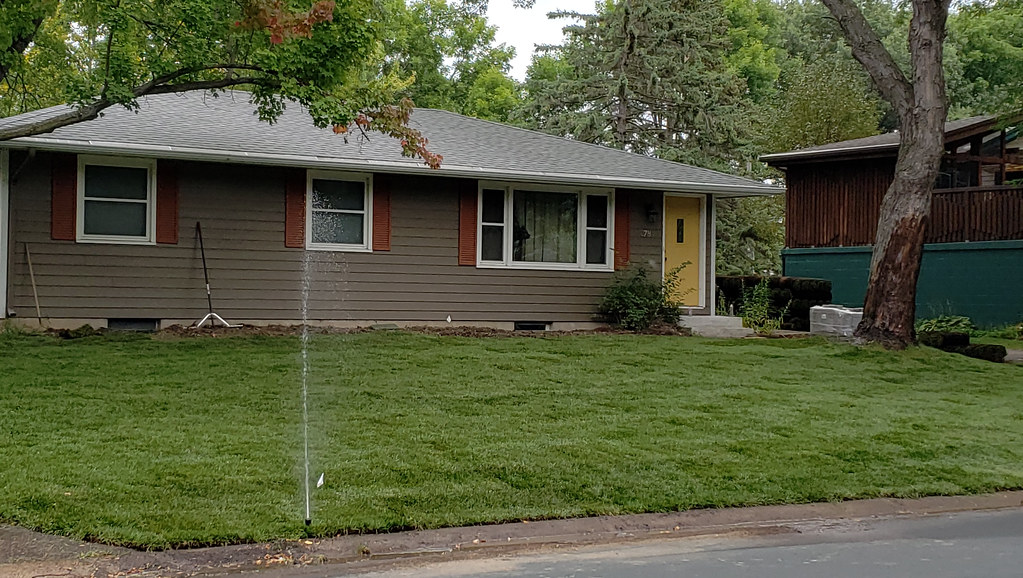
Transplanted grass has a shallow, cut-back root system, so it needs frequent light water at first, then a steady shift toward fewer, deeper soakings. The University of Florida IFAS schedule for new St. Augustine sod is a good template for any warm-season transplant:
| Days after planting | How to water |
|---|---|
| 1 to 7–10 | Several short waterings (5–10 minutes each) spread through the day, enough to keep the sod and the soil under it damp |
| 7–10 to 17–20 | Once a day, applying 1/4–1/2 in (6–12 mm) |
| From about day 17–20 | 2–3 times a week at 1/4–1/2 in, then ease into your normal deep-and-infrequent routine |
Arizona’s bermuda guide is similar: three short waterings a day for 7–9 days, then lift a corner of a piece; if it resists, roots have taken and you can drop to once a day. Missouri Extension stresses keeping zoysia plugs moist for the first two or three weeks so the roots do not dry out. Delaware Extension gives the overall picture: sod knits with the soil in about two weeks, but it takes about a month before roots reach deep enough to survive a dry spell without help. Light midday watering is acceptable in this first week, as Clemson notes, even though it is wasteful on an established lawn, as our guide on the best temperature to water grass explains.
When to mow and fertilize transplanted grass
- Mowing: not until the pieces are firmly rooted and do not lift when tugged. UF IFAS puts the first mow of St. Augustine sod at 14–21 days after planting. Mow high with a sharp blade and let the soil dry slightly first so the mower does not lift the pieces or rut the ground.
- Fertilizing: Clemson says fertilizer should not be needed immediately after transplanting sod. Feed plugs three to four weeks after planting (Clemson) and new St. Augustine sod 30–60 days after planting (UF IFAS), at a light rate; heavy nitrogen on unrooted grass pushes leaf growth the roots cannot support.
- Herbicides: none. Penn State advises against applying herbicides to newly laid sod or to the soil before sodding, and pre-emergents also stop spreading stolons from rooting. Hand-pull weeds between plugs until the grass has closed over.
Common mistakes that kill transplanted grass
- Moving grass in a heat wave or while dormant. Warm-season grass moved in early spring while still brown has no energy to root; moved in August heat it desiccates. Pick a mild, cloudy week.
- Letting the roots dry. A slab left on a driveway in the sun for an afternoon is often finished before it goes in the ground. Cut, carry, plant, water, in that order.
- Planting too deep or too high. Buried crowns rot and smother; pieces sitting proud dry out at the edges and get scalped. Flush with the grade, every time.
- Cutting pieces too thin. Lifting sod with half an inch of soil by hand leaves most of the roots behind.
- Skipping the firming step. Air pockets under a piece are the commonest reason one square dies while its neighbours thrive.
- Overwatering after week three. Once rooted, constant wet soil invites disease and shallow roots.
- Expecting zoysia to behave like bermuda. Virginia Tech and Missouri both warn that complete zoysia cover can take until the second season; space plugs closer and be patient.
- Waiting on a dead piece. A healthy transplant looks wilted for a few days, greens up within a week and cannot be lifted after two. If a piece is still loose and browning at three weeks, its roots dried out or never touched the soil; replace it with a fresh plug.
Moving ornamental grass clumps
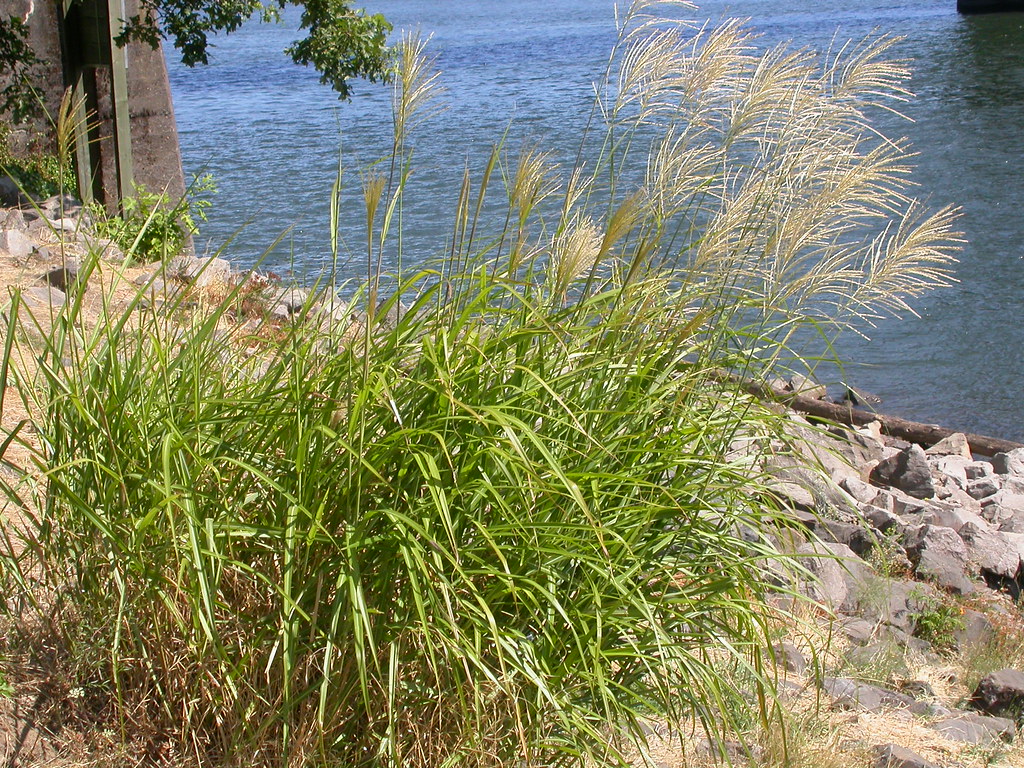
Ornamental grasses such as miscanthus, fountain grass, switchgrass and pampas grass are transplanted by division rather than as sod. Clemson HGIC advises digging and dividing warm-season ornamental grasses in early spring just before new growth starts, and cool-season types (blue fescue, feather reed grass, blue oat grass) in early fall, with most clumps benefiting from division every three to four years. Cut the foliage back, dig the whole clump, and expect to need a sharp spade, saw or axe for a mature root mass. Hose off some soil, discard the dead centre, and replant vigorous outer sections with the crown level with the soil surface. Water thoroughly to settle the soil and watch watering closely for the first few weeks. Colorado State University Extension adds that late-season planting of grass divisions is not recommended, particularly for warm-season species, and that any planting should stop about a month before the first frost.
Sources
- Clemson University HGIC – Lawn Establishment
- Virginia Cooperative Extension – Spring Planting Considerations for Warm-season Turfgrasses
- University of Missouri Extension – Establishment and Care of Zoysiagrass Lawns (G6706)
- University of Florida IFAS – St. Augustinegrass for Florida Lawns (ENH5)
- University of Arizona Turfgrass Research – Vegetative Establishment of Bermudagrass Home Lawns
- University of Delaware Cooperative Extension – Buying and Installing Certified Sod
- Penn State Extension – Lawn Establishment
- Clemson University HGIC – Ornamental Grasses and Grass-like Plants
- Colorado State University Extension – Ornamental Grasses