
Short answer: American buffalograss (Bouteloua dactyloides) is seeded from late May into July, once soil at seed depth is steadily above 60°F (16°C). Sow 2 to 3 lb of treated burrs per 1,000 sq ft (1 to 1.5 kg per 100 m²) no deeper than ½ inch (1.3 cm), keep the top inch moist with short waterings several times a day until emergence at 7 to 21 days, then stretch the intervals week by week. Apply mesotrione or quinclorac on the day of seeding, because untreated buffalograss seedbeds routinely fail to weeds. Seed by early June and you will have a full stand by mid-September. If you are in Australia shopping for “buffalo grass”, that is a different plant, and it is not sold as seed at all.
Two plants share the name “buffalo grass”
- American buffalograss (Bouteloua dactyloides, formerly Buchloe dactyloides) is a short, fine-leaved, grey-green native of the Great Plains. It is sold as seed (burrs), plugs and sod in the United States and Canada. This article is about it.
- Australian “buffalo grass” is Stenotaphrum secundatum, the coarse, broad-bladed grass that Americans call St. Augustinegrass. According to Encyclopaedia Britannica, St. Augustine grass is “also called buffalo grass” and is grown as a coarse lawn grass in parts of Australia and North America. It spreads by stolons, and the North Carolina State Extension plant toolbox notes it “is sold as sod or plugs and is rarely propagated by seed”. Sir Walter and Sapphire are turf-roll cultivars of this species; there is no such thing as Sir Walter seed.
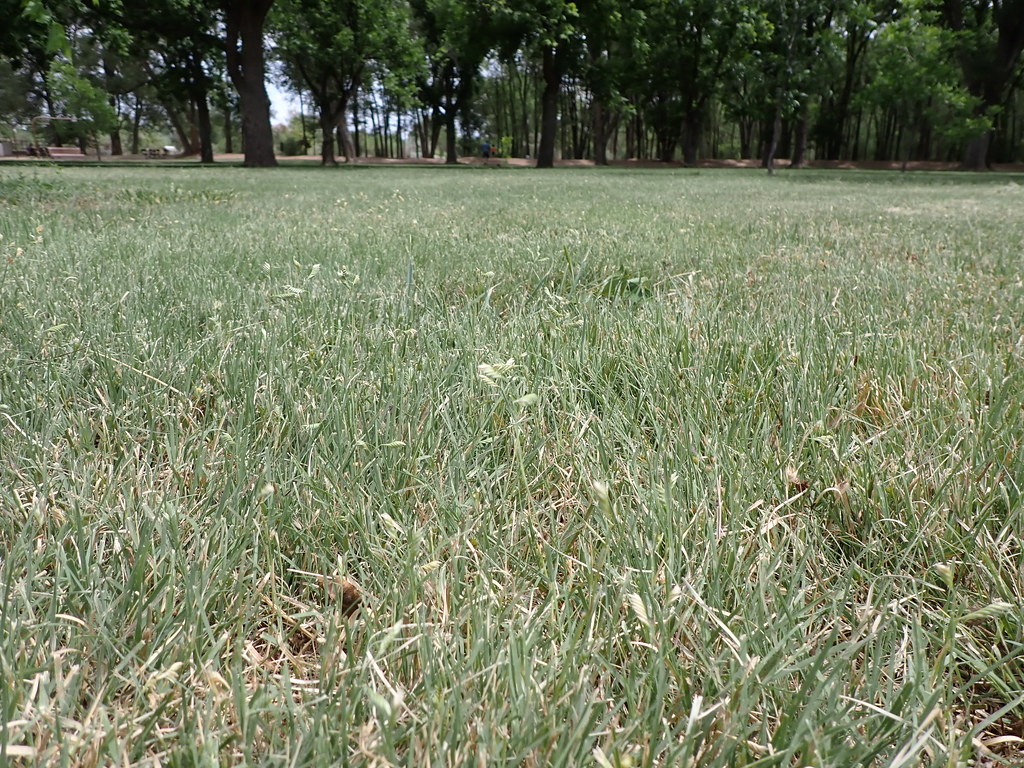
St. Augustine wants humidity and tolerates shade; American buffalograss wants a dry climate and full sun. Our St. Augustine vs Bermuda vs Zoysia vs Fescue vs Buffalo comparison puts the two side by side.
Where American buffalograss works, and where it fails
The USDA NRCS plant guide puts its native range from western Minnesota to Montana, south to Arizona and east to Louisiana, thriving on medium to fine-textured (loam and clay) soils where annual rainfall is 15 to 30 inches (380 to 760 mm). Once established it can survive with no irrigation. It fails in a predictable set of situations:
| Situation | What happens | Source |
|---|---|---|
| Humid regions or lawns irrigated like bluegrass | “When planted in the higher rainfall areas of eastern Texas or with excess irrigation, other grass species and weeds easily invade buffalograss.” | Texas A&M AgriLife, Turfgrass Selection for Texas |
| Shade (more than half a day of heavy shade) | Thins and goes patchy, “closely followed by extreme weediness”. Needs 6 to 8 hours of sun. | Colorado State University |
| Heavy traffic (dogs, children, play areas, small busy lawns) | Takes light use only; under constant traffic it “will disappear”. | Colorado State University |
| Sandy or poorly drained soils | Needs irrigation on sand; thins on waterlogged ground. | CSU Extension, K-State |
| Elevation above about 6,500 ft (2,000 m), or saline soils above 6 to 8 mmhos/cm | Poor survival. | CSU Extension |
In short: a lawn for the semi-arid interior of North America, for people who will accept a tan lawn from first hard frost until mid-May and who will resist watering it like bluegrass. Over-watering is the most common reason a buffalograss lawn turns into a weed patch.
Seed, plugs or sod?
Buffalograss plants are usually either male or female. Seeded cultivars are mixed populations; females produce the seed burrs, males send up the small flag-like flower stalks in early summer. Vegetative cultivars are, in the words of the Nebraska Extension NebGuide G1946, “merely a solid stand of female plants”, which is why they look denser and darker and why they can only be sold as plugs or sod.
| Seed | Plugs | Sod | |
|---|---|---|---|
| Cultivars | Cody, Bowie, Bison, Topgun, Sundancer, Plains (Texoka, Sharp’s Improved are older and coarser) | Legacy, Prestige, Turffalo (cold-hardy); Prairie, 609, UC Verde (southern and western sites only) | Same as plugs |
| Rate | 2 to 3 lb treated burrs per 1,000 sq ft (Nebraska: 1 to 2 lb; USDA: 3 to 5 lb) | 2 inch plugs on 12 inch centres (18 inch to save money; never over 24 inch) | Solid cover |
| Time to cover | Full stand by mid-September from an early-June sowing; fully knitted in year two | 6 to 12 weeks | Instant cover |
| Cost | Lowest | Moderate | Highest, several times seed |
| Weed pressure in year one | Highest; herbicide at seeding advised | Moderate; bare soil between plugs needs weeding | Lowest |
| Planting window | Late May to July (cut-off 1 to 15 August depending on region) | May to July; at least 6 weeks before first fall frost | May to August |
According to Nebraska Extension in Lancaster County, Cody (1995) is widely adapted with good density and drought tolerance, Bowie (2001) adds better colour and quicker establishment, and Sundancer (2014) is darker green with faster establishment and denser canopy. Of the plug types, Legacy is darkest and densest; Prestige greens up earlier and holds colour longer in autumn. In the northern Plains and Colorado, use Legacy or Prestige plugs; UC Verde and 609 are not reliably winter-hardy there.
Buy treated seed, and understand what a “burr” is
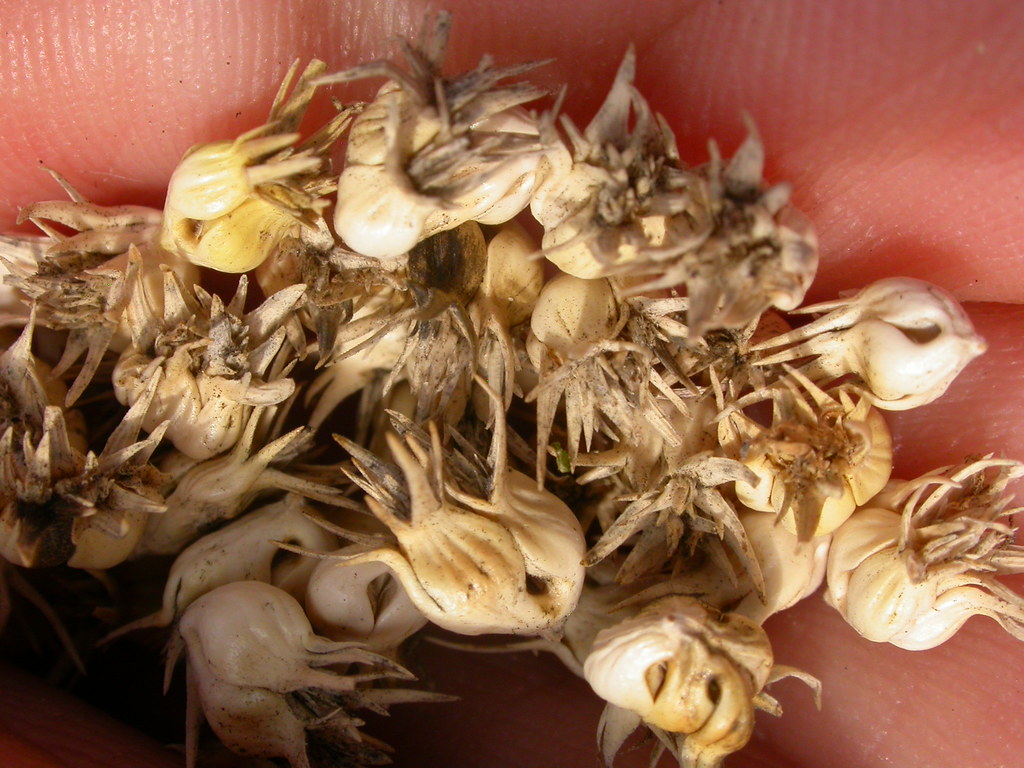
Buffalograss seed is sold as burrs, each holding one or more true seeds (caryopses). Untreated burrs are strongly dormant; “treated” or “primed” seed has been soaked in potassium nitrate and chilled to break that dormancy. K-State Riley County Extension notes that home-soaked burrs must be planted within 3 days. Buy treated seed from a supplier who states the PLS (pure live seed) percentage. The USDA guide gives about 50,000 burrs per pound, with typical lots at 90% seed fill and 45% germination, which is why rates are quoted in PLS rather than bulk weight; our note on why grass seed costs so much explains what that figure is buying you.
When to plant: soil temperature, not the calendar
Nebraska Extension is blunt: seeds “will not germinate until soil temperatures reach 60°F” (16°C), which in eastern Nebraska is usually after 15 May and in the west after 31 May. Oklahoma State University Extension gives the warm-season seeding window as a daily mean upper-soil temperature of 68 to 95°F (20 to 35°C) and lists May to July for buffalograss. Colorado State warns against seeding between 1 August and 1 October; Nebraska’s cut-off is 15 August in the east and 1 August in the west of the state. Check with a soil thermometer at 1 inch on three consecutive mornings. June is the sweet spot almost everywhere: soil is warm, rain is still likely, and the plants get three full months before frost.
Step by step: seeding a buffalograss lawn
- Kill the old lawn first. Seedlings cannot compete with existing bluegrass, fescue or bermuda. The Colorado State University lawn conversion guide calls for two to three glyphosate applications 10 to 21 days apart once the old lawn is fully green and temperatures are above 65°F (18°C). Mow the dead material short; do not till.
- Loosen the surface. Core-aerate on 1 to 2 inch centres, or rake bare soil, so burrs reach mineral soil. Our guide to preparing soil for grass seed applies, minus the compost; buffalograss prefers lean clay and loam.
- Starter fertiliser. Nebraska recommends 1 lb each of nitrogen and phosphorus per 1,000 sq ft (0.5 kg per 100 m²) worked in at seeding.
- Sow. 2 to 3 lb of treated burrs per 1,000 sq ft in two passes at right angles. On dead-lawn conversions use a slit seeder or drill so the burrs get through the thatch.
- Cover, but barely. Rake in to ¼ to ½ inch (0.6 to 1.3 cm); K-State’s rule is ½ inch or less. Roll for seed-to-soil contact.
- Apply a seedling-safe herbicide the same day. See below; this is the step most people skip and most regret.
Watering schedule for the first five weeks
Keep the top 1 to 2 inches damp until emergence, then back off quickly. The University of Nebraska buffalograss turf guide lays out the pattern: water every day the first week, every other day the second, every third day the third, and once a week in weeks four and five, applying ¼ to ½ inch (6 to 13 mm) each time. For an automatic system the CSU conversion guide translates this as three or four cycles a day of 3 to 4 minutes until germination (5 to 10 days on warm soil), then three cycles a day for two weeks, then once a day at midday for two weeks. Emergence takes 7 to 21 days depending on soil temperature.
From week six, make the plants hunt for water. By the end of the first summer a stand needs only 1 to 2 inches of rain or irrigation every two to four weeks to stay green, and none to stay alive. Frequent light watering after establishment is what invites crabgrass and bluegrass back in; the symptoms in our overwatered lawn guide show up early in buffalograss.
First-season weed control: what is safe on buffalograss seedlings
In University of Nebraska trials on Bowie and Sundancer, reported in Crop, Forage & Turfgrass Management (Li et al., 2015), untreated seedbeds had less than 15% buffalograss cover and more than 53% weed cover six weeks after emergence, while most treated plots had more than 80% buffalograss and under 20% weeds. Mesotrione, sulfentrazone, quinclorac, carfentrazone, simazine and amicarbazone (alone or in the tested combinations) were all safe applied at seeding or at emergence; waiting two weeks after emergence roughly doubled weed cover. Prodiamine alone and imazapic applied at seeding caused severe injury, leaving under 10% cover.
In practice:
- Day of seeding: a product containing mesotrione or quinclorac whose label lists buffalograss at seeding, at label rate. Both control crabgrass and many broadleaves in the seedbed; sulfentrazone adds sedge control where nutsedge is a known problem.
- Weeks 2 to 6: mow anything taller than the seedlings at 2 to 3 inches (5 to 7.5 cm) rather than spraying. Hand-pull large broadleaves.
- Do not apply three-way broadleaf killers (2,4-D, dicamba, MCPP) until the new lawn has been mowed three times, per K-State. Save prodiamine, pendimethalin and dithiopyr preventers for the second spring.
- Never use MSMA, fenoxaprop, sethoxydim or triclopyr mixes on buffalograss at any age; the CSU GardenNotes herbicide list flags all of them as injurious.
Crabgrass is the main seedbed invader; knowing what crabgrass looks like at the two-leaf stage helps you judge whether the seedbed spray worked.
Fertiliser: less than you think
After the starter application, buffalograss needs very little. CSU Extension gives the maximum useful rate as 2 lb of nitrogen per 1,000 sq ft per season, applied as ½ to 1 lb in late May to mid-June and again in late July. Nebraska says annual nitrogen “should not exceed 2 lb per 1,000 square feet”, applied in the second half of June; on unirrigated lawns 1 lb, or nothing, is enough. More nitrogen does not make buffalograss greener; it makes bluegrass, bermuda and weeds happier. Skip 10-10-10 unless a soil test asks for phosphorus or potassium, and do not feed before mid-May or after August, when the nitrogen only benefits cool-season invaders.
Mowing height and dormancy colour
Buffalograss tops out at 4 to 8 inches (10 to 20 cm) if never cut, so mowing is optional. For a tidy lawn, K-State suggests 2.5 inches every three to four weeks in late spring and early autumn, or 3 to 4 inches if you mainly want to remove the male flower stalks. CSU suggests 2 inches on irrigated lawns. Never remove more than a third of the leaf in one cut.
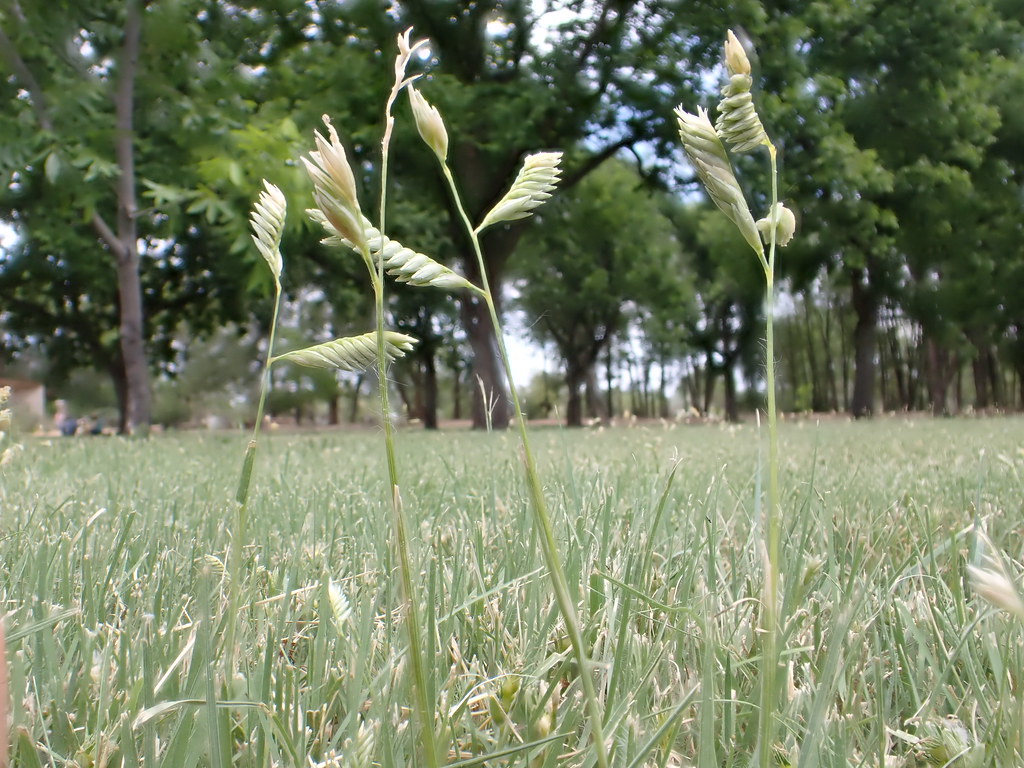
Set colour expectations before you plant. In eastern Colorado buffalograss is green only from mid-May through September, against March to November for bluegrass; it turns straw-tan at the first hard frost and stays tan for six to seven months. That is dormancy, not death, and the stand needs no water in that state. Overseeding it with a cool-season grass for winter colour invites exactly the competition that thins it out.
Sources
- Colorado State University Extension – Buffalograss Lawns
- Colorado State University Extension – CMG GardenNotes #565: Buffalograss Lawns
- Colorado State University PlantTalk – Buffalograss Lawn Establishment Using Seed or Plugs
- Colorado State University – 3 things to know before growing a buffalograss lawn
- Nebraska Extension – NebGuide G1946: Buffalograss Lawns
- Nebraska Extension, Lancaster County – Buffalograss Selection and Establishment
- University of Nebraska – EC92-1245 Buffalograss: A Warm-Season Native Grass for Turf
- Li et al. 2015, Crop, Forage & Turfgrass Management – Herbicides Applied at or Shortly after Seeding Are Effective for Weed Control in Seedling Buffalograss
- Kansas State University, Riley County Extension – Buffalograss Lawn
- Texas A&M AgriLife Extension – Turfgrass Selection for Texas
- Oklahoma State University Extension – Establishing a Lawn in Oklahoma
- USDA NRCS – Plant Guide: Buffalograss (Bouteloua dactyloides)
- North Carolina State Extension – Stenotaphrum secundatum (St. Augustinegrass)
- Encyclopaedia Britannica – Stenotaphrum