
Short answer: to prepare soil for grass seed, kill or strip the existing vegetation, get a soil test and correct pH only if it falls outside about 6.0 to 7.0, rough-grade so the ground falls 1 to 2 percent away from the house, spread 1 to 2 inches (2.5 to 5 cm) of compost and till it into the top 4 to 6 inches (10 to 15 cm), work in a starter fertilizer at roughly 1 to 1.5 lb of P2O5 per 1,000 sq ft, firm the bed with a light roller, rake it level, and sow at the rate for your species (2 lb per 1,000 sq ft for Kentucky bluegrass, 6 to 8 lb for tall fescue, 1 to 2 lb for bermudagrass). Rake the seed in no deeper than 1/4 inch (6 mm), cover with one bale of clean straw per 1,000 sq ft, and water lightly two to four times a day until the seedlings are up. Do it in late summer for cool-season grasses and late spring for warm-season grasses.
Timing comes first
Preparation takes one to three weekends and the seed must go down inside a narrow window, so count backwards from the sowing date. For cool-season grasses (Kentucky bluegrass, tall fescue, perennial ryegrass, fine fescues), late summer to early autumn is best. The University of Missouri Extension gives August 25 to October 10 for Missouri, and Rutgers gives August 15 to October 10 for New Jersey, with early spring as the second choice. Spring sowings need soil above about 55°F (13°C) before germination starts, according to Purdue Extension.
Warm-season grasses (bermudagrass, zoysiagrass, centipedegrass, bahiagrass, buffalograss) want the opposite: sow after the last frost once the soil is warm. Clemson suggests May 1 to 14 for South Carolina, Maryland says mid-May into June, and NC State Extension allows March 1 to July 1.
| Grass group | Best sowing window | Second choice | Avoid |
|---|---|---|---|
| Cool-season (bluegrass, fescues, ryegrass) | Mid-August to early October (earlier in the north) | Early spring, soil above 55°F / 13°C | Late May to mid-August |
| Warm-season (bermuda, zoysia, centipede, bahia) | Late spring to early summer, after frost risk | Mid-summer if you can irrigate daily | Late summer and autumn |
Step 1: Kill or remove what is growing there
The old lawn, weeds and their roots have to go before you till.
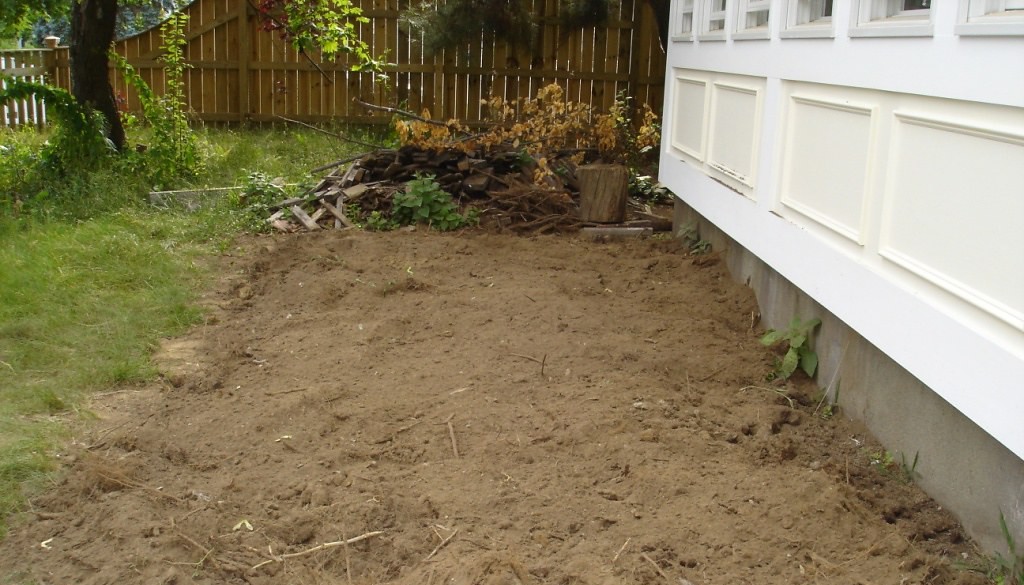
- Non-selective herbicide. Spray the whole area with a glyphosate product while the weeds are actively growing, then wait at least seven days before tilling or seeding so the herbicide has moved into the roots, as Ask Extension advises. Perennial spreaders such as bermudagrass or nutsedge usually need more than one pass: UF/IFAS recommends a second application 14 to 21 days after the first, and a third when removing bermudagrass.
- Strip the sod. A rented sod cutter set to 1 to 2 inches (2.5 to 5 cm) lifts turf and shallow roots in one pass but removes topsoil with it. Our guide on removing old sod and reseeding covers this route.
If the area is mostly lawn with scattered weeds, overseeding may be enough; read whether to kill weeds before overseeding first.
Step 2: Test the soil before you buy anything
A basic lab test tells you pH, phosphorus and potassium levels, and organic matter, which decide the rest of the plan. Most turfgrasses grow best at a pH of roughly 6.0 to 7.0. The University of Maryland Extension gives 6.0 to 6.8 as optimal (5.8 to 6.5 for tall fescue) and only recommends lime when pH is below 5.5 or sulfur when it is above 7.0; NC State puts the preferred range at 6.5 to 7.0, while centipedegrass prefers the acid end.
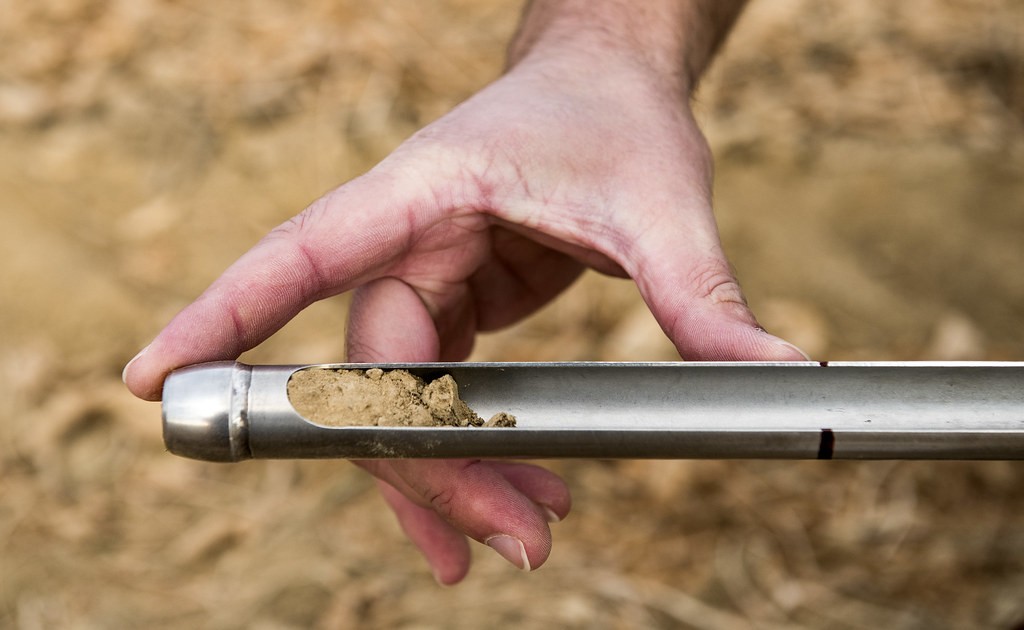
Apply lime or sulfur only at the rate the report gives, and work it into the bed at this stage rather than spreading it on top later. Sulfur is applied at no more than 20 lb per 1,000 sq ft in one go, according to Clemson Extension. Unneeded lime pushes pH too high and locks up iron, and a home pH meter is not accurate enough to set a lime rate. Take 10 to 15 cores to 4 inches (10 cm) deep, mix them, and allow one to three weeks for results. Our guide to lime for lawns explains how to read that recommendation and when to spread.
Step 3: Rough grade for drainage
Before adding anything, shape the subsoil so water runs away from foundations, sheds and patios. University of Illinois Extension calls for a final slope of 1 to 2 percent away from buildings, a 1 to 2 ft drop over 100 ft of run; Maryland puts the same figure as 1¼ to 2½ inches of fall every 10 ft (3 to 6 cm per 3 m). Fill low spots, cut down humps that would scalp under the mower, and dig out buried construction debris now.
If the subsoil is so compacted that a spade will not go in, or it is a heavy clay that stays wet for days after rain, ordinary tilling will not be enough. Our separate article on preparing hard, compacted soil for grass seed slots in at this point in the sequence.
Step 4: Add topsoil and compost, then till
Grass roots need at least 4 to 6 inches (10 to 15 cm) of decent, loose soil, and Illinois sets six inches or more of well-prepared soil as the goal. If the site does not have that, bring in screened topsoil, but ask for a sample first: purchased soil is often no better than what you have and frequently carries weed seed.
Organic matter is what turns compacted clay or hungry sand into a seedbed. The rates extension services agree on:
- Compost: 1 to 2 inches (2.5 to 5 cm) spread over the surface, which Maryland calculates as 3 to 6 cubic yards per 1,000 sq ft (roughly 2.3 to 4.6 m³ per 93 m²). NC State gives 1 to 2 cubic yards per 1,000 sq ft. Use finished compost, not fresh manure or raw wood chips.
- Peat: 1 to 2 cubic yards per 1,000 sq ft, per Rutgers, if compost is not available. It adds no nutrients.
- Sand: do not add sand to clay in the amounts a homeowner can manage; small amounts make clay harder.
Till the amendments, plus lime and the starter fertilizer from the next step, into the top 4 to 6 inches (10 to 15 cm); Illinois and NC State go to 6 to 8 inches on poor soil. On clay, Nebraska Extension suggests tilling in one inch of compost, then a second inch in the opposite direction, so it is mixed through the profile rather than left as a layer. A layer of compost sitting on untouched clay creates a perched water table: roots stay in the fluffy layer and the lawn dries out in the first hot week. Work the soil only when it crumbles in your hand; tilling wet clay recreates the compaction you were trying to fix.
Step 5: Starter fertilizer, at the rate the test allows
Seedlings need phosphorus close to their first roots, which is why starter fertilizers are heavy in the middle number. Purdue’s rate is 1.5 lb of P2O5 per 1,000 sq ft worked into the seedbed; Nebraska gives 1.0 to 1.5 lb, with the lower figure for soils already high in phosphorus. In product terms, Missouri’s example is 5 lb of a 20-27-5 starter per 1,000 sq ft, or 10 lb of 10-10-10 where fertility is unknown. Several states (Maryland, New Jersey, Minnesota and others) restrict lawn phosphorus unless a soil test shows a need or a lawn is being newly established, and Illinois notes that starter fertilizer is only necessary where the test shows a phosphorus deficiency. Too much soluble nitrogen at sowing feeds weeds and burns seedlings.
Step 6: Firm, then rake the final grade
Freshly tilled soil is too fluffy to seed into: it settles unevenly after the first rain and seed raked into it ends up too deep. Go over the bed with a lawn roller one-third full of water, or in a small area walk it in heel-to-toe, until a footprint is no more than about 1/2 inch (1 cm) deep. Then rake smooth with a landscape rake, removing stones larger than about 1 inch (2.5 cm), roots and clods, and check the slope from Step 3 has survived.
Step 7: Sow at the right rate for the species
The rates below are from the extension sources linked in this article, for new lawns on bare soil; overseeding rates are about half. Weigh the seed out per 1,000 sq ft (93 m²), split it in two, and spread half in one direction and half at right angles.
| Species | Seeding rate, new lawn (lb per 1,000 sq ft) | Approx. g per m² | Typical germination |
|---|---|---|---|
| Kentucky bluegrass | 1.5 to 3 | 7 to 15 | 18 to 28 days |
| Tall fescue (turf type) | 6 to 8 (Rutgers 4 to 6, Purdue up to 9) | 30 to 40 | 14 to 21 days |
| Perennial ryegrass | 4 to 7 | 20 to 35 | 5 to 10 days |
| Fine fescues | 4 to 6 | 20 to 30 | 10 to 21 days |
| Bluegrass + ryegrass mix (80–90% KBG) | 3 to 4 | 15 to 20 | Ryegrass first, bluegrass by week 4 |
| Bermudagrass (hulled) | 1 to 2 (up to 4 in Florida) | 5 to 10 | 7 to 14 days in warm soil |
| Zoysiagrass | 1 to 2 | 5 to 10 | 14 to 21 days |
| Centipedegrass | 0.25 to 1 | 1 to 5 | 14 to 28 days |
| Bahiagrass | 5 to 10 | 25 to 50 | 14 to 28 days |
| Buffalograss (treated burs) | 3 | 15 | 14 to 21 days |
Buy seed with a purity of 90 percent or higher and germination of 85 percent or higher, as printed on the label; Clemson gives those as the minimum worth paying for. If you are unsure which species suits your climate, our comparison of the main lawn grasses walks through it. Doubling the rate gives crowded, weak seedlings that thin out in the first summer, not a thicker lawn; see too much grass seed.
Step 8: Seed-to-soil contact, then mulch
Seed on the surface dries out and feeds the birds; seed buried too deep never reaches light. Lightly rake so the seed is covered by 1/8 to 1/4 inch (3 to 6 mm) of soil, the depth Missouri gives, with tiny seed such as centipedegrass and bluegrass at the shallow end. Roll once more with an empty roller to press the seed against the soil; Rutgers warns not to overdo it. If birds still raid the bed, bird netting for grass seed explains when netting is worth it and how to use it without harming wildlife.
Straw mulch holds moisture and stops seed washing off in a downpour. The rate is consistent across sources: one bale of clean, weed-free straw (60 to 80 lb) per 1,000 sq ft, so that about 50 percent of the soil is still visible through it; Rutgers allows up to two bales for cool-season seedings. Use straw, not hay, which is full of weed seed; at that rate it can be left to rot in place. On slopes, or where a storm is forecast, an erosion blanket pinned over the straw is worth the cost; see our notes on protecting new grass seed from heavy rain.
Step 9: Watering until the lawn is up
The seedbed must not dry out from sowing until the seedlings have their second or third leaf, which means light, frequent watering rather than a deep soak.
- Germination phase (first 2 to 3 weeks): water two to four times a day, just enough to keep the top 1/2 to 1 inch (1 to 2.5 cm) moist, about 1/4 inch (6 mm) per session. Missouri gives one to four times daily, Purdue and Nebraska two to four, NC State two or three times a day for 7 to 21 days.
- Seedlings 1 to 2 inches tall: once a day, a little longer, so moisture reaches 2 inches (5 cm).
- After the first or second mowing: two or three deep waterings a week, then the usual 1 inch (2.5 cm) a week for an established lawn.
Mow for the first time when the grass reaches about 3 inches (7.5 cm), cutting to 2 to 2.5 inches with a sharp blade and only when the soil will not rut. Four to six weeks after germination, apply 0.75 to 1 lb of nitrogen per 1,000 sq ft to fill the stand in, and hold off on any broadleaf herbicide until the lawn has been mowed three or four times.
Mistakes that undo the whole job
- Skipping the kill step. Tilling live bermudagrass, quackgrass or nutsedge chops rhizomes and tubers into hundreds of new plants.
- A thin skin of bagged soil over hardpan. It grows grass for one season and fails in the first drought. Till the amendment in, or fix the compaction properly.
- Seeding into loose, unfirmed soil. Seed goes too deep, the surface settles into hollows, and the first mowing scalps the humps.
- Letting the bed dry out once. Germinating seed has no reserves; a single missed day in warm weather can cost most of the stand.
What to expect and when
Sown in the right window on a bed prepared like this, perennial ryegrass shows green in about a week, tall fescue in two to three, Kentucky bluegrass in three to four, and warm-season grasses in one to four weeks depending on species. A cool-season lawn sown in late August is usually mowable by early October and looks like a lawn by spring. Bare patches at three to four weeks are almost always down to uneven watering or seed depth rather than the soil; rake, reseed and mulch them at once while the weather is still in the window.
Related guides: How to Grow Buffalo Grass From Seed: Planting and Establishment Guide · Can You Lay Turf Over Existing Grass? What Happens and How to Do It Right
Sources
- University of Illinois Extension – Preparing Lawn Soil and Site
- University of Maryland Extension – Starting a New Lawn
- University of Missouri Extension – Cool-Season Grasses: Lawn Establishment and Renovation (G6700)
- Rutgers NJAES – Seeding Your Lawn (FS584)
- Clemson Cooperative Extension HGIC – Lawn Establishment
- Nebraska Extension – Establishing Lawns From Seed
- NC State Extension Gardener Handbook – Chapter 9, Lawns
- Purdue Extension – Seeding a Turf Area in the Spring (AY-20-W)
- UF/IFAS Extension – Establishing Your Florida Lawn (LH013)
- Ask Extension – Seeding Grass after Glyphosate Application