
The first hard frost has come and gone. The crabgrass along the driveway has turned purple-brown, the dandelions have slumped flat, and the lawn suddenly looks tidier than it has all summer. So you start to wonder: do weeds die in winter, and can you simply let the cold finish the job for you?
Short answer: some weeds die in winter and some do not, and which group a weed belongs to decides what to do in fall. Summer annuals such as crabgrass, spurge and purslane are killed by the first frost, but each plant has already dropped thousands of seeds that wait for spring. Winter annuals such as henbit, chickweed, hairy bittercress and annual bluegrass do the opposite: they germinate in September and October, stay green all winter and set seed in early spring. Perennials such as dandelion, plantain, bindweed, quackgrass and Canada thistle lose their tops but keep living roots that regrow as soon as the soil warms. Frost clears exactly one of the three groups, and fall is the best time of year to deal with the other two.
Here’s the good news: once you know which group each weed belongs to, you’ll know what to do this fall, what to leave alone, and what to save for spring.
The three life cycles and what winter does to each
Before you plan anything, it helps to know what kind of weed you’re looking at. Weed scientists sort weeds by how long they live, and that’s the sorting that matters for winter. The UMass Extension guide to weed life cycles describes the groups below.
Summer annuals: dead by the first frost, but the seed is not
Summer annuals come up once soil warms in spring and are killed by frost in fall. Crabgrass, prostrate knotweed, spotted spurge, purslane and foxtail are the common lawn examples.
So if your crabgrass is turning purple-brown in October, don’t take the credit just yet. That’s the plant finishing its life, not your weed control working.
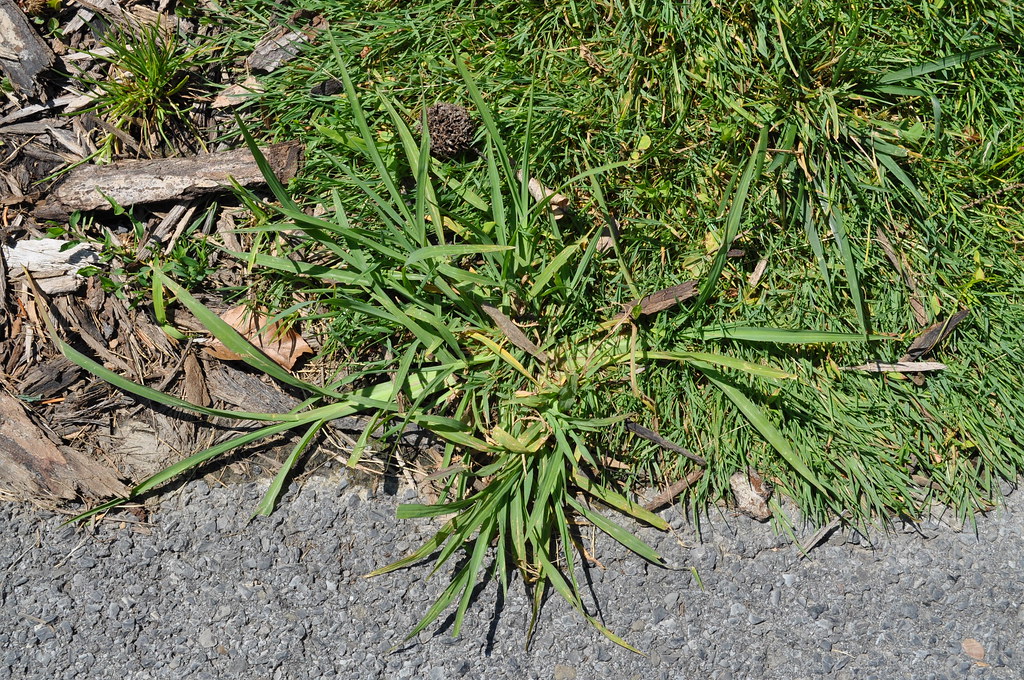
The catch is the seed. According to the UMass Extension crabgrass fact sheet, a single crabgrass plant can produce up to 150,000 seeds, and it keeps producing seed heads right up until frost. Those seeds germinate the following spring once soil at the surface holds 55°F (13°C) for four or five consecutive days.
In other words, a summer annual that “died in winter” is just waiting in the seed bank. Your only fall job for this group is to stop more seed: mow seed heads off and keep bare soil covered. The rest is spring work, covered in our guide to identifying and preventing crabgrass.
Winter annuals: they thrive in the cold you thought would kill them
This is the group that catches people out. Winter annuals germinate in late summer and early fall, grow through winter as low rosettes or mats, then flower, set seed and die the following late spring or early summer. Common chickweed, henbit, purple deadnettle, hairy bittercress, shepherd’s purse, Persian speedwell and annual bluegrass (Poa annua) all follow this pattern.
They’re the weeds you notice in February and assume came out of nowhere. They didn’t. They’ve been growing since October, and by the time henbit flowers in April, it’s already setting seed.
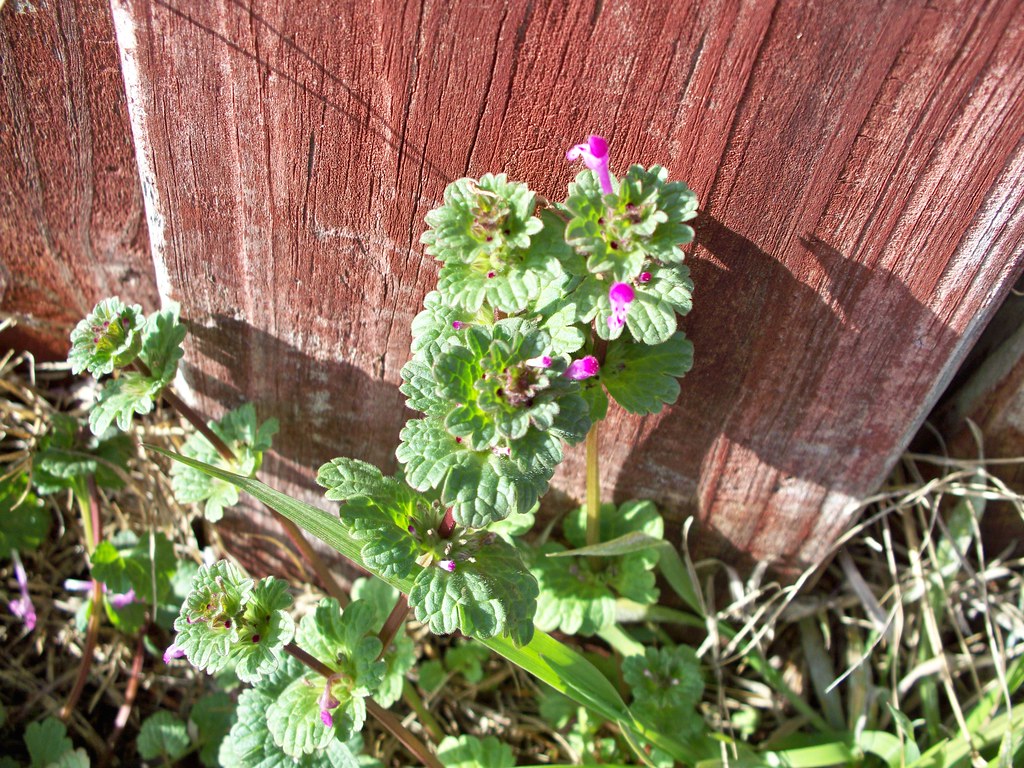
Why doesn’t the cold finish them off? A hard freeze may burn their leaf tips, but the crowns sit at soil level under the turf and any snow, and growth resumes in every mild spell.
That’s also why timing matters so much with this group. Kansas State Extension notes that henbit and chickweed are “much easier” to control in fall than in spring, when the plants are large and flowering and herbicides are “not very effective”, according to its Henbit and Chickweed fact sheet.
Biennials: a rosette this winter, a seed stalk next summer
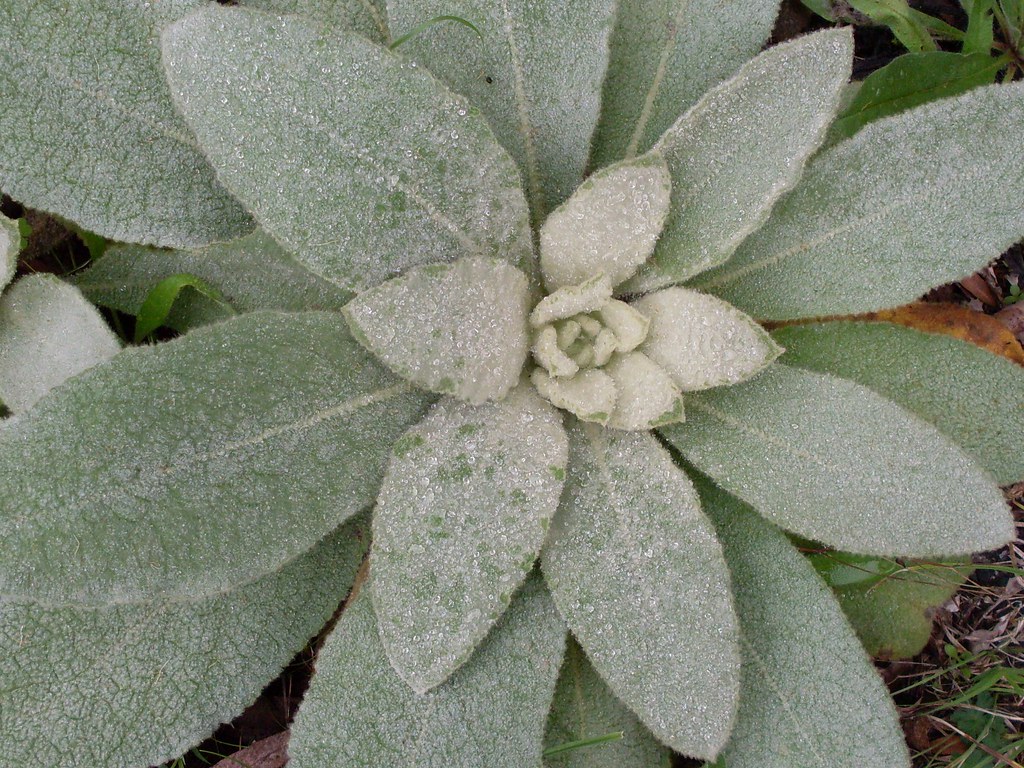
Biennials live two years: a flat rosette the first year, which is what overwinters, then a flowering stalk, seed and death the second. Burdock, common mullein, Queen Anne’s lace and bull thistle are typical.
Honestly, this is the easiest win on the list. The rosette is easy to dig or spray in fall; once it bolts the following June, it’s a different story.
Perennials: tops die, the underground parts do not
Perennials are the ones that fool you. They live for many years and, in the UMass wording, have “underground parts that store food over the winter”. They come in two kinds:
- Simple perennials like dandelion, plantain and curly dock rely on a taproot.
- Spreading perennials like ground ivy, white clover, Canada thistle, quackgrass, field bindweed and yellow nutsedge also spread by rhizomes, stolons or tubers.
After frost the leaves collapse and the lawn looks clean. But a dandelion taproot is most commonly 6 to 18 inches (15 to 45 cm) deep, and pieces as short as 1 inch (2.5 cm) can regenerate a new plant, according to the UC IPM dandelion page.
Canada thistle is in another league. Colorado State University Extension reports vertical roots 6 to 15 feet (2 to 4.5 m) deep, horizontal roots spreading 15 feet or more, and root fragments only a quarter inch long that carry enough stored energy to start a new plant. No temperate winter reaches roots like that. Frost only switches these plants off until spring.
Common weeds: life cycle, winter status and best control window
Want the whole picture at a glance? Find your weed in the left column, then read across for what winter does to it and when to act.
| Weed | Life cycle | What winter does to it | Best control window |
|---|---|---|---|
| Crabgrass | Summer annual | Plant killed by first frost; up to 150,000 seeds per plant left in soil | Spring pre-emergent when soil reaches 55°F (13°C) for 4–5 days |
| Spotted spurge, purslane, knotweed, foxtail | Summer annual | Killed by frost; seed persists | Spring pre-emergent; stop seed set in summer |
| Henbit, purple deadnettle | Winter annual | Germinates Sept–Oct, green all winter, flowers March–April | Pre-emergent early to mid September; post-emergent late Oct to early Nov |
| Common chickweed | Winter annual (occasionally short-lived perennial) | Forms spreading mats, grows in every mild spell | Same as henbit; hand-pull mats before they flower |
| Annual bluegrass (Poa annua) | Winter annual | Germinates once soil drops below about 70°F (21°C); seeds heavily in spring | Pre-emergent in late summer or early fall before soil cools to 70°F |
| Hairy bittercress | Winter annual | Small rosettes overwinter; explosive seed pods by late winter | Fall pre-emergent in beds; pull before pods form |
| Burdock, mullein, bull thistle | Biennial | First-year rosette survives winter; bolts next summer | Dig or spot-spray rosettes in fall |
| Dandelion, plantains | Simple perennial (taproot) | Leaves die back; taproot 6–18 in (15–45 cm) survives | Broadleaf herbicide mid September to early November |
| Ground ivy, white clover, violets | Spreading perennial | Creeping stems and crowns survive under the turf | Fall broadleaf herbicide, usually two applications |
| Canada thistle, field bindweed, quackgrass | Spreading perennial (deep roots/rhizomes) | Tops die; roots and rhizomes survive any freeze | Systemic herbicide on green, actively growing leaves in early fall |
Why fall is the best time to spray perennial broadleaf weeds
If you only treat perennial weeds once a year, make it now. Here’s the reason. In early autumn, perennials move the sugars made in their leaves down to the roots for next spring, and a systemic herbicide absorbed by the leaves travels the same route.
Iowa State University Extension puts the ideal window at mid September to early November and explains that herbicides applied then “travel to the roots alongside these nutrients, destroying the entire plant”. Spring applications are less effective because the plant is pushing everything upward.
The savings are real, too. SDSU Extension estimates that controlling dandelion, Canada thistle, ground ivy and field bindweed in spring or summer takes two to three times the amount of herbicide needed in fall. It adds that spraying after the first hard frost can increase control, because frost strengthens the pull of reserves into the roots. The conditions that matter:
- Weeds must still be green and growing. Do not mow for two to three days before spraying, and wait three to four days after (Iowa State).
- Daytime highs above 55°F (13°C) for a few days around the application, per SDSU.
- Wind under 5 mph, no rain forecast for 24 hours, and no irrigation for 24 hours after spraying (Iowa State). Skip days when the temperature will exceed 85°F (29°C) within 24 hours.
- Use a combination product of two or three actives (2,4-D, MCPP, dicamba, triclopyr); violets and ground ivy usually need two applications about three weeks apart.
- Granular products only work on wet foliage, so apply them over morning dew.
Whatever product you choose, read and follow the label for rates, grass-type safety and temperature limits.
If you also plan to overseed, mind the label interval between spraying and seeding (commonly three to four weeks). Our guide on whether to kill weeds before overseeding works through the timing by weed type.
Fall pre-emergent timing for winter annuals
Here’s where most people end up a few weeks late. Pre-emergents stop seedlings establishing and do nothing to a weed that’s already up. So for winter annuals, the product must be down and watered in before germination starts, which is earlier than you’d probably expect.
Texas A&M AgriLife Extension recommends going by soil temperature rather than the calendar: annual bluegrass begins germinating as soil temperature falls to about 70°F (21°C), which is September or October in Texas and August to early September further north. Kansas State gives early to mid September for henbit and chickweed.
In the UK and Australia the same soil-temperature logic applies, though fewer pre-emergents are sold to home users, so mulch and hand weeding carry more of the load. Wherever you are, the sequence looks like this:
- Check soil temperature at 2 inches (5 cm) for a few mornings; apply when it falls into the low 70s °F (21–23°C).
- Choose a lawn pre-emergent containing prodiamine, dithiopyr, pendimethalin or isoxaben (the last is for broadleaf winter annuals in beds). Check the label for your grass type and for any newly seeded areas.
- Water in with 0.25 to 0.5 inch (6 to 12 mm) of irrigation so the barrier forms in the top quarter to third of an inch of soil where the seeds sit.
- Aerate or dethatch before, not after; both break the barrier.
- Spot-treat any henbit or chickweed that breaks through in late October or November while temperatures are still above 50°F (10°C).
Already mid-fall with seedlings up? Go straight to step 5; spot-treating is the only lever left this season.
One more caution. Texas A&M also warns against fall “weed and feed” combinations on warm-season lawns: the nitrogen pushes soft growth right before freezes, and nitrogen should stop four to six weeks before the first expected frost.
Mulch and cover crops for vegetable and flower beds
Leave a bed bare over winter and it’ll likely be carpeted with chickweed and bittercress by March. Two things prevent that.
The first is mulch. Clemson Cooperative Extension recommends a layer up to about 3 inches (7.5 cm) of straw, shredded leaves, pine needles or bark applied after weeding. It also notes that annuals can still germinate in the mulch itself, so rake through it in late winter. We look at what goes wrong with mulched beds in how to stop weeds and grass growing through mulch.
The second is a winter cover crop, which keeps the soil occupied so weeds have less room to claim it. According to University of Georgia Extension, slower legumes such as crimson clover and hairy vetch should be sown in August or September, while fast cereals such as winter rye or oats can go in as late as October or November. So if you’re reading this in October, a cereal cover is still on the table.
Cut or turn the cover in three to six weeks before spring planting. In cold climates oats winter-kill and leave a ready mulch; rye survives and must be cut before it seeds.
What not to do in winter
Most winter weed mistakes come from good intentions. Four to skip:
- Do not till or dig beds “to clean them up”. Clemson cautions that tilling brings buried seed to the surface and fragments perennial roots, and “each of the root pieces may develop into a complete plant”; Colorado State notes Canada thistle shoots reappear about 15 days after tillage. Hoe weeds off at the surface instead.
- Do not spray dormant weeds. Once dandelion or clover leaves have gone limp and brown after a hard freeze, there is nothing to absorb the herbicide or move it to the roots. Wait for regrowth, or better, mark the calendar for next September.
- Do not expect a fall pre-emergent to catch spring crabgrass. The barrier breaks down over a few months and is largely gone by the time soil reaches 55°F in April or May; crabgrass needs its own spring application.
- Do not work frozen or waterlogged turf to pull weeds; the compacted bare spots you leave are where next year’s weeds start.
Regional notes: where weeds never stop
Everything above assumes regular frost. If you garden somewhere mild, the rules bend. Across the southern United States, coastal California, most of coastal Australia and the milder parts of the UK, weeds don’t so much survive winter as ignore it.
UC IPM notes that dandelion “grows year-round in California except in the coldest intermountain areas” and flowers nearly year-round in temperate parts of the state. In places like that, winter is the main growing season for chickweed, bittercress, annual bluegrass and lawn burweed. Your fall tasks shift later and stretch longer:
- Pre-emergents go down in October.
- Post-emergent sprays can be made on any run of mild days through January.
- A second pre-emergent in mid winter is often needed.
There’s one small bonus. A dormant bermuda or zoysia lawn is the easiest place to spot winter weeds, because they’re the only green thing in it.
In Canada and the northern US the window is short: pre-emergents before Labor Day, broadleaf spraying finished by late October, and once the ground freezes the season is over.
So wherever you live, the takeaway is the same. Winter isn’t a weed killer; it’s a pause. The weeks before it arrives are when your year’s easiest control happens.
Sources
- UMass Extension – A Guide to Weed Life Cycles
- UMass Extension – Biology and Management of Crabgrass
- Kansas State University Extension – Henbit and Chickweed
- Texas A&M AgriLife Extension – Apply Fall Preemergence Herbicide to Avoid Spring Weeds
- Iowa State University Extension – Timing and Applying Broadleaf Lawn Herbicides
- SDSU Extension – Fall Weed Control in Lawns
- UC IPM – Dandelion
- Colorado State University Extension – Canada Thistle
- Clemson Cooperative Extension – Controlling Weeds by Cultivating and Mulching
- University of Georgia Extension – Winter Cover Crops in Raised Garden Beds