
It’s early spring, the lawn is still half-asleep, and suddenly there are tidy clumps of glossy, grass-like leaves that are greener than everything around them. You mow them. They’re back in a week. Then, in April, the clumps throw up clusters of bright white, six-pointed flowers, and you realise you’re not looking at a patch of tall grass at all. You’ve met star of Bethlehem.
Short answer: that’s almost certainly the star of Bethlehem weed (Ornithogalum umbellatum), a bulb-forming perennial that spreads by dozens of tiny bulblets. Mowing, tilling and most ordinary lawn weed killers won’t stop it. What works is a sulfentrazone or carfentrazone herbicide sprayed in early spring while the leaves are up (often repeated for two seasons), digging small clumps out bulbs and all, and a thick lawn that leaves no gaps for new bulbs.
The good news is that November is the perfect time to get ahead of it. The bulbs are about to start their winter growth, and you have a few quiet months to map the clumps, buy the right product and plan your spring spray. By the end of this guide you’ll be able to tell star of Bethlehem from wild garlic in ten seconds, pick a herbicide that actually works on it, and know exactly when to dig and when to spray.
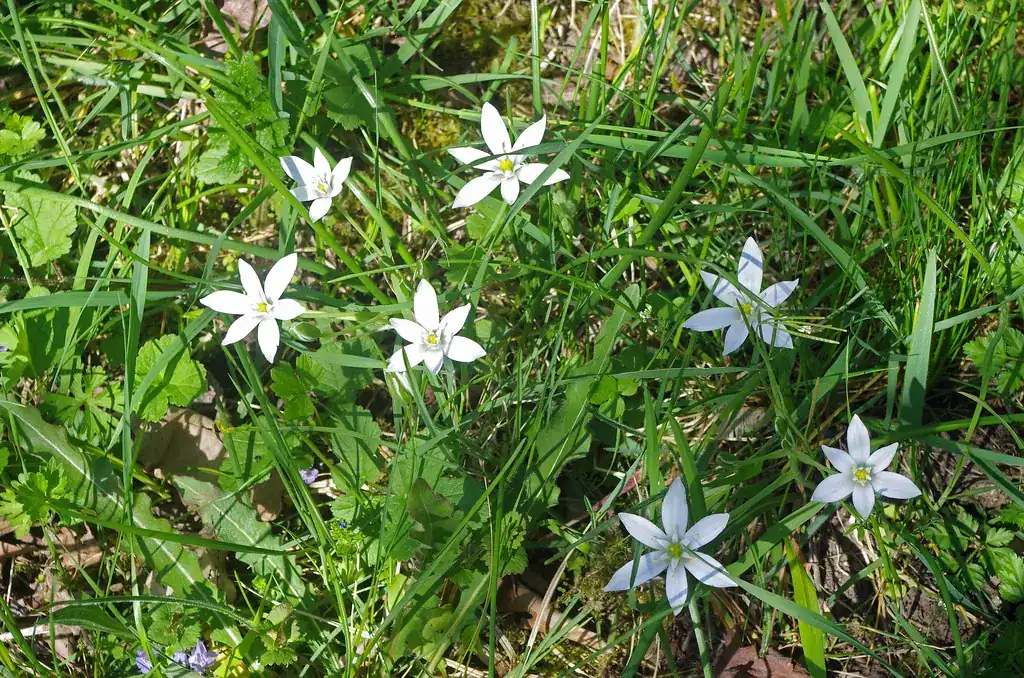
What Is the Star of Bethlehem Weed?
Star of Bethlehem is a Mediterranean bulb that was brought to North America as a garden flower and has been escaping ever since. The University of Arkansas Extension describes it as a pretty but invasive bulb that is hard to eradicate once it gets into a lawn (Klingaman, UA Extension). NC State’s Plant Toolbox notes it can form colonies dense enough to crowd out other spring plants, and that Alabama lists it as a Class C noxious weed (NC State Extension).
Its whole strategy is timing. The plant grows during the cool months when your warm-season grass is dormant or your cool-season grass is only just waking up. Then it flowers, sets a few seeds and disappears underground before summer.
The University of Tennessee calls it a cool-season perennial that emerges from bulbs in winter and early spring, flowers around April in East Tennessee, and then stays dormant through summer (UT Extension W216). That vanishing act is why so many homeowners forget about it until it’s back the next spring, a little bigger each time.
Why it keeps spreading
Almost all of the spread comes from bulbs, not seed. Each mother bulb is surrounded by small offset bulbs (bulblets), and seed production is minimal (University of Illinois). A Midwest invasive-plant factsheet adds that bulbs buried 3–4 inches deep can still sprout, and even bulb fragments moved to a new spot can regrow (Midwest Invasive Plant Fact Sheet #2).
Here’s the part most guides miss. In greenhouse work at Southern Illinois University, bulbs that were cut or “chipped” actually produced more small daughter bulbs, not fewer. The authors concluded that operations which slice bulbs, such as tillage, may increase both the spread and the density of an infestation (Johanning et al., 2012). So rototilling a patch to “start fresh” is one of the worst things you can do.
Field data show how dense it gets. In untreated plots in southern Illinois, star of Bethlehem bulbs took up 7.9% of the entire soil volume in the top 3 inches (7.6 cm) of soil (Johanning, Young & Young, 2016). That’s a lot of stored energy waiting under one lawn.
How to Identify Star of Bethlehem in Your Lawn
You can identify this weed in any season it has leaves, but you need a different checklist before and after it flowers. Start with the leaves, because they’re up for months before the flowers appear.
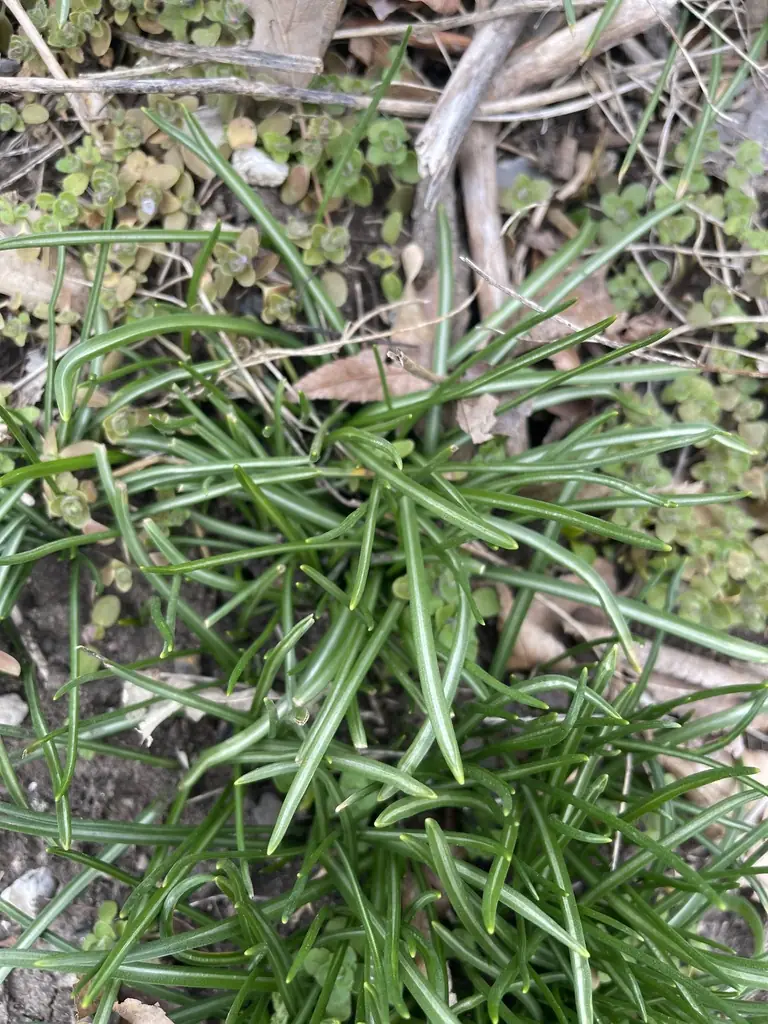
Key ID features
- Leaves: narrow, smooth, glossy, dark green, with a distinct white stripe down the middle of the upper side. Tennessee describes them as hollow with a waxy coating (UT W216); Illinois calls them succulent with a whitish, grooved midrib (Illinois).
- Growth habit: the leaves arch and flop outward from a tight clump, rather than standing straight up. Clumps from large bulbs can be 6 inches across (University of Arkansas).
- No smell: crush a leaf. Wild garlic and wild onion smell oniony; star of Bethlehem smells of nothing.
- Flowers: six white petals (tepals) with a broad green stripe on the underside, held in a loose cluster on a leafless stalk. Arkansas reports 12–30 blooms per spike up to about 10 inches tall, opening in the morning and closing in the evening (UA Extension).
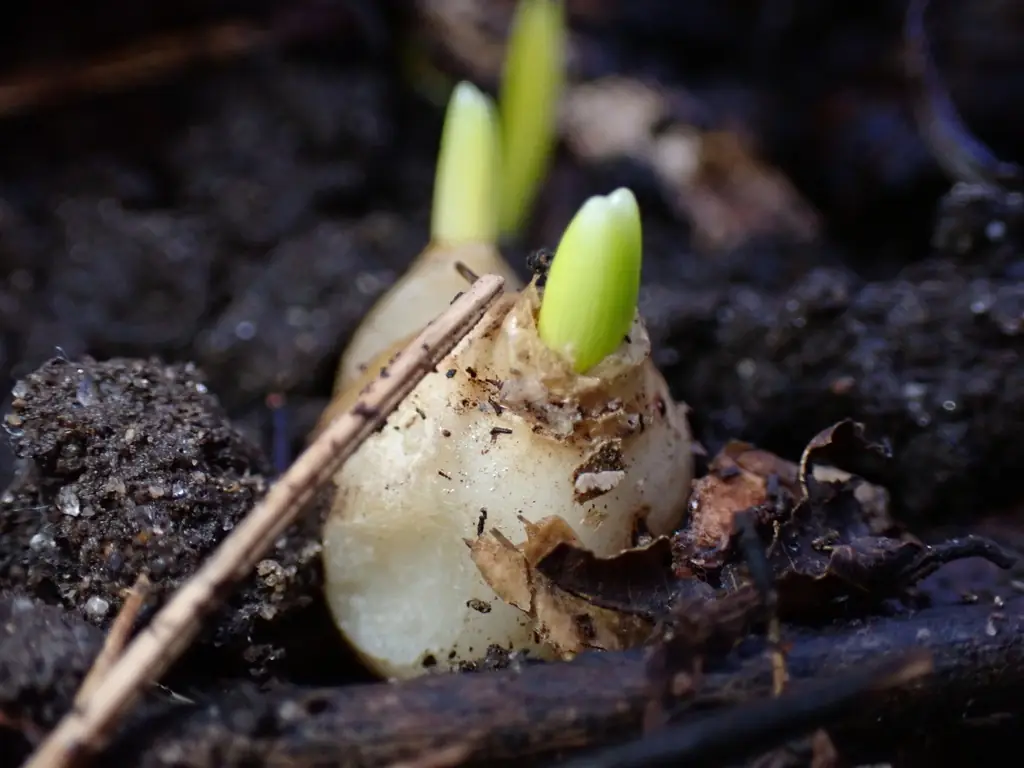
- Bulbs: white, egg-shaped, about thumb-sized, usually surrounded by smaller bulblets.
- When: leaves through late winter and spring; flowers roughly April to June depending on latitude; then the whole plant dies back.
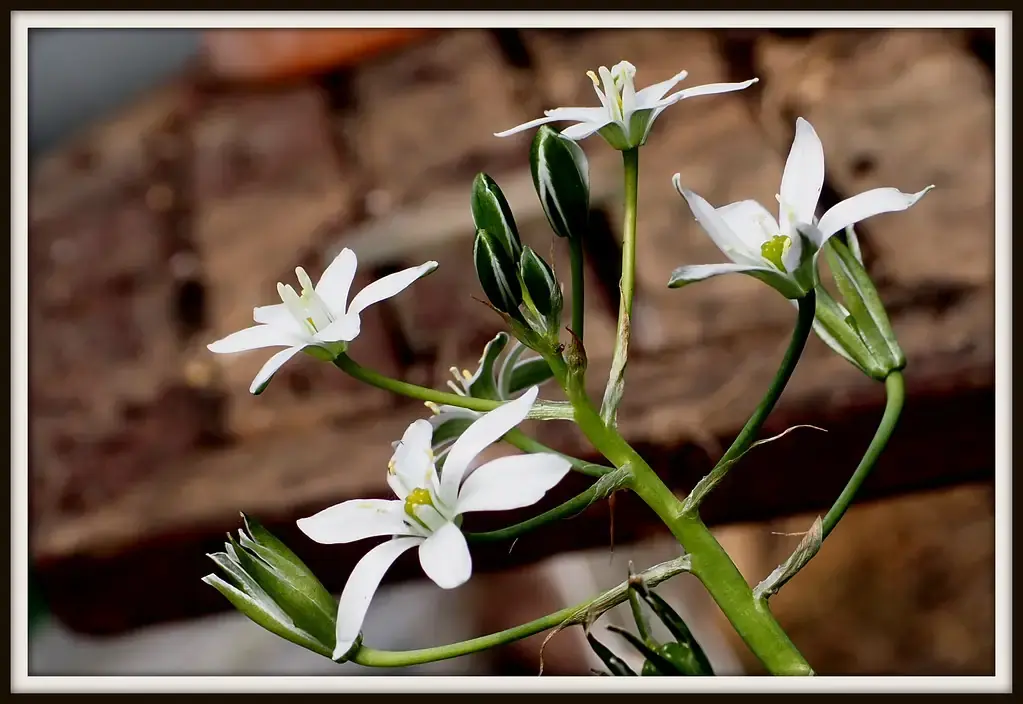
Star of Bethlehem vs look-alikes
The most common mix-up is with onion-type weeds. If you’ve read our guide on wild onion vs wild garlic, you’ll already know the smell test. Kansas State also lists crow poison (Nothoscordum bivalve) and spring beauty (Claytonia virginica) as look-alikes (K-State Turf).
| Plant | Leaves | Smell when crushed | Flowers | Control difficulty |
|---|---|---|---|---|
| Star of Bethlehem | Flat to channelled, arching, white midrib | None | White, 6 petals, green stripe underneath, Apr–Jun | High (bulbs resist most herbicides) |
| Wild garlic | Hollow, round, upright | Strong garlic/onion | Rarely flowers; aerial bulblets | Moderate |
| Wild onion | Flat-ish, solid, upright | Onion | White to pink star flowers | Moderate |
| Crow poison | Narrow, grass-like, no white midrib | None | Small white flowers, spring | Moderate |
| Spring beauty | Narrow, no white midrib | None | Fewer, pink-striped, rounded petals | Low (native, ephemeral) |
| Crocus | Similar leaf with pale stripe | None | Large cup-shaped flowers, late winter | Not a weed (planted) |
Spring beauty is a native wildflower, so it’s worth getting this one right. The Midwest factsheet notes its leaves lack the white midrib and its flowers are fewer, pinker and more rounded (MIPN factsheet). If you’re sorting out other bloomers, our guide to lawn weeds with white flowers and our roundup of weeds that look like grass can help.
Is Star of Bethlehem Poisonous to Pets and People?
Yes. Purdue’s turf program warns that the plants, including the flowers and bulbs, contain cardiotoxins and should not be eaten by people or animals (Purdue Turf). Illinois says all parts are poisonous if swallowed, and NC State adds that the bulbs and flowers can cause stomach upset and that the sap can cause dermatitis in sensitive people.
In practical terms:
- Wear gloves when you dig or pull clumps.
- Don’t leave dug bulbs lying on the lawn where a dog might chew them.
- Bag the bulbs and put them in the trash, not the compost (more on that below).
- If a pet or child eats any part of the plant, call your vet or poison control promptly rather than waiting for symptoms.
Why Most Weed Killers Fail on This Weed
If you’ve already sprayed a standard “weed and feed” or a three-way broadleaf product and watched the clumps shrug it off, you’re in good company. There are three reasons it fails so often.
- Waxy, narrow leaves. The coating that makes the leaves glossy also sheds spray, and there’s very little leaf area to absorb it.
- Short window. The leaves are only up for a few months, and many products are sprayed in summer when the plant is already dormant underground.
- Bulbs regrow. Even when the leaves die, untouched bulbs and bulblets simply send up new leaves next season.
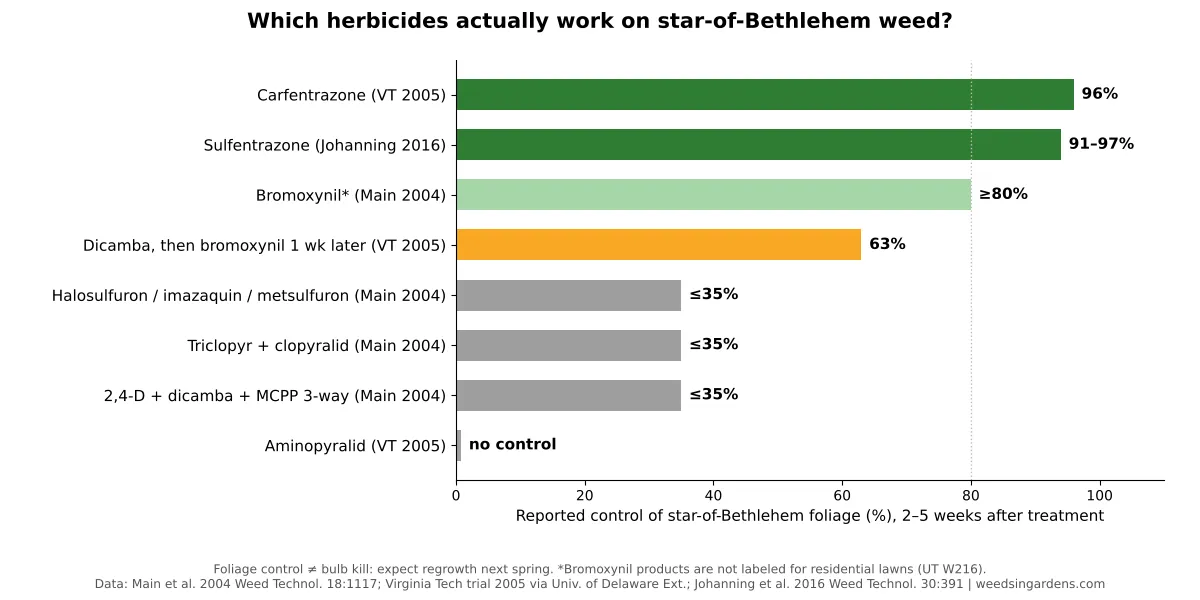
The research backs this up. In a Tennessee field study in dormant bermudagrass, halosulfuron, imazaquin, metsulfuron, a 2,4-D + dicamba + mecoprop three-way, and triclopyr + clopyralid all gave 35% control at most five weeks after treatment (Main et al., 2004). Arkansas Extension reports that conventional broadleaf herbicides give only about 20% control (UA Extension).
Glyphosate isn’t the answer either. Tennessee notes non-selective products like glyphosate often give only marginal control (UT W216), and in the Illinois field trials two consecutive years of glyphosate or 2,4-D ester applications cut bulb density by 5% or less (Johanning et al., 2016). That’s a lot of effort for almost nothing.
Star of Bethlehem Weed Killer: What Actually Works
Two active ingredients stand out in the extension literature: sulfentrazone and carfentrazone. Kansas State says both have been very effective (K-State), and Purdue rates sulfentrazone and carfentrazone products as giving good control (Purdue). Both are fast-acting, contact-type herbicides that destroy leaf tissue, which is why timing and repeat sprays matter so much.
| Active ingredient | Example products | What research and extension found | Notes |
|---|---|---|---|
| Sulfentrazone | Ortho Nutsedge Killer for Lawns (homeowner); Dismiss (professional) | 91–97% foliage control at 14 days (Johanning 2016); a single Dismiss application gave “excellent control” in established turf (UT W216) | Homeowner label lists star of Bethlehem; safe on many cool- and warm-season grasses |
| Carfentrazone | Quicksilver; SpeedZone (with 2,4-D, MCPP, dicamba) | 96% control one month after treatment in tall fescue with no turf injury (Virginia Tech, 2005) | Quicksilver is professional-use; sequential sprays may be needed |
| Sulfentrazone combinations | Q-4, Surge (professional) | Repeat applications may be required (UT W216) | Check turf species on label |
| 2,4-D (ester) or 3-way | Many lawn broadleaf products | Ester likely beats amine (Illinois), but 3-way mixes gave ≤35% in Tennessee | Only for light infestations; expect repeat sprays |
| Glyphosate | Roundup and generics | Marginal control; ≤5% bulb reduction over 2 years | Non-selective: kills your grass too |
| Bromoxynil | Buctril | ≥80% control (Main 2004) | Not labeled for residential turf (UT W216) |
For most homeowners, the practical choice is a ready-to-spray sulfentrazone product sold for nutsedge. The Ortho Nutsedge Killer for Lawns label (1.40% sulfentrazone) specifically lists star of Bethlehem, along with wild onion and wild garlic, as a target weed (product label, EPA Reg. No. 279-3437-239). Sulfentrazone is also the go-to for yellow and purple nutsedge, so one bottle may solve two problems.
Label rules that matter (follow the label)
Always read and follow the label on the exact product you buy; it is the law, and rates differ between products. On the sulfentrazone label referenced above:
- Use only on well-established, non-stressed turf. Stressed grass can discolour.
- Listed grasses include Kentucky bluegrass, tall and fine fescue, perennial ryegrass, creeping bentgrass, bermudagrass, zoysiagrass, St. Augustinegrass, centipedegrass, bahiagrass, buffalograss and others. Don’t use it on grasses not listed.
- Don’t apply to newly seeded, sodded or plugged lawns, and wait at least 4 weeks after treatment before reseeding.
- Apply when no rain is forecast for 24 hours, and keep children and pets off the treated area until the spray has dried.
- Don’t exceed the label’s annual maximum (9.3 oz of that product per 1,000 sq ft per year).
Temperature and turf safety
Illinois recommends spraying in early spring once temperatures are at least 50°F (Illinois); below that the plant isn’t growing actively enough to take up much herbicide. Skip spraying during heat or drought stress. Spring growth on desirable plants is also very susceptible to injury, so avoid drift onto flower beds, and don’t spray these lawn products in landscape beds, because they’re not labelled for that use.
Mowing matters too. Tennessee advises delaying mowing for 10–14 days after a postemergence herbicide application (UT W216), so the chemical has time to work through the leaves. For a refresher on how contact and systemic products differ, see our guide to post-emergent herbicides.
What about paraquat?
In the Illinois trials, the only treatment that substantially reduced the bulbs themselves was paraquat: two consecutive years of spring applications cut bulb density by 88% (Johanning et al., 2016). But paraquat is a restricted-use pesticide that only certified applicators can buy or use (US EPA), and it kills turf too; a Virginia Tech trial saw 95% injury to tall fescue (Univ. of Delaware Extension summary). It’s not a homeowner option. It does tell you, though, that killing the bulbs takes repeated hits, year after year.
How to Get Rid of Star of Bethlehem Without Chemicals
For a few clumps, a garden bed, or a lawn where you’d rather not spray, digging is the most reliable method. It’s slow, but every bulb you remove is gone for good.
- Dig while the leaves are up. It’s easiest in spring when you can see every clump (MIPN). Mark clumps with flags now, in late fall or winter, so you can find them.
- Go deep. An Ask Extension expert answering a Michigan gardener advises digging 6–8 inches deep and picking out the small remaining bulbs (Ask Extension). A narrow trowel or soil knife works better than a spade.
- Sift, don’t shake. Lift the whole soil plug onto a tarp and crumble it apart. Bulblets are pea-sized and easy to miss.
- Bag and bin. Illinois says don’t compost the bulbs (Illinois). Our guide on how to dispose of invasive plants explains why bagging and trashing beats composting.
- Patch the hole. Backfill with clean soil and seed or plug it right away so there’s no bare spot for a stray bulblet to exploit.
- Repeat next spring. Ask Extension is blunt: it is not a one-and-done task.
Methods that don’t work
Tilling, smothering, tarping and mowing are generally ineffective (MIPN factsheet), and as we saw, tilling can multiply the bulbs. Illinois does suggest cutting plants back early to help drain the bulbs’ energy reserves; think of that as a supporting tactic between digs or sprays, not a cure. Pulling by hand usually snaps the leaves off and leaves the bulb behind.
In flower beds
Lawn herbicides like sulfentrazone aren’t labelled for landscape beds. Illinois notes glyphosate spot treatments “could be tried” but may give only marginal control, and that physically removing bulbs may be the best option there (Illinois). Because bulbs sit beneath perennials, dig carefully around crowns, and consider lifting and cleaning the roots of any heavily infested perennial.
When to Treat Star of Bethlehem: A Season-by-Season Plan
Timing is the difference between 30% and 90% control. In Illinois field trials, spraying in mid-March, about three weeks before flowering, gave better results than spraying on March 1 or April 11 (Johanning et al., 2016). In other words, spray when the plants are fully leafed out but before they bloom and start shutting down. Tennessee likewise recommends spring spraying once there’s adequate growth after winter frosts.
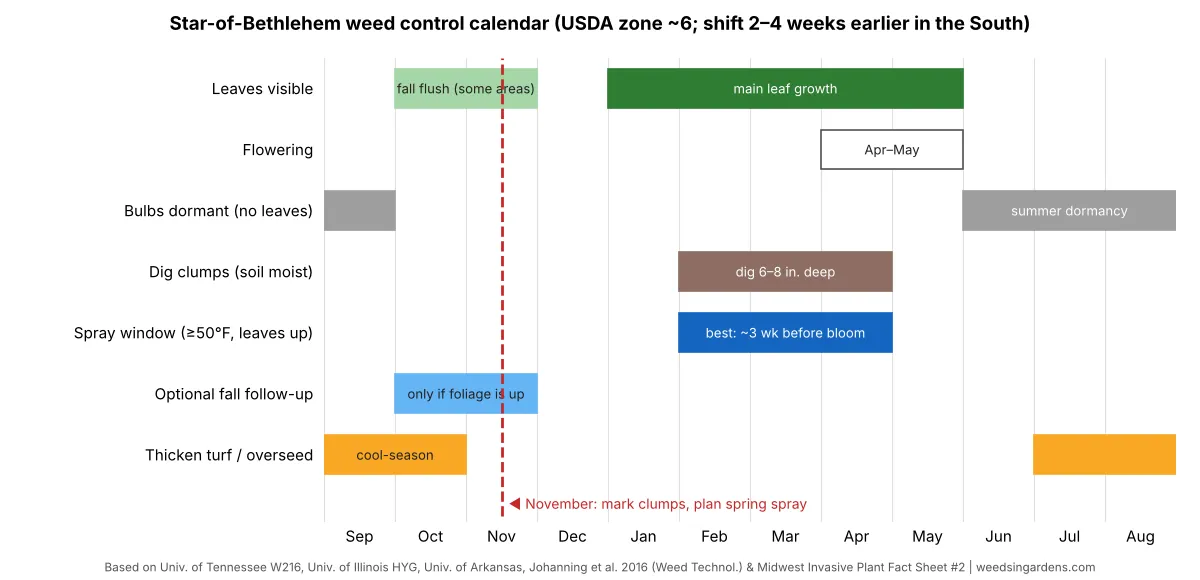
| Season | What the weed is doing | What you should do |
|---|---|---|
| Late fall (now) | Bulbs resuming growth; leaves appear in some areas | Flag clumps you can see; buy a sulfentrazone product; if foliage is up and temps are ≥50°F, an optional fall spray is reasonable (Illinois recommends spring + fall) |
| Winter | Leaves emerging and expanding | Map clumps on a sketch of your lawn; don’t spray cold, frosted foliage |
| Early spring (Feb–Mar in the South, Mar–Apr in the North) | Full leaf growth before flowering | Main spray window. Spray at ≥50°F; delay mowing 10–14 days; repeat per label if regrowth appears. Dig small clumps. |
| Flowering (Apr–Jun) | Blooming, then leaves yellow | Spot-dig any survivors; spraying gets less effective as leaves decline |
| Summer | Dormant underground; invisible | No point spraying. Keep turf healthy; don’t till infested areas |
| Next year | Surviving bulbs regrow | Repeat. Illinois expects spring and fall applications for at least 2 consecutive years |
If you plan to overseed thin spots in fall, remember the 4-week wait after sulfentrazone, and read our guide on how to kill weeds before overseeding so the two jobs don’t clash.
Choosing Your Approach: A Quick Decision Guide
There’s no single right answer, because a few clumps by the mailbox and a lawn carpeted in white flowers are different problems. Use this table to match the method to your situation.
| If you have… | Best approach | Realistic expectation |
|---|---|---|
| Fewer than 10 clumps | Dig in spring, 6–8 in. deep; bag bulbs | Gone in 1–2 seasons if you’re thorough |
| Scattered clumps across the lawn | Spot-spray sulfentrazone in early spring; dig survivors | Big drop in year 1; clean-up in year 2 |
| Solid patches or a whole lawn | Broadcast a labelled sulfentrazone or carfentrazone product, spring (and fall if foliage is up), 2+ years; consider a licensed applicator | Steady decline over 2–3 years |
| Clumps in flower beds | Dig; careful glyphosate spot-treatment only as a backup | Slow; persistence wins |
| Infestation spreading from a neighbour’s yard | Treat your side and keep turf dense at the boundary | Ongoing maintenance |
Prevention: keep the lawn thick
Purdue’s first recommendation is simply to encourage dense turf through good maintenance (Purdue). Bulbs need light to build reserves in late winter and spring, and a thick, healthy canopy shades and out-competes them. Mow at the higher end of your grass type’s range, fertilise on schedule, and overseed thin areas in the right season.
Avoid moving soil from infested areas. Bulb fragments travel easily on tools, in topsoil and with transplanted perennials. And if star of Bethlehem is just one of several cool-season invaders, our guide to winter annual weeds covers the others showing up this time of year.
A Note from the Agronomist’s Side
Here’s how I’d think about this weed: you’re not fighting the leaves, you’re fighting a bank account. Every bulb is a savings deposit of starch, and every bulblet is a new account. Any treatment that only burns the leaves is a withdrawal, not a closure. That’s why the research keeps saying “repeat applications” and “two consecutive years”.
The second principle is timing to the plant’s own calendar. A bulb is most vulnerable when it has spent its reserves pushing up leaves and hasn’t yet refilled them. That’s the late-vegetative stage just before flowering, which lines up neatly with the mid-March sweet spot in the Illinois trial. Spray too early and the plant has little leaf to absorb anything; spray during bloom and it’s already shifting energy back underground.
Third, be honest about expectations. Contact herbicides like sulfentrazone and carfentrazone give striking leaf burn within days, and it’s tempting to declare victory. But the Illinois data show that impressive early foliage control doesn’t automatically translate into fewer bulbs a year later. Judge your success the following spring, not the following week.
Finally, don’t underestimate the boring stuff. A dense lawn doesn’t kill bulbs, but it starves new bulblets of light. Combine a well-timed spray, targeted digging and better turf density, and you’ll turn a problem that slowly gets worse into one that slowly gets smaller.
Star of Bethlehem Weed FAQ
Will star of Bethlehem die on its own?
No. The leaves die back every summer, but the bulbs survive underground and regrow each winter and spring. Left alone, clumps usually get larger as bulblets multiply.
What is the best star of Bethlehem weed killer for lawns?
Products containing sulfentrazone or carfentrazone have the best extension and research track record. A homeowner sulfentrazone product such as Ortho Nutsedge Killer for Lawns lists star of Bethlehem on its label. Always follow the label for rates and grass types.
Does Roundup (glyphosate) kill star of Bethlehem?
Not reliably. Extension sources describe glyphosate control as marginal, and in Illinois field trials two years of glyphosate reduced bulb density by 5% or less. It also kills your lawn grass.
When should I spray star of Bethlehem?
In early spring, when temperatures are at least 50°F and the plants are fully leafed out but not yet flowering. In southern Illinois research, mid-March, about three weeks before bloom, worked best. A fall follow-up helps where foliage is present.
Can I mow star of Bethlehem to get rid of it?
No. Mowing removes leaf tips but not the bulbs, and the plant resists mowing. Delay mowing for 10–14 days after spraying so the herbicide can work.
Is star of Bethlehem the same as wild garlic?
No. Both grow in clumps, but wild garlic has hollow, round leaves and a strong onion or garlic smell. Star of Bethlehem leaves are flatter with a white midrib, arch outward, and have no odour.
Is star of Bethlehem toxic to dogs?
Yes. Purdue notes the plant, including flowers and bulbs, contains cardiotoxins and should not be eaten by people or animals. Keep dug bulbs away from pets and contact your vet if your dog eats any.
Sources
- Breeden, G. & Brosnan, J.T. (2009). Star-of-Bethlehem (W216). University of Tennessee Extension.
- Wiesbrook, M. (2022). Controlling Star-of-Bethlehem. University of Illinois Home, Yard & Garden Pest Newsletter.
- Patton, A. Spring Beauty and Star-of-Bethlehem. Purdue University Turfgrass Science.
- Hoyle, J. (2019). Star-of-Bethlehem (Ornithogalum umbellatum). Kansas State University Turf and Landscape Newsletter.
- Klingaman, G. (2006). Plant of the Week: Star of Bethlehem. University of Arkansas System Division of Agriculture.
- NC State Extension. Ornithogalum umbellatum. Extension Gardener Plant Toolbox.
- Main, C.L., Robinson, D.K., Teuton, T.C. & Mueller, T.C. (2004). Star-of-Bethlehem control with postemergence herbicides in dormant bermudagrass turf. Weed Technology 18:1117–1119. doi:10.1614/WT-03-200R2
- Johanning, N.R., Young, J.M. & Young, B.G. (2016). Efficacy of preplant corn and soybean herbicides on star-of-Bethlehem in no-till crop production. Weed Technology 30:391–400. doi:10.1614/WT-D-15-00094.1
- Johanning, N.R., Preece, J.E. & Young, B.G. (2012). The influence of chilling and chipping of star-of-Bethlehem bulbs on plant growth and reproduction. Invasive Plant Science and Management 5:402–407. doi:10.1614/IPSM-D-12-00004.1
- University of Delaware Cooperative Extension, Kent Co. (2007). Turf: Star-of-Bethlehem Control (summary of Virginia Tech research).
- Midwest Invasive Plant Network / Pollinator Partnership. Midwest Invasive Plant Fact Sheet #2: Star-of-Bethlehem.
- Ask Extension (2024). Eradicate star of bethlehem #864866.
- The Ortho Group (2024). Ortho Nutsedge Killer for Lawns Ready-To-Spray label (EPA Reg. No. 279-3437-239), via WSU PICOL.
- US EPA. Paraquat Dichloride: restricted-use pesticide information.