
Short answer: a lawn that is genuinely too dense is rare; a thick stand of grass is usually the goal. When people say their grass is too thick they nearly always mean one of five things: it has grown too tall and clumps behind the mower; it feels spongy because thatch has built past 1/2 inch (1.3 cm); it has been over-fed and the soft growth mats down and gets disease; a creeping grass such as bermuda or zoysia has built a dense mat or crept into the beds; or an ornamental grass clump has outgrown its space. Each has a different fix. Mow tall grass down in stages, never more than a third at a time. Core-aerate or dethatch when thatch is over 1/2 inch. Cut nitrogen to no more than 1 lb per 1,000 sq ft (0.5 kg per 100 m²) per application. Scalp warm-season grass once, at spring green-up. Edge the beds, and divide ornamental grasses when the centre dies out.
Is thick grass actually a problem?
Density is what every fertiliser and overseeding programme is trying to achieve, and a tight turf that shades the soil is the main reason crabgrass stays out. If the lawn looks good, mows cleanly and feels firm underfoot, leave it alone. The problems below are real, but none of them is fixed by making the grass sparser. They are fixed by mowing, dethatching, feeding or edging correctly.
What you actually have: a quick diagnosis
Push your fingers down to the soil in a few places, cut out a small wedge with a trowel, and match what you find to the table.
| What you notice | What it usually is | What to do |
|---|---|---|
| Grass is 5–8 in (13–20 cm) or taller, mower bogs down, clippings come out in wet clumps | Overgrown lawn, not too dense | Staged mowing over one to two weeks (below) |
| Lawn feels spongy or springy; mower scalps on humps; a brown felt-like layer sits between the green blades and the soil | Thatch over 1/2 in (1.3 cm) | Core aeration first; vertical mowing if the layer is thick |
| Lush, dark, floppy growth that lies flat, needs mowing twice a week, patches of brown or grey disease | Too much nitrogen or water | Cut the fertiliser rate and watering frequency |
| A dense, wiry mat of runners; the grass is climbing into flower beds and over paths | Creeping warm-season grass (bermuda, zoysia, St Augustine, kikuyu) | Spring scalp at green-up, then edge the beds |
| A clump of ornamental grass is huge, flops open and is dead in the middle | Congested clump | Lift and divide |
Case 1: grass that is too tall, not too thick
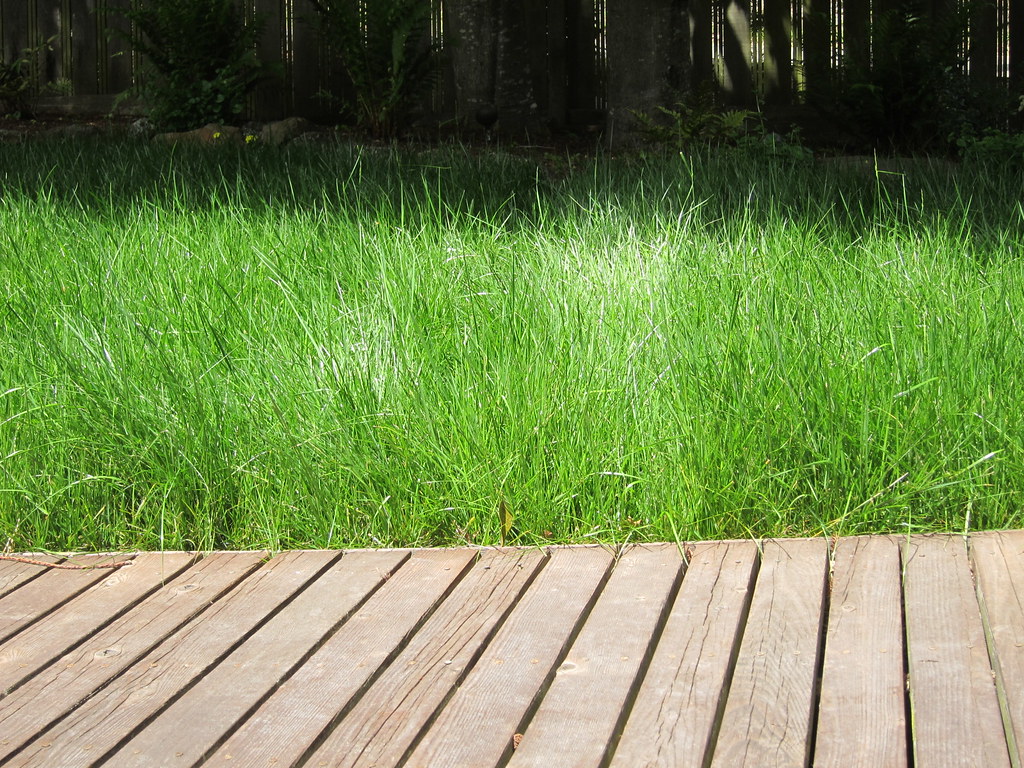
An overgrown lawn looks dense because the blades fold over each other, and the mower chokes on the volume of leaf. The Purdue Extension mowing guide gives the rule: do not remove more than one-third of the leaf blade at a single mowing. If you normally cut at 3 inches, mow when the grass reaches 4 inches. When it has got away from you, raise the deck to its highest setting, mow, then lower it one notch at each following cut, two to four days apart, until you are back at the normal height.
- Wait for a dry afternoon. University of Wisconsin Extension notes that clippings clump when wet turf is cut, and clumps smother the grass under them.
- Mow at the highest setting. Rake off any clumps thicker than a finger.
- Two to four days later, drop one setting and mow again. Repeat until you reach the target for your grass: 2–3.5 in (5–9 cm) for Kentucky bluegrass, ryegrass and fine fescue, 2.5–4 in (6–10 cm) for tall fescue, 1–2 in (2.5–5 cm) for zoysia, per the same Purdue table.
- Sharpen the blade. A dull blade tearing thick grass is most of what makes a mower struggle.
Cutting an overgrown lawn to its normal height in one go removes most of the leaf area, restricts root growth and, as Purdue puts it, leaves the turf more vulnerable to insects, disease, drought and weed invasion. A month of yellow lawn is the one outcome that really is thinner than you wanted.
Case 2: spongy turf and thatch
Thatch is the layer of dead and living stems, crowns and roots between the green grass and the soil. It is not made of clippings: Illinois Extension notes that clippings are mostly water and break down quickly, while thatch comes from stems and roots being produced faster than soil organisms can decompose them, which happens with excess nitrogen, overwatering, compacted or waterlogged soil, and acid soil that slows microbes.
To measure it, cut a wedge 2–3 in (5–8 cm) deep and look at the profile. A layer under 1/2 inch cushions the surface and does no harm. University of Minnesota Extension and Purdue both put the action threshold at 1/2 inch (1.3 cm); Clemson Extension allows up to 1 inch (2.5 cm) in zoysia because the species naturally builds a thick layer. Past these figures, roots live in the thatch rather than the soil, the turf dries out in the first hot week, and the mower scalps every high spot.
Two tools, in this order:
- Core aeration first. A hollow-tine machine pulls out plugs, and the soil in those plugs seeds the thatch with the microbes that digest it. Purdue specifies the largest tines available, 2–3 in (5–8 cm) deep, with enough passes to leave 20–40 holes per square foot; Illinois settles for 15–20 holes from two passes at right angles. University of Missouri Extension prefers aeration because it stresses the turf far less than power raking. Do it from late August to early October for cool-season lawns and early to mid summer for warm-season lawns, with the soil moist but not wet (see our note on aerating after rain).
- Vertical mowing (dethatching) when the layer is thick. Use a machine with fixed knives, not flexible spring tines, set so the blades just nick the soil and bring up a little of it with the debris. Clemson advises 2–3 in blade spacing at 1/4 in depth for zoysia and warns against 1 in spacing, which tears the turf. Time it as for aeration on cool-season grass; for bermuda, NC State Extension says late May after full green-up. Rake off everything you lift, apply 1/2–3/4 lb of nitrogen per 1,000 sq ft (Minnesota’s figure) and overseed cool-season lawns while the soil is exposed.
If the layer is over 1 inch, Missouri recommends removing it over two or three seasons rather than in one pass. Our guides to when dethatching actually helps and power raking versus dethatching compare the machines.
Case 3: soft, over-fed growth
A lawn that needs mowing twice a week, lies flat after rain and shows brown patches in humid weather is usually eating too much nitrogen. Wisconsin Extension’s rule: most lawns need about 3 lb of nitrogen per 1,000 sq ft per year (1.5 kg per 100 m²) in roughly three applications of 1 lb each, and never more than 1 lb per 1,000 sq ft at once. Over-application produces top growth at the expense of roots, encourages disease and, per NC State’s bermuda calendar, drives thatch. Warm-season grasses are in the same range: Clemson gives zoysia 2–4 lb per year in 1/2–1 lb doses from May to mid-August and nothing in autumn; NC State gives bermuda 1 lb every four to six weeks through summer, with no more than 1/2 lb in September.
If you mulch your clippings, count them: Wisconsin estimates they return about 1 lb of nitrogen per 1,000 sq ft a year, one whole application you can drop (our post on mulching versus bagging clippings covers when they become a problem). Check the bag: a 20-5-10 product at 5 lb per 1,000 sq ft is 1 lb of nitrogen, so anything heavier per visit is too much. Water deeply and infrequently; daily watering keeps the top inch soft and pushes the same floppy growth.
Case 4: creeping grasses building a mat or invading beds
Bermuda, zoysia, St Augustine and kikuyu spread by stolons above ground and, in bermuda’s case, rhizomes below it. Over a season they build a woody mat; over a few seasons they walk into every bed.
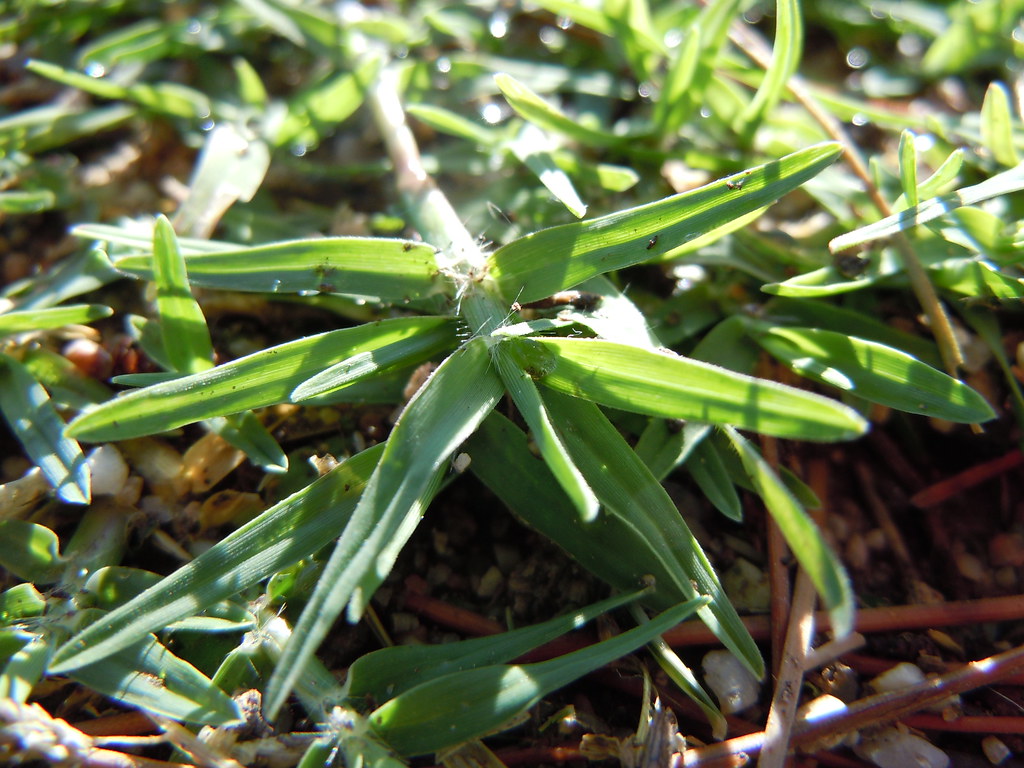
The spring scalp. This is the one time cutting hard is right, and only for these grasses. NC State’s bermuda calendar says to mow at the first sign of green-up with the mower set as low as possible without cutting into bare soil, removing the dead winter top growth and setting the height for the year. Clemson’s zoysia calendar gives 1–1.5 in (2.5–4 cm), slightly below the normal 1.5–2 in summer height, just before green-up in late April or early May, and says to bag or rake off the debris. Never do this to a cool-season lawn, in mid-summer, or before the last frost, because bare crowns exposed to a late freeze are killed.
Edging the beds. University of Arizona Extension notes that bermuda rhizomes usually run 1–6 in (2.5–15 cm) deep in undisturbed ground and deeper in cultivated soil, so a shallow plastic strip does nothing. Cut a vertical edge with a half-moon edger every few weeks in the growing season, or sink a rigid barrier at least 6 in (15 cm) deep. Where runners are already through, dig them out with the rhizomes attached, or use a grass-selective herbicide containing fluazifop, sethoxydim or clethodim while regrowth is under 6 in tall, repeating as it regrows; glyphosate spot-treated in mid to late summer, when the plant is moving reserves to its roots, also works but kills anything green it touches. Our lawn grass comparison shows how to tell these grasses apart.
Case 5: ornamental grasses that have got too big
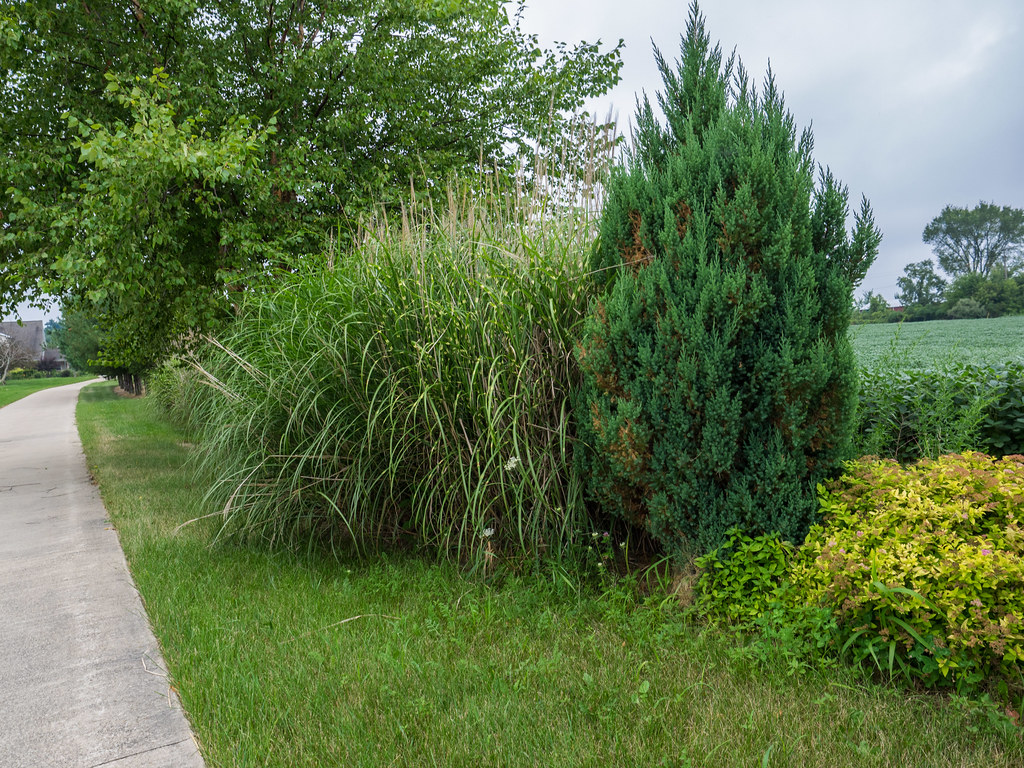
A miscanthus, pampas or fountain grass that flops open with a dead centre is congested, not diseased. The Royal Horticultural Society advises dividing cool-season grasses (Carex, Calamagrostis, Festuca) in late winter to early spring, roughly every three years, and warm-season grasses (Miscanthus, Pennisetum, Cortaderia) in late spring, around May, only when needed. Lift the clump, split it with two forks back to back or a spade, keep the divisions large, discard the dead core, replant promptly, firm in and water.
What not to do
- Do not thin a healthy lawn with a rake or dethatcher because it looks too thick. You will open the canopy to crabgrass and gain nothing.
- Do not scalp a cool-season lawn, or any lawn in summer or before the last frost.
- Do not dethatch a lawn with less than 1/2 inch of thatch; you are tearing out living crowns.
- Do not power-rake through a 1 inch layer in one pass. Spread it over seasons and aerate in between.
- Do not fertilise to recover beyond the 1/2–3/4 lb of nitrogen already mentioned. Extra nitrogen is how the problem started.
When to expect results
Staged mowing gets an overgrown lawn back to normal height in one to two weeks, with colour returning a week or so later. A core-aerated lawn looks messy for two weeks while the plugs break down; measurable thatch reduction takes a year of aeration and sensible feeding. A vertically mown lawn looks rough for three to four weeks and fills in within six to eight if overseeded or if it is a spreading warm-season grass in active growth. A scalped bermuda or zoysia lawn is brown for two to three weeks and greens up evenly as soil temperatures rise. Cutting nitrogen shows within a fortnight as slower growth and a firmer, more upright turf.
Related guides: Why Is My Grass Lying Flat? Causes and How to Make It Stand Up Again · How to Transplant Grass: Moving Sod and Plugs Without Killing Them
Sources
- Purdue Extension – AY-8: Mowing, Dethatching, Aerifying and Rolling Turf
- University of Minnesota Extension – How to control thatch in your lawn
- University of Missouri Extension – Managing Thatch in Home Lawns (G6708)
- Illinois Extension – Managing Thatch in Lawns
- University of Wisconsin Extension – Lawn Maintenance
- Clemson Extension HGIC – Zoysiagrass Yearly Maintenance Program
- NC State Extension – Bermudagrass Lawn Maintenance Calendar
- University of Arizona Extension – Bermudagrass
- Royal Horticultural Society – Ornamental Grasses: Dividing