
Short answer: yes, vinegar kills weeds, but only the parts it touches, and only reliably when the weeds are small. Ordinary kitchen vinegar (about 5% acetic acid) burns down seedlings in their first two weeks of life and does little to anything bigger. Horticultural vinegar at 20–30% acetic acid gave 85–100% kill of annual weeds at all growth stages in USDA trials, yet it still does not reach the roots, so dandelions, thistle, bindweed and lawn grasses grow back within one to three weeks. It is a sensible choice for young annual weeds in paving cracks, gravel and patios, a poor choice for lawns (it kills the grass too) and perennials, and at 20% it is a corrosive acid that needs goggles and gloves.
What vinegar actually does to a weed
Acetic acid is a non-selective contact herbicide. According to the National Pesticide Information Center, it breaks open the cell walls of any green tissue it lands on and the plant dies by drying out. It does not travel inside the plant, so whatever the spray misses, including every root, rhizome and tuber below the surface, is untouched. That single fact explains almost everything about when vinegar works and when it disappoints.
It also explains the speed. Leaves brown within hours on a sunny day; whether the weed is dead is a question you can only answer two weeks later.
Household 5% vs horticultural 20–30%: what the trials show
The most-quoted evidence comes from USDA Agricultural Research Service work at Beltsville, Maryland. Researchers sprayed lamb’s-quarters, giant foxtail, velvetleaf, smooth pigweed and Canada thistle with 5%, 10% and 20% solutions. As reported by USDA-ARS, the 5% and 10% solutions killed the weeds during their first two weeks of life; older plants needed the stronger solutions, which gave an 85–100% kill rate at all growth stages. In the field, 20% vinegar spot-sprayed between corn rows killed 80–100% of weeds.
A later ARS greenhouse study put numbers on the weak spots. Testing 0%, 5% and 20% acetic acid at two spray volumes with and without oil adjuvants, USDA-ARS (Webber et al.) found broadleaf control of 84% or more at the higher concentration, but large crabgrass control of only 44–63% even with the best treatment (20% acid at the high volume of about 100 gallons per acre). Adding orange oil or canola oil made little difference. Grasses have a protected growing point at the base and upright leaves that shed spray, so they are consistently harder to kill.
The University of Maryland Extension summarises it for homeowners: 5–10% acetic acid controls weeds with one or two leaves only, and with the stronger products over 90% of small treated weeds should die within 24 hours, while grassy and perennial weeds may begin to regrow a week or so later because the root systems are not killed. Illinois Extension puts effective control at 80–100% for 10–20% acetic acid and states plainly that kitchen vinegar does not make a good herbicide.
| Product | Acetic acid | What it kills | Hazard | Legal status (US) |
|---|---|---|---|---|
| Kitchen white vinegar | 4–6% | Seedlings up to about 2 weeks old or 1–2 true leaves; scorches larger weeds without killing them | Mild irritant | Not registered or labelled as a herbicide; some states treat home use as illegal |
| “Cleaning” vinegar | 6–10% | Slightly larger seedlings; still top-kill only | Irritant; 8% or less is exempt from EPA registration only when sold as a minimum-risk pesticide | Usually sold as a cleaner, not a herbicide |
| Horticultural / herbicidal vinegar | 20–30% | 85–100% of annual broadleaf weeds at any stage; 44–63% of crabgrass; top-kill only on perennials | Corrosive; signal word DANGER; permanent eye damage, skin burns | EPA-registered products exist; most states require registration |
Why perennials and grasses grow back
Because vinegar does not move to the roots, a perennial simply loses its leaves and regrows from stored reserves. Montana State University Extension states that perennial plants are unlikely to be controlled because they can resprout from roots, and that broadleaf plants are more susceptible than grasses. In the Beltsville trial even 5% vinegar took out 100% of Canada thistle top growth, but as Purdue Extension notes, the roots survived to sprout new shoots. Oregon State’s extension advisers list dandelion, morning glory (bindweed), horsetail and Canada thistle as the plants that will defeat it.
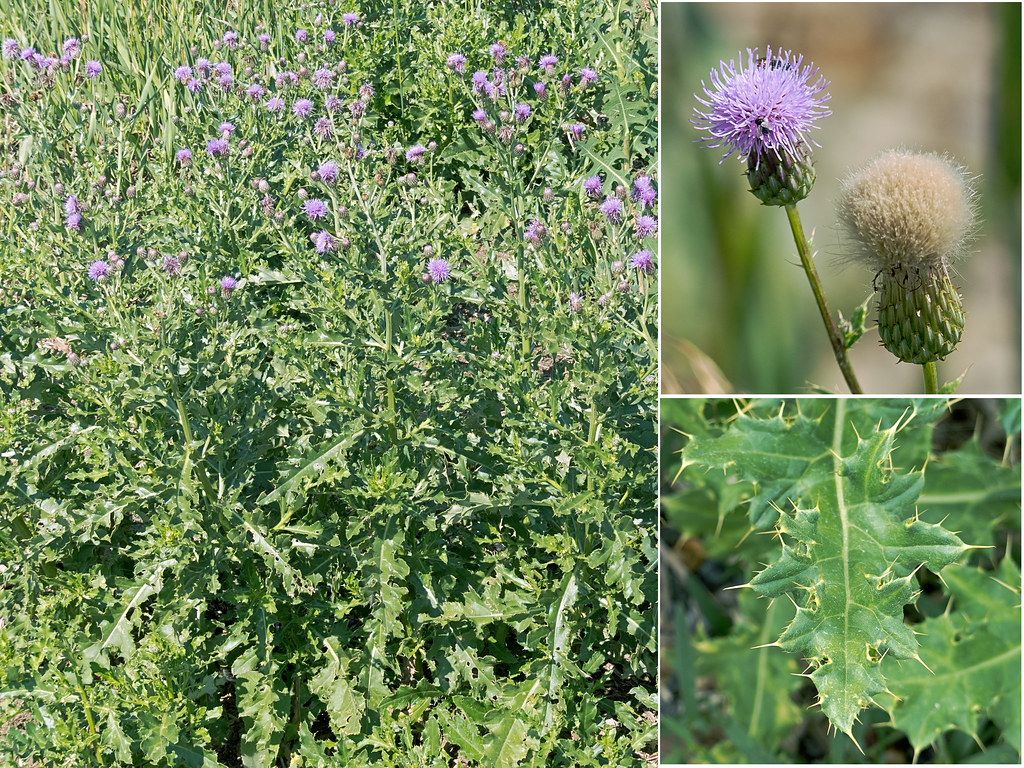
Repeated burning does drain a perennial’s reserves, and with enough persistence you can weaken small clumps. In practice that means spraying every two to three weeks for a season, at a cost per square foot the University of Maryland found to be more than three times that of glyphosate. For deep-rooted weeds it is usually cheaper and quicker to dig, or to use a systemic product where that is acceptable to you. The same limitation applies to bleach, which we cover in Does bleach kill weeds?; vinegar is the better of the two because it leaves no residue.
How to get the best result from vinegar
If the weeds are young annuals and the site suits a non-selective spray, the technique matters more than the brand.
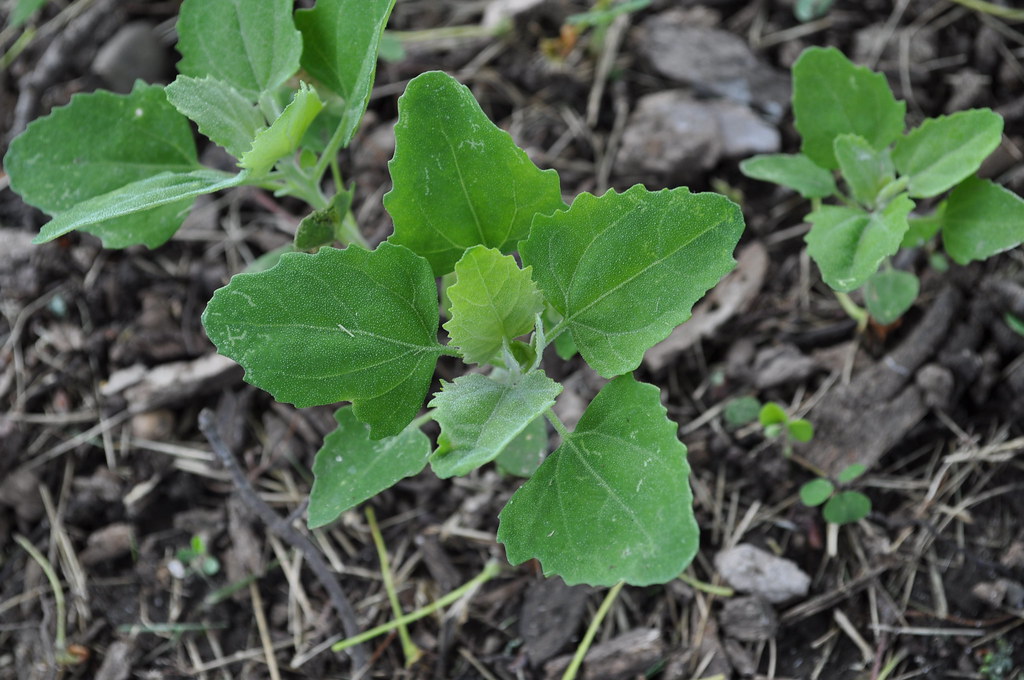
- Spray early. Aim for the two- to four-leaf stage. Seedlings under two weeks old die from 5% vinegar; anything with a woody stem or a taproot will not.
- Pick a warm, sunny, still day. Extension advice consistently reports the best burn in hot, sunny conditions; in our experience anything above about 70°F (21°C) with direct sun works well, and a cool cloudy day gives a patchy result. Wind carries spray onto plants you want to keep.
- Wait 24–48 hours after rain and check the forecast. Wet leaves dilute the acid, and rain within a few hours washes it off before it has finished working.
- Wet every leaf and the crown. Coverage is everything for a contact herbicide. Commercial guidance calls for at least 70 gallons of spray per acre, which works out at about 1 US quart per 150 square feet (roughly 0.7 litres per 10 square metres), far more than a light misting. Coat the growing point at the top of the plant and the base.
- Add a surfactant. A few drops of a horticultural wetting agent (or, failing that, plain dish soap, which extension advisers describe as workable but not ideal) helps the liquid stick to waxy leaves. Trials with oil adjuvants showed little extra benefit, so do not expect it to turn a weak spray into a strong one.
- Use plastic equipment. Acetic acid corrodes metal sprayer parts and can stain concrete, brick and pavers, so test an out-of-sight spot first.
- Repeat, but not more often than every two weeks, and only for weeds that regrow. Vinegar has no pre-emergent action, so seeds that germinate after you spray are unaffected.
Safety: 20% acetic acid is not the stuff in your salad
This is the part most homemade-recipe articles skip. Solutions of 11% or stronger can cause skin burns and eye injury, according to Purdue Extension, and the University of Maryland warns that concentrated products can cause severe eye irritation, burns and possible irreversible damage, with prolonged exposure linked to dermatitis, chronic bronchitis and erosion of tooth enamel. NPIC states that acetic acid can permanently damage the corneas, which is why every EPA-registered vinegar herbicide carries the signal word DANGER. Wear chemical splash goggles, nitrile gloves, long sleeves and closed shoes, mix outdoors, and keep children and pets off the area until it is dry.
“Natural” is not the same as harmless. Ohio State University Extension points out that the oral LD50 of acetic acid (3,310 mg/kg) is actually lower, meaning more acutely toxic, than that of glyphosate (5,600 mg/kg), and that common household vinegar is not labelled or legal for use as a herbicide in Ohio. The Royal Horticultural Society gives UK gardeners the same message: it is not advisable to use household products such as bleach, vinegar or washing-up liquid as pesticides, and homemade mixes often damage plants, soil and soil organisms. If you want to use acetic acid, buy a product that is labelled as a herbicide in your country and follow its label.
What vinegar does to soil
Here the news is good. Acetic acid breaks down rapidly and leaves no residue, and it has no residual activity in the soil. Purdue Extension notes that it is unlikely to accumulate enough to change soil pH for more than a few days, and Illinois Extension describes effects on soil microbes and pH as minimal and short-lived. You can replant a vinegar-treated bed within days. The only lasting marks are on hardscape: etched concrete or discoloured stone if you overspray.
The vinegar, salt and dish soap recipe: why the salt is the problem
The internet’s favourite mix is roughly a gallon of vinegar, a cup of salt and a squirt of dish soap. The vinegar and soap do what was described above. The salt is what makes the recipe work on bigger weeds, and it is also the ingredient that causes lasting harm. Sodium chloride does not break down; it is soluble and mobile, so as Illinois Extension explains it spreads through the soil to nearby vegetables and ornamentals and damages them, and only heavy leaching with water removes it. Extension advisers answering homeowner questions through Ask Extension put it bluntly: to use enough salt to kill weeds effectively causes more harm to the soil than good, killing earthworms and beneficial insects and potentially trees whose roots run under the treated area. Epsom salt (magnesium sulfate) is a different compound and is a fertiliser, not a weedkiller; in the quantities needed to burn weeds it still poisons the soil for other plants.
On any soil you might plant, or within the root spread of a tree or hedge, leave the salt out. Vinegar plus a wetting agent does the same job on young weeds without sterilising the ground for years.
Where vinegar makes sense, and where it does not
| Situation | Vinegar? | Why |
|---|---|---|
| Young annual weeds in paving cracks, patios, gravel paths | Good choice | Nothing desirable to hit, roots are shallow, hard surfaces reflect heat and speed the burn |
| Seedlings flushing in a bare vegetable bed before planting | Reasonable | No soil residue, so you can sow within days; hoeing is just as fast |
| Weeds in a lawn | No | Non-selective: it kills the grass around the weed and leaves a brown patch, while dandelions regrow from the taproot |
| Dandelion, thistle, bindweed, dock, nutsedge, quackgrass | No | Perennials regrow from roots, rhizomes or tubers within weeks |
| Established crabgrass, foxtail, other grasses | Weak | Around half control even at 20%; protected growing point |
| Between ornamentals or vegetables | Only with a shield | Drift or run-off scorches anything green it touches |
For lawns, the honest answer is that vinegar is the wrong tool. Every drop that kills a dandelion leaf also kills the fescue or Bermuda around it, and the dandelion is the one that regrows. Hand-weeding, a thick sward and a selective broadleaf herbicide are the working options; if the problem is a grassy weed, start with crabgrass identification and control, and for the yellow-green sedge that laughs at vinegar see our guide to yellow and purple nutsedge. For gravel and rock beds, vinegar fits into a broader routine of scraping, flaming and landscape fabric that we cover in how to kill weeds in rock gardens and gravel.
What to expect after spraying
- Within 2–4 hours on a sunny day: leaves darken, then wilt.
- By 24 hours: small annuals are brown and crisp; over 90% of properly covered seedlings are dead.
- Days 7–14: perennials and grasses push new green from the crown. Missed or shaded annuals may recover too. This is when you decide whether to respray, dig, or switch approach.
- Weeks 3–6: a new flush of seedlings appears from the seedbank. Vinegar did nothing to prevent this; mulch or a pre-emergent does.
Used for what it is, a fast top-killer for small annual weeds on hard surfaces, vinegar is a useful, low-residue tool. Used on lawns and perennials it wastes money and, at 20% strength, puts your eyes at real risk.
Related guides: Does Boiling Water Kill Weeds? Where It Works and Where It Damages the Garden · Post-Emergent Herbicides for Lawns: Selective vs Non-Selective
Sources
- USDA Agricultural Research Service – Spray Weeds With Vinegar?
- USDA Agricultural Research Service – Impact of acetic acid concentration, application volume, and adjuvants on weed control efficacy
- University of Maryland Extension – Vinegar: An Alternative to Glyphosate?
- Montana State University Extension – Does Vinegar Kill Weeds?
- National Pesticide Information Center (Oregon State University) – Can I use vinegar to control weeds?
- Purdue Extension – Conquer Weeds with Vinegar?
- Ohio State University Extension – Vinegar: Is it a “Safer” Herbicide?
- University of Illinois Extension – Home Horticultural Remedies
- Ask Extension – Vinegar, salt and Dawn weed killer
- Royal Horticultural Society – Understanding and avoiding chemical use