
Short answer: a post-emergent herbicide kills weeds that are already up and growing. A selective herbicide kills one group of plants (broadleaf weeds, grassy weeds or sedges) and leaves the lawn grass alone, so it is what you spray over a lawn. A non-selective herbicide such as glyphosate kills any green plant it touches, lawn included, so it is only for spot treatment, cracks and full lawn renovation. Match the product to the weed group, spray young weeds between about 55 and 85°F with no rain for 24 hours, and broadleaf weeds start twisting within 48 hours and die back over the following weeks.
Most failures with these products come from the wrong match (a broadleaf product on crabgrass or nutsedge) or the wrong timing, not from a weak product. The sections below show how to pick the right one and when to use it.
Table of Contents
What a post-emergent herbicide does (and how it differs from a pre-emergent)
“Emergence” is the moment a seedling breaks through the soil. A pre-emergent works in the top layer of soil and stops seeds from establishing; it does nothing to a dandelion that is already there. A post-emergent herbicide works through the leaves of a plant that has already emerged. You need a pre-emergent to stop next season’s crabgrass and a post-emergent to deal with the weeds you can see today.
The two are often used in the same season. Penn State Extension notes that post-emergence products can be combined with pre-emergence products to catch late-germinating summer grasses. If the pre-emergent side is what you need, the timing guide on when to apply pre-emergent by soil temperature covers it.
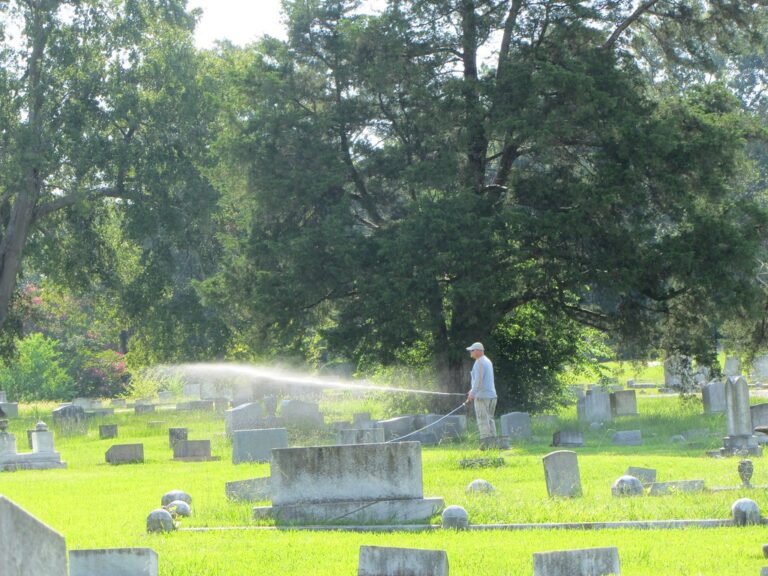
Selective herbicide vs non-selective herbicide: the key difference
The University of Maryland Extension puts it simply: a selective herbicide “affects certain plant species or groups without seriously harming others”, while a non-selective herbicide affects all plants it contacts, including your turf (UMD Extension). Their examples of non-selective products are glyphosate and acetic acid (vinegar).
Selectivity is not magic. It depends on the rate on the label, the grass species and the weather. A lawn broadleaf product sprayed at double rate on a hot day can injure grass, and some lawn grasses are far more sensitive than others (more on that below). University of Georgia Extension adds that non-selective products are to be “used only on a spot treatment basis” in lawns (UGA Bulletin 978).
| Selective herbicide | Non-selective herbicide | |
|---|---|---|
| What it kills | One plant group: broadleaves, grasses or sedges | Any green plant it contacts |
| Safe over lawn grass? | Yes, at label rate on a tolerant grass | No; it kills the lawn too |
| Typical actives | 2,4-D, MCPP, dicamba, triclopyr, quinclorac, fenoxaprop, halosulfuron | Glyphosate, glufosinate, acetic acid |
| Best use | Weeds scattered through turf | Cracks, fence lines, spot kills, lawn renovation |
| Main risk | Wrong product for the weed group; injury to sensitive grasses | Dead patches from overspray or drift |
Systemic vs contact: why some weeds come back
The second thing to know is how the product moves. A systemic herbicide moves from the leaves down into the roots; a contact herbicide affects only the tissue it lands on, so it can burn off the top of a perennial and leave the roots alive (UMD Extension). UGA notes that most post-emergent lawn products are systemic, while contact products such as glufosinate need complete coverage of the weed.
This explains the most common complaint about vinegar and similar “burn-down” sprays: the leaves brown in a day, then the dandelion or ground ivy regrows from its root. Our post on whether vinegar kills weeds shows the same pattern. For perennial weeds, a systemic post-emergent herbicide is the one that reaches the root.
Which selective herbicide for which weed
Identify the weed group first. A broadleaf product will not touch crabgrass, and neither a broadleaf nor a grass product controls nutsedge well. If you are unsure whether a plant is a grass or a sedge, our guide to weeds that look like grass walks through the stem and leaf checks.
Broadleaf weeds (dandelion, clover, plantain, ground ivy)
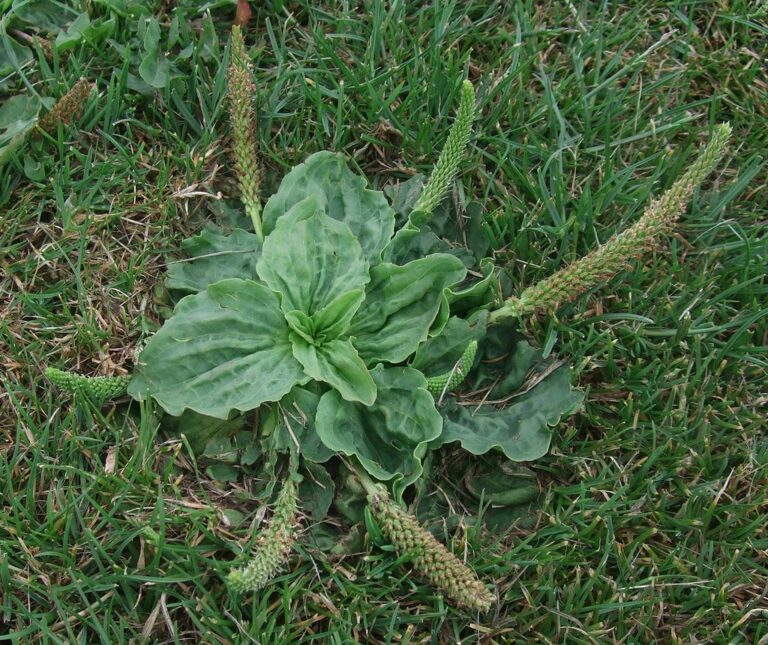
UMD lists 2,4-D, mecoprop (MCPP), MCPA, dicamba, triclopyr and carfentrazone as post-emergent actives for broadleaf lawn weeds. Kansas State University recommends combinations such as 2,4-D + MCPP + dicamba, triclopyr + clopyralid, or 2,4-D + triclopyr (K-State Turf). The “three-way” mixes cover more species than any single active.
Tough perennials often need a triclopyr product and a repeat. Our guides on creeping Charlie, dandelions that keep coming back and clover in lawns give weed-by-weed detail, including when living with a weed is the better choice.
Grassy weeds (crabgrass, goosegrass, foxtail)
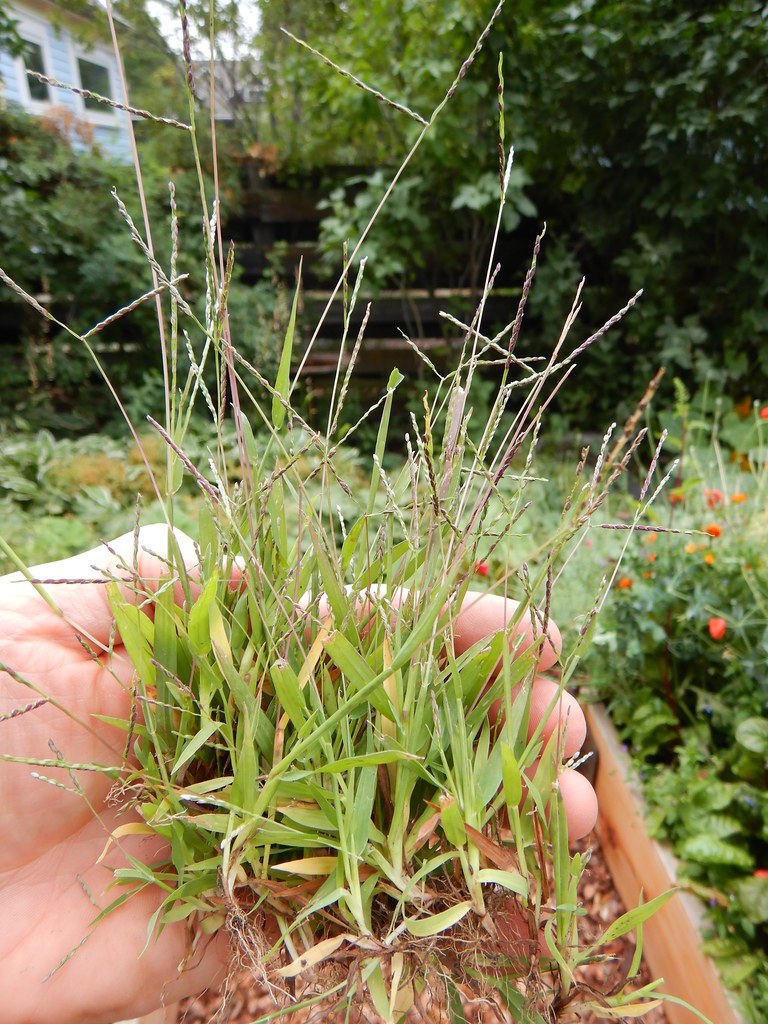
Killing a weedy grass inside a lawn grass is harder, and fewer actives do it. UMD lists quinclorac and fenoxaprop-p-ethyl for grassy weeds. Penn State adds mesotrione and topramezone, and gives growth-stage limits that matter a lot (Penn State Extension):
- Mesotrione and topramezone: best control on crabgrass with fewer than 4 tillers (side shoots).
- Fenoxaprop: works on tillered annual grasses up to 4–5 tillers, but should not go on cool-season turf that shows drought stress.
- Quinclorac: controls larger plants, though control can be incomplete at the 2–4 tiller stage.
In practice that means spraying crabgrass in early to mid summer, not in late August when clumps are big and about to die at frost anyway. See our crabgrass identification and control guide for the full season plan. Perennial grass weeds such as tall fescue clumps or quackgrass in a bluegrass lawn usually have no selective fix and are spot-treated with glyphosate.
Sedges (yellow and purple nutsedge)
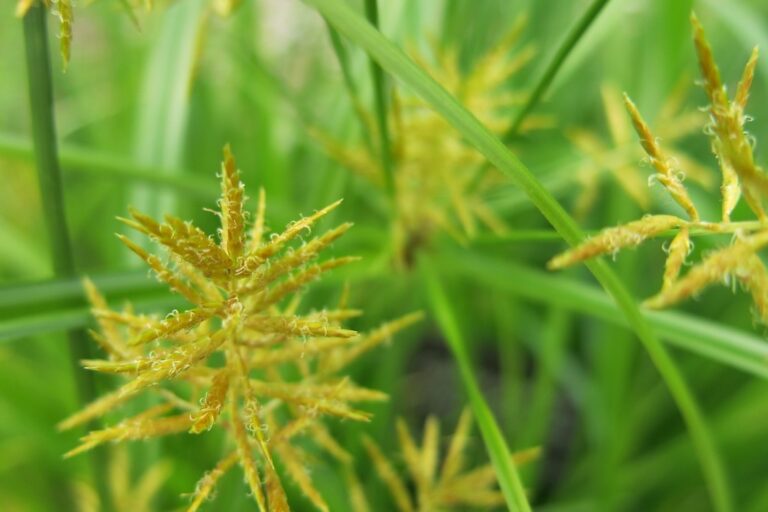
Nutsedge is not a grass, and it needs its own selective herbicide. UMD and Clemson list halosulfuron and sulfentrazone; UGA also names imazaquin, applied once the sedge has three to eight leaves (UGA). Clemson notes that halosulfuron usually needs a repeat application 3 to 4 weeks later for complete control (Clemson HGIC). Our yellow vs purple nutsedge guide explains why tubers make this weed so persistent.
When a non-selective herbicide makes sense
Glyphosate is systemic and non-selective. It has a place in lawn care in four situations:
- Spot-killing a perennial grass weed that no selective herbicide removes.
- Killing weeds in cracks, gravel and fence lines where you want nothing growing.
- Killing an old lawn before reseeding or resodding.
- In the South, weeds in fully dormant bermudagrass, which UGA lists as one of the few allowed over-the-lawn uses (along with spot treatments and edging).
Glyphosate is slow. A Michigan State University expert answer advises waiting seven days after spraying before overseeding, so the product has fully moved through the plants (Ask Extension). NC State’s injury photos show leaves turning from pale green to yellow within 48 hours and browning over about two weeks (NC State Extension). For the renovation route, see should you kill weeds before overseeding.
When to spray a post-emergent herbicide: timing and weather
Extension rules on timing are very consistent. For broadleaf products:
- Temperature: Illinois says apply between 55 and 85°F (University of Illinois); UMD gives 65–85°F. UGA says do not spray if the air is expected to pass 85°F within 24 hours. Clemson warns that triclopyr in particular should not be used above 85°F because of vapour drift.
- Rain: no rain expected for 24 hours, and Iowa State adds no irrigation within 24 hours of spraying (Iowa State Extension).
- Mowing: do not mow for 2–3 days before, and wait 3–4 days after, so there is leaf area to absorb the product and time for it to move to the roots (Iowa State).
- Wind: Iowa State says do not spray above 5 mph; Illinois describes a gentle 3–10 mph breeze as workable. Use coarse droplets at low pressure, close to the ground.
- Soil moisture: the weed must be actively growing. Illinois notes that adequate soil moisture keeps herbicide moving through the whole plant, so water a dry lawn a few days before, not after.
Granular vs liquid. Granular “weed and feed” products only work if the granules stick to wet leaves. Iowa State recommends applying them in the early morning on dew-covered weeds, or after irrigating. Liquids give better coverage and let you spot-spray instead of treating the whole lawn.
Fall beats spring for perennial broadleaf weeds. Systemic herbicides work better in late summer and autumn, when perennials move sugars down to their roots for winter (UMD). A dandelion sprayed in early fall usually does not return; one sprayed in full spring bloom often does. A second fall application extends control (Illinois). In Iowa, for example, the recommended window is mid-September to early November (Iowa State Extension).
Formulation. The PNW Weed Management Handbook notes that 2,4-D esters work well in cool, wet weather but are more likely to vaporise, while amine forms are safe across a wider temperature range (PNW Handbooks). Near vegetable beds, choose amine forms and skip hot days.
Your grass type changes which selective herbicide is safe
Cool-season lawns (Kentucky bluegrass, tall fescue, perennial ryegrass) tolerate most broadleaf three-way mixes. Warm-season lawns are pickier. UGA notes that St. Augustinegrass is sensitive to 2,4-D + MCPP mixes and should get only the low label rate of MCPP + 2,4-D + dicamba products, and that centipedegrass may yellow temporarily after some broadleaf herbicides. UGA also advises against spraying during the spring green-up of warm-season grasses, when they are most easily injured.
If your bermudagrass bleaches white after a spray, herbicide injury is one of the causes covered in why bermuda grass turns white. Always check that your grass is listed on the label before you buy.
Post-emergent herbicides and new grass seed
Most post-emergent products harm young grass seedlings, and some hold up reseeding. The published intervals vary a lot by product:
| Situation | Wait | Source |
|---|---|---|
| Seeding after a broadleaf herbicide | At least 30 days | Illinois, K-State |
| Seeding after certain other herbicides | 2.5–4 months | UGA |
| Seeding after glyphosate | 7 days | MSU (Ask Extension) |
| Spraying new seedlings with broadleaf products | After 3–4 mowings | K-State |
| Mesotrione on new seedlings | After 2 mowings or 4 weeks after emergence | Penn State |
| Quinclorac on new seedlings | Tall fescue 7 days; Kentucky bluegrass 28 days after emergence | Penn State |
The label on your product always overrides these general figures.
Safety: people, pets, clippings and drift
Keep children and pets off a sprayed lawn until it is fully dry. A study on athletic-field turf found that 9.4–9.9% of the applied 2,4-D could be wiped off perennial ryegrass right after spraying, but 0.5% or less after the spray had dried for one hour. Morning dew brought some residue back to the surface over the next few days, and irrigation or rain reduced it (Jeffries et al. 2016, PLOS ONE).
Clippings matter too. Products that contain clopyralid carry label instructions not to compost the clippings or use them as mulch, because the residue can damage vegetables and flowers (PNW Handbooks). Protect nearby garden plants with a board or bucket, or wipe the product onto weeds with a sponge, as Iowa State suggests (Iowa State).
Where this applies: the temperatures and seasons here come from US extension services and fit cool-season lawns in temperate climates of the Northern Hemisphere. Warm-season lawns in the southern US and the tropics have different windows and more sensitive grasses. In the Southern Hemisphere, shift the seasons by about six months. Which actives are registered for home lawns, and at what rates, varies by country and state, so follow the label and local rules where you live.
A note from the agronomist’s side
In field trials the same three mistakes turn up again and again. The first is spraying a broadleaf product on nutsedge or crabgrass and blaming the product when nothing happens. The second is spraying too late: flowering dandelions in late spring and five-tiller crabgrass in August are the hardest targets of the year. The third is spraying a stressed lawn in heat, which injures the grass and opens space for the next flush of weeds. A post-emergent herbicide removes the weeds you have; it does not fix the thin, underfed turf that let them in. Plan to overseed or feed the bare spots once the waiting period ends.
FAQ
Will a post-emergent herbicide kill my grass?
A selective herbicide used at label rate on a grass listed on the label should not kill the lawn, though sensitive grasses such as St. Augustinegrass and centipedegrass can yellow for a while. A non-selective product such as glyphosate will kill the grass it touches.
How long does a post-emergent herbicide take to work?
Broadleaf products such as 2,4-D and dicamba belong to the synthetic auxin group. NC State Extension describes twisting of stems and leaf stalks within 48 hours, yellowing in about 7–10 days and growth stopping in about four weeks (NC State Extension). Glyphosate shows yellowing within about two days and browning over roughly two weeks.
How long after spraying can I mow?
Iowa State recommends waiting 3–4 days after a broadleaf spray, and not mowing for 2–3 days before it.
Related guides: How to Kill Weeds in a Gravel Driveway
Sources
- University of Maryland Extension. Herbicide Options for Managing Common Lawn Weeds in Maryland.
- Kansas State University Turfgrass. Broadleaf Weed Chemical Control.
- Penn State Extension. Postemergence Control of Crabgrass and Other Summer Annual Grasses in Lawns.
- University of Illinois Extension, Home, Yard and Garden. Fall Broadleaf Weed Control in Turf.
- Clemson Cooperative Extension HGIC. Managing Weeds in Fescue Lawns.
- University of Georgia Extension. Bulletin 978: Weed Control in Home Lawns.
- Iowa State University Extension. What is the proper way to apply broadleaf herbicides to the lawn?
- Pacific Northwest Weed Management Handbook. Chemical Control of Broadleaf Weeds in Turf.
- Michigan State University Extension via Ask Extension. Seeding Grass after Glyphosate Application.
- NC State Extension. Herbicide Injury: Glyphosate.
- NC State Extension. Synthetic Auxins.
- Iowa State University Extension. Controlling Broadleaf Weeds in the Lawn.
- Jeffries MD, Gannon TW, Brosnan JT, Breeden GK (2016). Comparing Dislodgeable 2,4-D Residues across Athletic Field Turfgrass Species and Time. PLOS ONE 11(12): e0168086.
More herbicide guides are collected in our Herbicides & Pre-emergents section.