
You’re standing in the garden-center aisle with a bottle that says 2,4-D in small print under a big brand name, and a lawn full of dandelions waiting at home. Is this the stuff that’s in every weed and feed? Will it kill your grass? Is it safe for the dog? And why does the label say not to spray when it’s hot?
Short answer: 2,4-D herbicide is a selective, hormone-type weed killer that kills many broadleaf weeds (dandelion, plantain, thistle) without killing most lawn grasses. It works best on young, actively growing weeds in fall or spring, at air temperatures below about 85°F, and you should keep people and pets off the lawn until the spray has dried. On its own it is weak on clover, ground ivy, violets, chickweed and oxalis, which is why most lawn products mix it with dicamba, mecoprop or triclopyr.
This guide explains what 2,4-D actually is, which weeds it does and doesn’t control (with a chart), amine versus ester, safe rates by grass type straight from real labels, the best months to spray, and what the science says about safety. By the end, you’ll know whether 2,4-D is the right tool for your weeds and exactly how to use it without hurting your lawn, your shrubs or your pets.
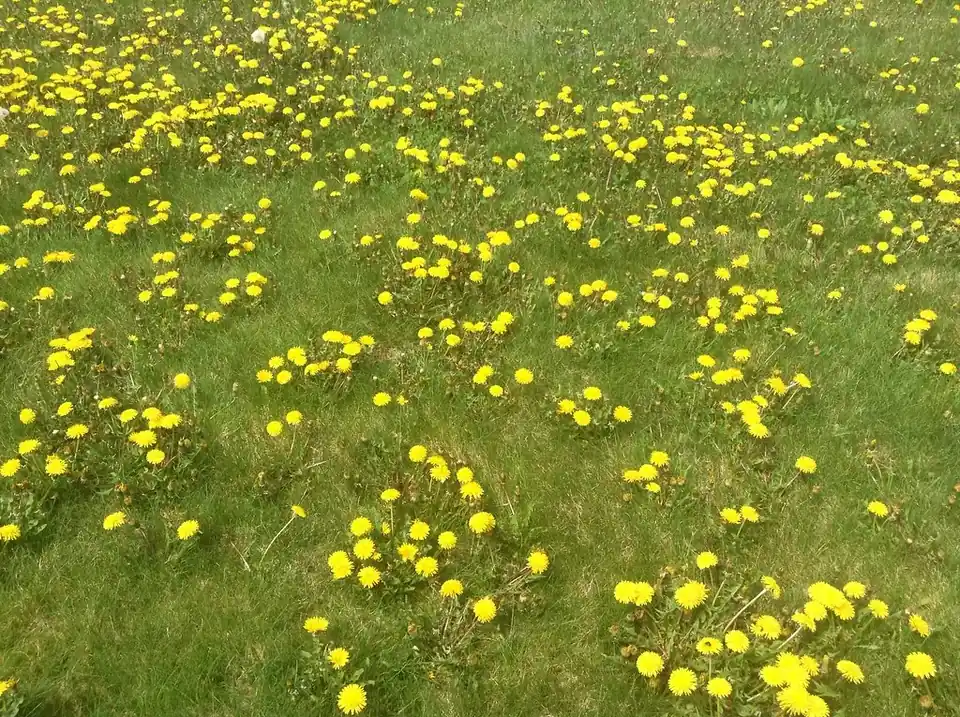
What Is 2,4-D Herbicide?
2,4-D (2,4-dichlorophenoxyacetic acid) is one of the oldest synthetic weed killers in the world. It has been registered in the United States since 1948, and the US EPA estimated domestic use at roughly 46 million pounds a year, with homeowner lawn products (alone or in weed and feed) making up a big slice of that (EPA 2,4-D RED Facts). There are more than a thousand products containing it on the US market, as liquids, ready-to-use sprays and granules (National Pesticide Information Center).
Every 2,4-D herbicide belongs to the phenoxy family, a group that also includes MCPA and mecoprop (MCPP). That family matters, because it tells you how the product behaves: it’s absorbed through leaves, moves inside the plant, and kills slowly over days to weeks rather than burning leaves overnight.
How 2,4-D kills weeds
2,4-D mimics auxin, a natural plant growth hormone. Susceptible broadleaf plants absorb it, and cells in the tissues that carry water and nutrients start dividing and growing without stopping (NPIC; UC IPM). That’s why treated weeds twist, curl and cup before they collapse. Grasses handle the hormone differently, which is why a correctly applied 2,4-D herbicide spares most turfgrass.
Because the weed has to transport the herbicide down to its roots, timing matters more than with a contact spray. You’ll see twisting within a day or two, but full kill of a tough perennial usually takes a couple of weeks. Our guide to how long weed killer takes to work breaks down the timeline by herbicide type.
2,4-D vs glyphosate: not the same thing
People often lump the two together, but they are opposites in the way that matters most. Glyphosate is non-selective: it kills grass and weeds alike. 2,4-D is selective: it kills many broadleaf weeds but not most grasses (NPIC). Spray glyphosate across a lawn and you’ll have a brown lawn. Spray 2,4-D at the label rate and, in the right season, you’ll mostly just have fewer dandelions. If you want the bigger picture of lawn-safe sprays, see our post-emergent herbicide guide.
What 2,4-D Kills (and the Weeds It Misses)
Here’s the thing most product packaging won’t tell you: 2,4-D herbicide on its own is excellent on some weeds and nearly useless on others. If your main problem is in the second group, buying straight 2,4-D is money down the drain.
Kansas State University’s turf program puts it plainly: 2,4-D is effective on tap-rooted weeds such as dandelion and broadleaf plantain, but by itself it doesn’t control white clover, chickweed, purslane, ground ivy or violets very well (K-State Turf). The Pacific Northwest Weed Management Handbook rates dozens of turf weeds against each herbicide, and the chart below pulls out the ones US homeowners see most often (PNW Handbook).
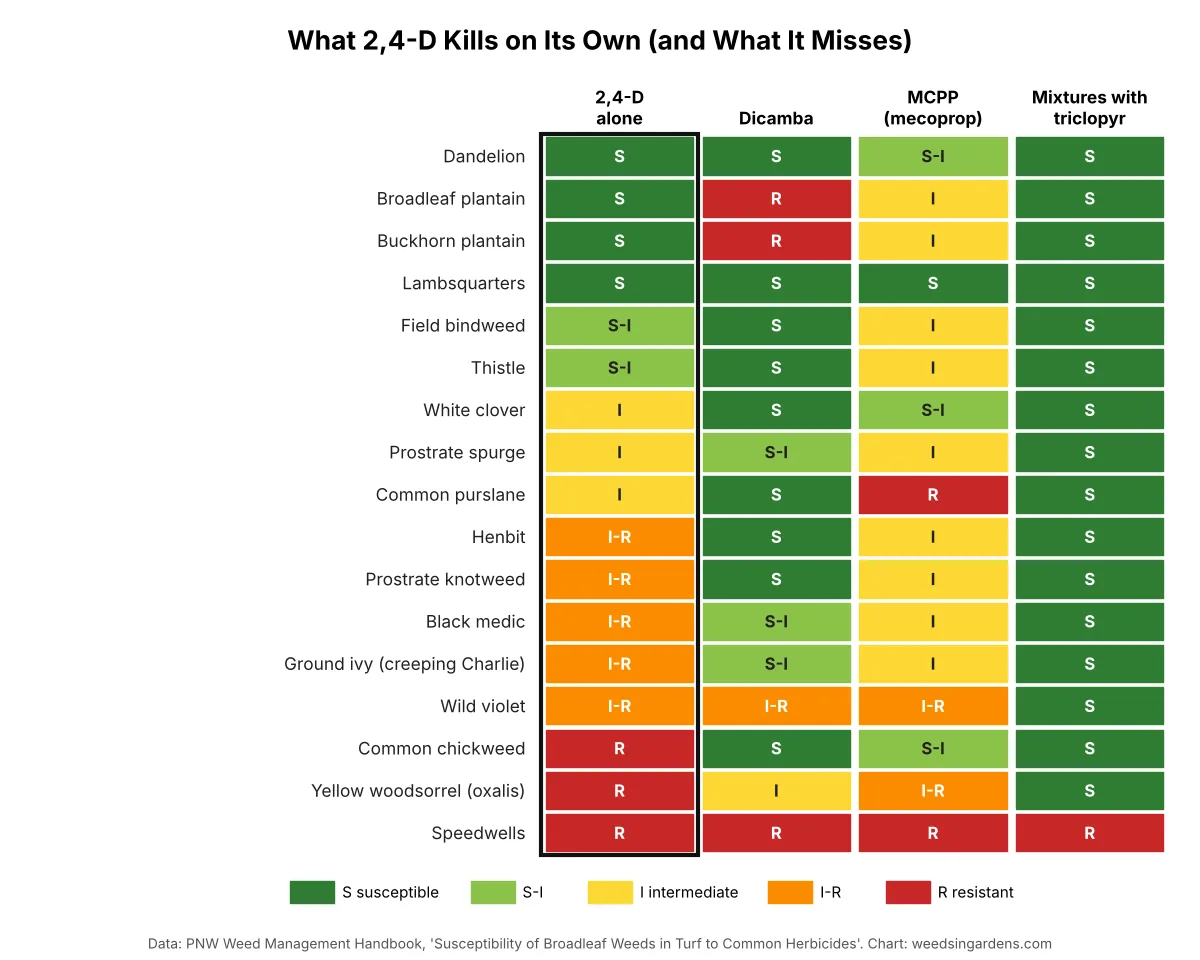
Read the black-outlined column first. Green means 2,4-D alone should do the job; orange and red mean you need a different active ingredient or a mix. Notice how the right-hand column (mixtures containing triclopyr) is green almost all the way down. That’s the logic behind three-way and four-way lawn products.
| Your main weed | 2,4-D alone? | Better choice (follow the label) |
|---|---|---|
| Dandelion, broadleaf or buckhorn plantain | Yes, susceptible | 2,4-D alone or any 2,4-D mix |
| Thistle, field bindweed | Partly (S-I) | 2,4-D + dicamba mix; repeat sprays |
| White clover, black medic | Weak | Mix with dicamba or MCPP; triclopyr mixes |
| Henbit, chickweed, prostrate knotweed | Weak to resistant | Dicamba-containing mix, best in fall |
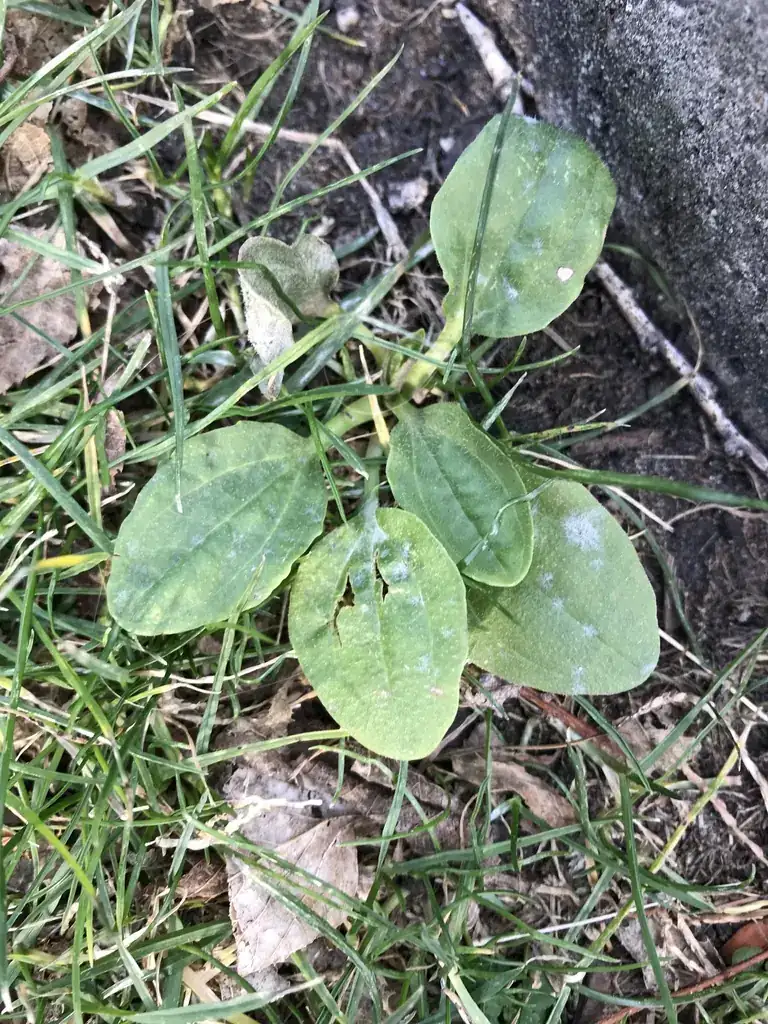
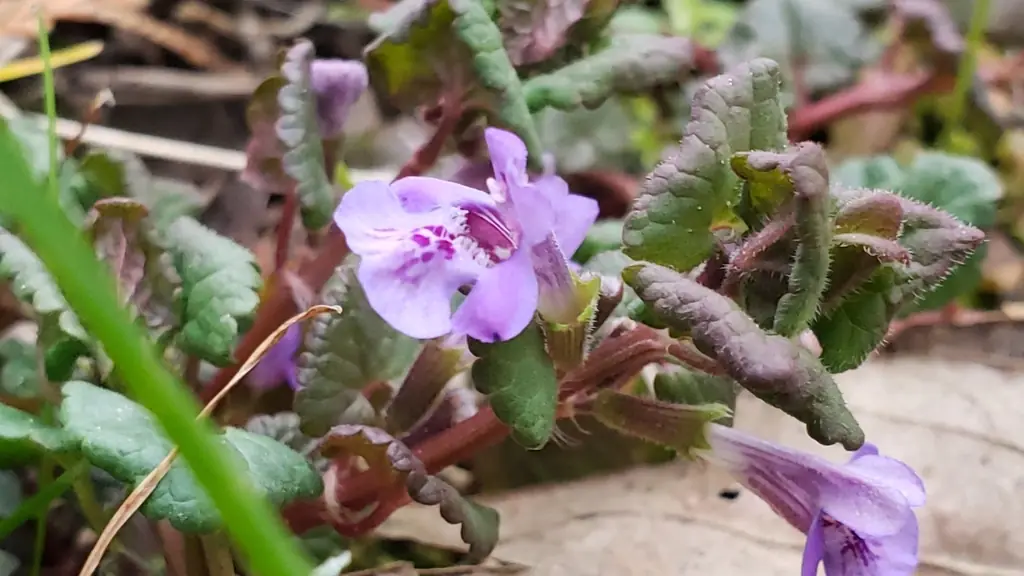
| Ground ivy (creeping Charlie), wild violet | Weak | Triclopyr-containing product |
| Yellow woodsorrel (oxalis), speedwell | Resistant | Specialty actives (see our oxalis and speedwell guides) |
| Grassy weeds (crabgrass, nutsedge) | No | Not a 2,4-D job at all |
Source for ratings: PNW Weed Management Handbook and K-State Turf. If creeping Charlie is your headache, our creeping Charlie guide covers the triclopyr route in detail.
Amine vs ester: which 2,4-D herbicide formulation should you buy?
Look at the active-ingredient line on the label and you’ll see something like “2,4-D, dimethylamine salt” or “2,4-D, 2-ethylhexyl ester”. That suffix changes how the 2,4-D herbicide behaves on your property, not just in the weeds (Penn State Extension).
| Amine (salt) formulations | Ester formulations | |
|---|---|---|
| Volatility (vapor drift) | Lower | Higher; can vaporize and move to nearby plants |
| Uptake into waxy leaves | Slower (more water-soluble) | Faster (more oil-soluble) |
| Best season | Warm weather, near gardens and shrubs | Cool spring weather, hard-to-kill weeds |
| Risk to fish if it reaches water | Salt forms only slightly toxic | Some esters very toxic to fish |
| Typical home-lawn products | Most concentrates and RTU sprays | Some farm and professional products |
Penn State explains that esters have higher vapor pressure, so they volatilize more as temperatures rise, while amines are generally less volatile and are the usual choice in landscapes where drift is a concern. In cool weather (March to early May), esters can give better control; in warm weather, the two perform about the same, so the amine is the smarter pick (Penn State Extension). K-State adds that ester forms are recommended for waxy weeds like wild garlic and wild onion (K-State Turf). Fish toxicity data come from NPIC.
Honestly, for most home lawns with tomatoes, roses or a neighbor’s vegetable garden nearby, the amine version is the sensible default.
Safe 2,4-D Rates and Grass Tolerance by Lawn Type
Not every lawn grass tolerates the same dose of 2,4-D herbicide. Southern grasses like St. Augustine and centipede are noticeably more sensitive, and some labels ban certain grasses outright. This is where most lawn damage from 2,4-D comes from: one rate sprayed over every grass type.
Below are real rates from two widely sold homeowner products and an extension table. They are examples only. Products differ in strength, so the rate on your bottle is the only one that counts.
| Product (2,4-D content) | Grass type | Rate per 1,000 sq ft | Source |
|---|---|---|---|
| Spectracide Weed Stop For Lawns Concentrate (2,4-D DMA 7.59% + MCPP-p + dicamba) | St. Augustine*, bahia, centipede | 2 fl oz | Product label |
| Same product | Bermuda, bentgrass | 2⅔ fl oz | Product label |
| Same product | Bluegrass, fescue, ryegrass, zoysia | 4 fl oz | Product label |
| Hi-Yield 2,4-D Selective Herbicide (11.8%) | Bermuda, zoysia (half rate on St. Augustine) | 2.94 fl oz | Alabama Extension |
| Amine 2,4-D concentrates (46.8%) | Bermuda, zoysia (half rate on St. Augustine) | 1.1–1.5 fl oz | Alabama Extension |
*Not for the Floratam variety of St. Augustinegrass in Florida, according to the Spectracide label.
Label limits worth knowing before you spray
- Temperature: the Spectracide concentrate says do not treat above 85°F; Alabama Extension also says don’t use 2,4-D above 85°F (label; ACES). Some newer mixes allow up to 90°F, and say not to spray bermudagrass above 90°F or zoysia just coming out of dormancy (label 9688-268-8845).
- Grasses to skip entirely: some 2,4-D mixes (for example ones that add quinclorac and sulfentrazone) must not be used on bentgrass, St. Augustine, bahia, centipede, carpetgrass or dichondra (label).
- How often: the Spectracide labels limit broadcast treatments to two per year, at least 30 days apart; the crabgrass version also caps the season at 1.2 lb of 2,4-D acid equivalent per acre (label; label).
- Water and rain: no watering within 6 hours on the Spectracide concentrate; Alabama Extension advises no watering for 24 hours; K-State says skip it if rain is expected within 24 hours (label; ACES; K-State). Our guide to spraying weed killer before rain compares rain-free times across products.
- New lawns: K-State advises waiting until new grass has been mowed three or four times before treating, and waiting at least 30 days after spraying before seeding; one label allows reseeding after three weeks (K-State; label).
- Trees and shrubs: don’t spray within the drip line of desirable trees, shrubs and flowers (ACES; label).
When to Apply 2,4-D: A Season-by-Season Plan
If you remember one thing from this article, make it this: fall is the best time to use a 2,4-D herbicide on most perennial lawn weeds. K-State notes that many cool-season annual and perennial broadleaf weeds are best controlled in autumn, with spring sprays used only to clean up escapes (K-State Turf). Mid-November, while weeds are still green and days are mild, is still useful in much of the country.
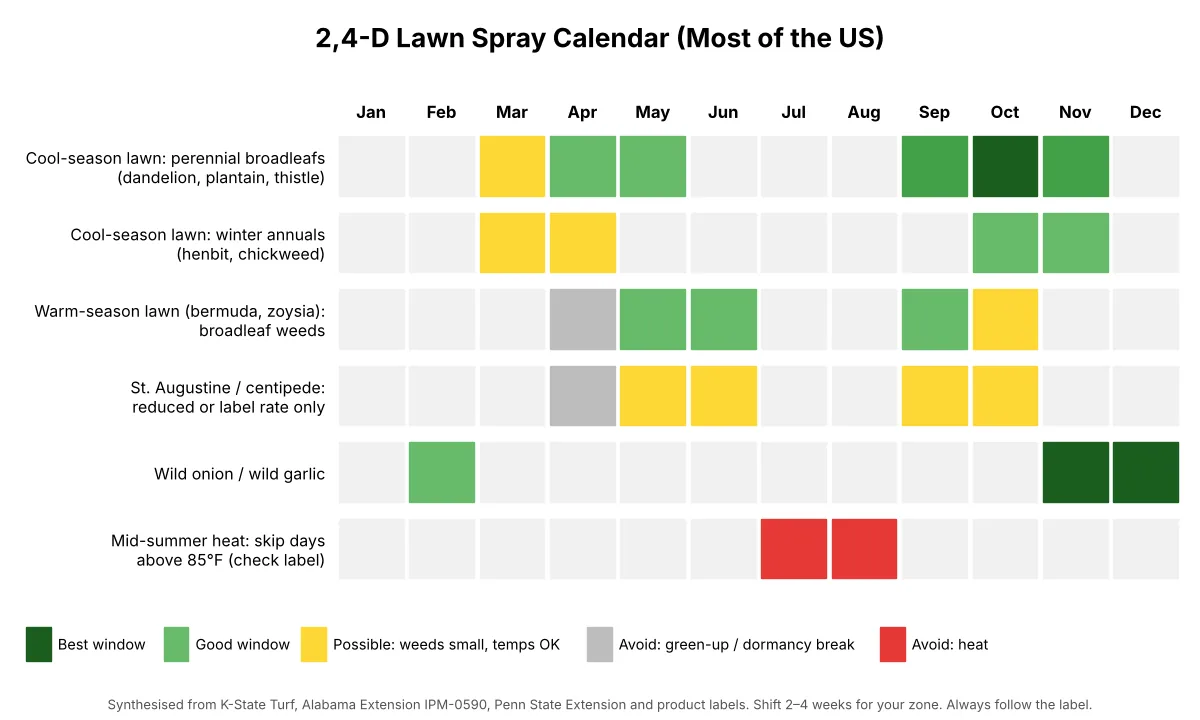
| Season | What to do with 2,4-D | Why |
|---|---|---|
| Early fall (Sept–Oct) | Main treatment for dandelion, plantain, thistle in cool-season lawns | Weeds are actively growing and moving sugars to roots; best control window |
| Late fall (Nov–Dec) | Spot-spray stragglers on mild days; first wild onion/garlic spray | Alabama Extension advises treating wild onion in Nov–Dec and again in Feb, only after several days above 60°F |
| Late winter–spring (Feb–May) | Second onion spray; clean up escapes while weeds are small | Small, young weeds are easier to kill; avoid warm-season turf during green-up |
| Summer (July–Aug) | Usually skip, or spot-treat only on cool mornings | Most labels prohibit spraying above 85–90°F; heat-stressed weeds absorb less |
Sources: K-State Turf, Alabama Extension IPM-0590, Penn State. Alabama Extension also defines the spring and fall “green-up” transition as the time warm-season grasses are most sensitive to herbicides. For the temperature details, see our best temperature to spray weeds guide, and for wild onion specifically, our wild onion vs wild garlic article.
How to Spray 2,4-D Without Hurting Your Lawn or Garden
Most 2,4-D herbicide failures aren’t the product’s fault. They come from spraying the wrong weed, in the wrong weather, at the wrong dose. Here’s the routine extension specialists recommend, put in order.
- Identify the weed first. Check the chart above. If it’s clover, violets or creeping Charlie, buy a mix, not straight 2,4-D (K-State).
- Pick a calm, mild day. Watch wind to avoid drift; early mornings are often stiller. Skip days forecast above 85°F, or the label’s limit (K-State).
- Don’t mow right before or after. K-State advises leaving a few days on either side so there’s plenty of leaf to absorb the spray (K-State).
- Spot-spray when you can. Treating individual weeds with a pump sprayer uses less product than blanketing the whole lawn, and K-State recommends it whenever possible (K-State).
- Measure, don’t guess. Use the rate for your grass type. Heavier isn’t better: Alabama Extension advises half the normal rate on St. Augustinegrass (ACES).
- Wait, then repeat if needed. Hardy weeds may need a second treatment in 10–14 days (ACES).
- Use a dedicated sprayer. It’s hard to remove every trace of herbicide from a sprayer, so don’t reuse it on vegetables or flowers (ACES).
Non-chemical options that work alongside 2,4-D
K-State calls good culture the first line of defense: properly mowed, watered, fertilized and aerated turf is denser and has fewer weeds (K-State Turf). In practice that means mowing high, feeding cool-season lawns mainly in fall, and overseeding thin patches so weeds have nowhere to land. For a few dandelions or plantains, a long-handled weeding tool that pulls the taproot is honestly faster than mixing a sprayer. Our fall weed control plan shows how to combine both approaches.
Is 2,4-D Safe for People, Pets and the Environment?
Is 2,4-D herbicide safe? It’s the question behind a lot of searches, so here’s what the evidence says, without hype in either direction.
| Topic | What the authoritative sources say |
|---|---|
| Short-term human exposure | Pure 2,4-D is low in toxicity by mouth, skin and inhalation, but the acid and salt forms can cause severe eye irritation (NPIC). |
| How the body handles it | Poorly absorbed through skin; mostly excreted unchanged in urine, with more than 75% gone within 4 days (NPIC). |
| Cancer | EPA classified it as Group D, not classifiable, and found the data don’t show a cause-and-effect link with non-Hodgkin’s lymphoma (EPA). In 2015, the WHO’s IARC classified 2,4-D as possibly carcinogenic to humans (Group 2B) (Loomis et al. 2015, Lancet Oncology). |
| Dogs and cats | Dogs may be more sensitive to 2,4-D than other animals; pets are exposed mainly by walking on wet treated grass and grooming, or by drinking the product (NPIC). |
| Soil | Usually breaks down quickly: half is gone in 1–14 days in most soils (NPIC). |
| Water and fish | Found at low levels in some streams and shallow groundwater; some esters are very toxic to fish, salts only slightly (NPIC). |
| Bees | Practically non-toxic to honeybees (NPIC). |
The practical takeaways are simple and all come from the labels and NPIC: keep people and pets out of the area during spraying and until the spray has dried; wear gloves, long sleeves and eye protection; store the bottle where children and pets can’t reach it; and never let spray or rinse water run into storm drains or ditches (label; NPIC; UC IPM).
A Note From the Agronomist’s Side
Lay these extension tables side by side and one pattern jumps out: a 2,4-D herbicide is rarely the weak link in a lawn program. The weak links are weed identification and timing. The herbicide does exactly what its chemistry allows. It’s devastating on rosette-forming, tap-rooted weeds like dandelion and plantain, and mediocre on creeping, small-leaved or waxy weeds. If your lawn is mostly clover and violets and you keep buying straight 2,4-D, the product isn’t failing you; it was never the right match.
The fall advantage makes biological sense, too. A systemic, hormone-type herbicide has to be carried inside the plant to do its job, and in autumn perennial weeds are busy moving resources down into their roots for winter. A spray that rides along that flow reaches the parts that would otherwise regrow next spring. In summer heat, the opposite happens: weeds are stressed, uptake drops, and the turf itself is more easily injured, which is exactly why labels draw a hard line at 85–90°F.
My rule of thumb: diagnose before you buy, spray on a calm fall day while weeds are green, use the lower rate for southern grasses, and judge the result after two to three weeks, not two days. Then fix the thin turf that let the weeds in, or you’ll be repeating this every year.
FAQ About 2,4-D Herbicide
Is 2,4-D safe for pets?
It can be used around pets if you follow the label: keep dogs and cats off the lawn during spraying and until the spray has completely dried. NPIC notes that dogs may be more sensitive to 2,4-D than other animals, and pets are mostly exposed by walking on wet grass and then grooming.
Is 2,4-D a pre-emergent?
Not in practical lawn terms. EPA describes 2,4-D as a post-emergence herbicide for selective control of broadleaf weeds, and it breaks down in soil within about 1–14 days, so it won’t stop next season’s weed seeds. Use a true pre-emergent for that.
Will 2,4-D kill my grass?
At the label rate on a listed grass, it usually won’t. Damage happens when it’s sprayed above about 85–90°F, at too high a rate, on sensitive grasses such as St. Augustine and centipede without reducing the rate, on newly seeded grass, or on grasses the label excludes, such as Floratam St. Augustine in Florida.
How long does 2,4-D take to work?
You’ll usually see twisting and curling within a day or two, but complete kill of established perennial weeds often takes one to three weeks. Hardy weeds may need a second spray 10–14 days later, according to Alabama Extension.
Is 2,4-D the same as glyphosate?
No. Glyphosate kills almost any green plant, including grass. 2,4-D is selective: it kills many broadleaf weeds but not most grasses, which is why it’s used on lawns.
Does 2,4-D kill clover?
Not reliably on its own. K-State and the PNW Weed Management Handbook rate white clover as only intermediate for 2,4-D alone. Products that add dicamba, mecoprop or triclopyr give much better clover control.
When is the best time to spray 2,4-D?
Early to mid-fall is the best time for most perennial broadleaf weeds, on a calm day below 85°F with no rain expected for 24 hours. Spring works for weeds that escaped fall treatment, ideally while they’re small.
Sources
- National Pesticide Information Center (Oregon State University). Jervais G. et al. 2,4-D General Fact Sheet. npic.orst.edu
- US EPA. 2,4-D RED Facts, EPA-738-F-05-002 (2005). archive.epa.gov
- Delvalle T. Amines or Esters; Which Should You Use? Penn State Extension (updated 2025). extension.psu.edu
- Kansas State University Turfgrass. Broadleaf Weeds: Chemical Control. k-state.edu
- Alabama Cooperative Extension System. Home Lawns: Chemical Weed Control Recommendations, IPM-0590. aces.edu (PDF)
- PNW Weed Management Handbook. Susceptibility of Broadleaf Weeds in Turf to Common Herbicides. pnwhandbooks.org (PDF)
- UC Statewide IPM Program. Pesticide Active Ingredients Database: 2,4-D. ipm.ucanr.edu
- Loomis D. et al. (2015). Carcinogenicity of lindane, DDT, and 2,4-dichlorophenoxyacetic acid. The Lancet Oncology 16(8):891–892. doi:10.1016/S1470-2045(15)00081-9 (via PubMed)
- Spectracide Weed Stop For Lawns Concentrate, product label (EPA Reg. No. as printed: 478-121-8845). WSU PICOL (PDF)
- Spectracide Weed Stop For Lawns Plus Crabgrass Killer Concentrate, product label (EPA Reg. No. 9688-268-8845). label PDF