
Short answer: grass fails for one of two very different reasons, and you need to know which you have before spending money. If you sowed seed and nothing came up, the usual culprits are soil that was too cold or too hot (cool-season seed wants roughly 59–86°F / 15–30°C at the surface; bermudagrass and zoysia want 65–72°F / 18–22°C), seed buried deeper than 1/4 inch (6 mm), a seedbed that dried out for one afternoon during germination, or a pre-emergent herbicide still active in the soil. If an established lawn refuses to thicken, the list is different: under four hours of direct sun, compacted soil, a pH outside 6.0–7.0, tree roots in the top 8 inches, buried builder’s rubble, dog urine, grubs, or a grass species that never suited your climate. The table below sorts symptoms into causes, and each fix gives the numbers you need.
First, which problem do you actually have?
Three questions narrow ten causes to two or three. Did you sow seed in the last month, or has this patch been thin for years? Is the failure spread evenly, or in defined shapes, under trees, along a path, or where the dog goes? And can you push a screwdriver 4–6 inches (10–15 cm) into moist soil with one hand?
| What you see | Most likely cause | Quick test |
|---|---|---|
| Seeded 3 weeks ago, nothing has emerged | Soil too cold or too hot; seed dried out; pre-emergent residue | Soil thermometer 1 inch (2.5 cm) deep at 8 am for 3 days; check what herbicide went down in the last 6 months |
| Seed came up only in low spots and furrows | Seed washed to low ground; high ground dried too fast | Look for drifts of seedlings at the bottom of slopes |
| Bare pecked ground, bird tracks | Birds ate exposed seed | Watch the bed at dawn |
| Seedlings appeared, then vanished in a week | Dried out after germination; crusted surface | Is the top inch bone dry by mid-afternoon? |
| Old lawn thin, pale and leggy near trees | Under 4 hours of sun; tree root competition | Count hours of direct sun in June; dig a 6-inch hole and look for fine tree roots |
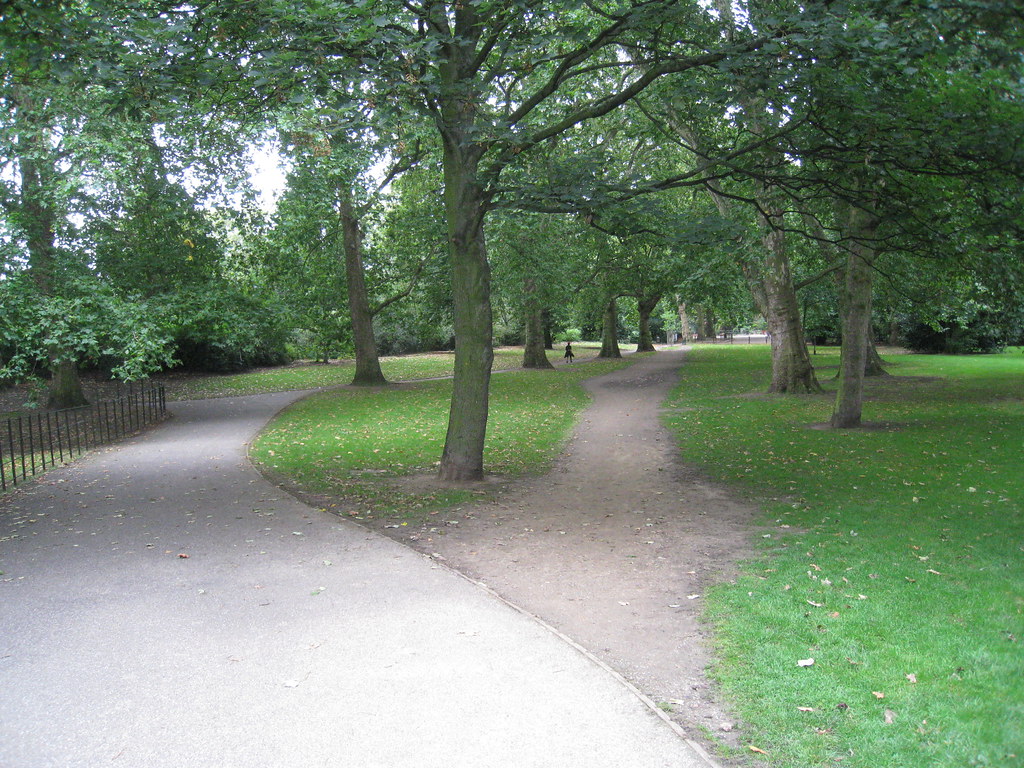
| Thin along paths, the driveway, where cars park | Compaction | Screwdriver will not go in 4 inches after rain |
| Thin everywhere, moss and clover winning | Low pH or low nutrients | Lab soil test: 12 cores, 4 inches deep |
| Dead patch with a sharp, regular outline that browns first in dry spells | Buried debris or fill | Probe with a rod; dig one corner |
| Brown spots 4–12 inches across with a darker green ring | Dog urine | Match spots to where the dog squats |
| Turf peels back like a carpet; skunks or birds digging | White grubs | Cut a 1-square-foot flap and count the C-shaped larvae |
| Whole lawn declines every summer (or every winter) | Wrong grass type for your climate | Identify the species; compare to your climate |
| Streaks, arcs or bleached grass 1–2 weeks after a spray | Herbicide damage or overlap | Match the pattern to your spray path |
Case A: you sowed seed and it never came up
1. The soil was the wrong temperature
A seed responds to soil temperature in the top inch, not to air temperature, and the windows are narrower than most bags suggest. Purdue lists the optimum germination ranges as a cooler night alternating with a warmer day: Kentucky bluegrass 59–86°F (15–30°C), tall fescue and perennial ryegrass 68–86°F (20–30°C), red and sheep fescue 59–77°F (15–25°C), according to Purdue University Turfgrass Science. Warm-season seed needs more: Oklahoma State advises seeding bermudagrass once soil reaches about 65°F (18°C), and the University of Arkansas puts zoysia at 68–72°F (20–22°C) at the soil surface, germinating in 7–10 days or more.
So cool-season seed sown in early April across the northern US, Canada or the UK often sits in 45°F (7°C) soil for weeks, rotting or coming up unevenly in May; seed sown in July hits a surface that bakes past 90°F (32°C) and dries within hours. The University of Maryland Extension gives the rule for cool-season lawns: seed from mid-August through October, with late February to March as second best, and expect tall fescue in 5–10 days and Kentucky bluegrass in 14–21 days once conditions are right. Past 21 days with nothing showing, the seed is not coming.
| Species | Germination temperature (soil surface) | Typical emergence | Seeding rate, new lawn |
|---|---|---|---|
| Kentucky bluegrass | 59–86°F / 15–30°C | 14–21 days | 1–3 lb per 1,000 sq ft (0.5–1.5 kg/100 m²) |
| Perennial ryegrass | 68–86°F / 20–30°C | 5–10 days | 4–6 lb per 1,000 sq ft (2–3 kg/100 m²) |
| Tall fescue | 68–86°F / 20–30°C | 5–10 days | 6–8 lb per 1,000 sq ft (3–4 kg/100 m²) |
| Fine fescues (red, sheep, Chewings) | 59–77°F / 15–25°C | 7–14 days | 4–6 lb per 1,000 sq ft (2–3 kg/100 m²) |
| Bermudagrass (hulled) | 65°F+ / 18°C+ | 7–14 days | Follow the bag; top 1/4 inch of soil only |
| Zoysia | 68–72°F+ / 20–22°C+ | 7–10+ days | 1–2 lb pure live seed per 1,000 sq ft |
Rates are from Cornell University’s sports field program, UMass and the Arkansas zoysia guide. They differ so much because a pound of bluegrass holds about 1.5 million seeds and a pound of ryegrass only 250,000.
2. Buried too deep, or not covered at all
Turf seed is small and most species need light to germinate. Maryland Extension says seed needs firm soil contact but must not be completely covered; Arkansas sets the limit for zoysia at 1/4 inch (6 mm) and Oklahoma State says the same for bermudagrass. Seed rototilled in or buried under an inch of topsoil or compost will not reach the surface. Scattering it on hard bare ground is the opposite mistake. Rake the surface loose, sow, then rake lightly or roll so the seed sits in the top 1/4 inch, as in our guide to preparing soil for grass seed.
3. It dried out during germination
This is the most common cause of total failure, and one dry afternoon is enough. The K-State Research and Extension bulletin on watering new lawns puts it plainly: seed that begins to germinate and then dries out may die. Their schedule is light watering once or twice a day (more in wind and heat) until emergence; every other day with 1/4 inch (6 mm) once seedlings reach 1 inch (2.5 cm); every third day with 1/2 inch (12 mm) in the second week; then 1 inch (25 mm) every 5–7 days. A thin layer of clean straw slows drying between cycles.
4. Old or poor-quality seed
Seed loses viability with age and heat; a bag left in a hot garage for two summers may germinate at half its labelled rate. Check the test date on the label, and if in doubt put 20 seeds on a damp paper towel in a plastic bag for two weeks and count what sprouts. Below 10 of 20, buy fresh certified seed. Maryland Extension lists uncertified seed as a leading cause of poor stands because of low germination and high weed-seed content.
5. Birds, rain and runoff
Sparrows, finches and doves clear exposed seed in days, and one thunderstorm can move a seeding to the bottom of the slope. Both are obvious on inspection: pecked bare ground, or a green stripe in the gutter. Straw mulch, seed mats or netting deal with both; see how to protect grass seed from birds and protecting new seed from heavy rain.
6. Pre-emergent herbicide residue
If crabgrass preventer went down in spring, it is doing exactly what it was designed to do: stopping grass seed from rooting. Pendimethalin, dithiopyr and prodiamine are not suitable around new seedings; only siduron and mesotrione can be used at seeding time, according to the Rutgers Center for Turfgrass Science. The reverse restriction matters too: Purdue’s table of herbicide delays after seeding shows prodiamine cannot go on a new seeding for 60 days or until after the second mowing, whichever is longer, and 2,4-D products need 2–4 mowings first. Reseeding intervals after a spring pre-emergent are printed on every label and run for months at typical rates, so read the bag you used before buying more seed. If weeds are the issue, see our guide on killing weeds before overseeding.
Case B: the lawn is established but will not fill in
7. Not enough light
Any area receiving less than four hours of direct sun a day, or less than 50 percent open sky, is too shady for turf to thrive, per NC State Extension; Clemson puts tall fescue’s limit at about five hours. Below that, Penn State Extension describes exactly what you see: shortened roots, reduced shoot density, erect elongated leaves, more disease, and moss moving in.
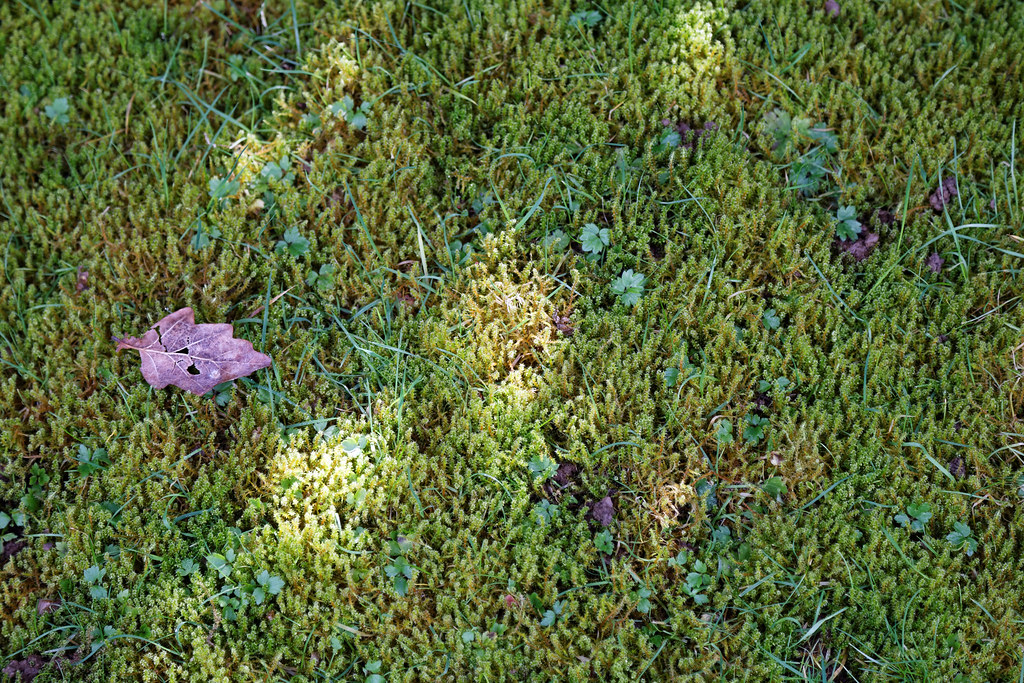
What works: mow 1/2 to 1 inch (1–2.5 cm) higher than the sunny lawn, prune lower limbs and thin the canopy, and reseed in early autumn with the most shade-tolerant grass available. In cool climates that is fine fescue for heavy shade or an 80 percent tall fescue, 20 percent Kentucky bluegrass blend for lighter shade; in warm climates St. Augustinegrass, then zoysia. Feed less, not more: Clemson HGIC recommends one-half to two-thirds the nitrogen of a sunny lawn, and NC State suggests about 2 lb of nitrogen per 1,000 sq ft per year for cool-season shade lawns. If it fails after two autumn seedings, mulch it or plant a groundcover.
8. Tree roots and buried debris
Under maples, willows, beeches and most conifers, light is only half the problem. NC State notes that these trees’ feeder roots grow in the upper 8 inches (20 cm) of soil, where grass roots live, and reach well beyond the drip line. Water deeply and infrequently (frequent shallow watering pulls tree roots up into the turf zone, per Penn State) and accept a thinner sward.
A dead patch with a regular outline that browns first in every dry spell is different. Maryland Extension describes buried debris in lawns as damage that follows the shape of the object below, because the roots over it are shallow and dry out first. Turf roots normally go 6–8 inches (15–20 cm) deep; a slab, a pile of bricks or a layer of compacted fill at 3 inches stops that. The only fix is to dig, remove it and backfill with 6 inches of real topsoil.
9. Compacted soil
Compaction squeezes air out of soil, so roots suffocate, water sheds off instead of soaking in, and the soil is harder to re-wet once dry, as the University of Maryland Extension describes. It shows first where feet and wheels travel. The fix is hollow-tine core aeration when the soil is moist but not wet, in early autumn for cool-season grass and late spring for warm-season, followed straight away by overseeding into the holes and a compost topdressing. One pass rarely cures years of compaction; plan on two or three seasons. For badly panned ground, see preparing hard, compacted soil for grass seed.
10. Wrong pH or missing nutrients (test before you lime)
Grass takes up nutrients best between pH 6.0 and 7.0; outside that band phosphorus and micronutrients lock up and moss and clover win. Do not guess. University of Missouri Extension describes the sampling: 12 or more cores per problem area, 4 inches (10 cm) deep on an established lawn or 6 inches before seeding, mixed and sent to a lab; retest every three years, or yearly while correcting a problem. Lime only on the lab’s recommendation, and never more than 50 lb per 1,000 sq ft (25 kg/100 m²) in one application on an established lawn, because surface lime moves down slowly. New seedings on low-phosphorus soil benefit from 1–4 lb of P₂O₅ per 1,000 sq ft worked in first, again per the test. In the UK and much of Australia, alkaline soils need sulphur rather than lime, and only a test tells you which you have. Where the lab does call for lime, lime for lawns covers the types, rates and timing in detail.
Three more that catch people out
- Dog urine. Brown centre, often a lush green ring. Colorado State University Extension is blunt: the damage is a concentrated dose of nitrogen and salts, no dietary supplement has been proven to prevent it, and the only thing that neutralises it is water. Hose the spot within a few hours and reseed dead centres; our piece on how long burnt grass takes to grow back gives timelines.
- White grubs. Grip the turf with both hands and pull; where grubs have eaten the roots it rolls back like a carpet, according to Ohio State University Extension. Their threshold for the common annual species is 10 grubs per square foot. Below that, water and feed and the lawn outgrows them; above it, a curative insecticide in late summer, or a preventive containing chlorantraniliprole from late May to mid-August, is justified. Skunks and raccoons digging at night are often the first sign.
- Wrong grass for the climate. Bermudagrass in a cool, cloudy region thins every year no matter what you do; Kentucky bluegrass in the Deep South dies every August. If the whole lawn struggles in the same season each year, identify what you have with our lawn grass comparison before reseeding the same species.
What not to do
- Do not lime because the lawn looks tired. Over-limed soil locks up iron and manganese, and only a test says whether you need it.
- Do not pile on seed. UMass Extension notes that seeding well above the recommended rate produces crowded juvenile plants that are slow to mature.
- Do not seed within weeks of a crabgrass preventer, and do not spray broadleaf weedkiller on seedlings that have not been mowed at least twice.
- Do not feed a shaded lawn harder to push it. Shade grass needs less nitrogen, and heavy feeding there invites disease.
- Do not reseed the same spot under a tree every spring. Two failed autumn seedings mean the light is not there.
When to expect results
A correctly timed cool-season seeding shows green in 5–10 days for ryegrass and tall fescue and 2–3 weeks for bluegrass, and is ready for a first mow at 3 inches about 4–6 weeks after emergence. Warm-season seedings need a full summer to knit together. A compacted or acidic lawn that is aerated, tested and corrected in autumn usually looks denser by early summer and properly thick after a second autumn treatment. Shade repairs are slower and less certain: if two consecutive autumn overseedings with a shade-tolerant mix have not held, the spot is not a lawn, and mulch or groundcover will cost less every year than the seed you keep throwing at it.
Sources
- Purdue University Turfgrass Science – Turf 101: Optimum temperatures for seed germination
- University of Maryland Extension – Poor Seed Germination in Lawns
- Cornell University Sports Field Management – Seeding Rates
- University of Arkansas Extension – Establishing Seeded Zoysiagrass
- Oklahoma State University Extension – Choosing, Establishing and Managing Bermudagrass Varieties
- Kansas State Research and Extension – Watering New Lawns (MF2802)
- Rutgers Center for Turfgrass Science – Weed Control in Spring Seedings
- Purdue University Turfgrass Science – Herbicide Delays after Seeding
- NC State Extension – Selecting and Managing Lawn Grasses for Shade
- Penn State Extension – Growing Turf Under Shaded Conditions
- Clemson University HGIC – Growing Grass in Shade
- University of Maryland Extension – Buried Debris in Lawns
- University of Maryland Extension – Lawn Problems Not Caused by Pests or Diseases
- University of Missouri Extension – Soil Testing for Lawns (G6954)
- UMass Extension – Seeding Rate Considerations
- Colorado State University Extension – Dog Urine Damage on Lawns
- Ohio State University Extension – White Grub Identification, Biology and Management