
Short answer: pull or cut invasive plants before they set seed, bag everything that could regrow (seed heads, roots, rhizomes, stem pieces) on the spot in heavy contractor-grade bags, and leave the sealed bags in full sun for at least three weeks before they go in the household rubbish. Never put invasive plants in a home compost heap, a council green-waste bin or a brush pile at the edge of the woods, and never tip pond plants into a ditch, stream or storm drain. Woody stems with no seeds can be dried, chipped or burned where permits allow. Japanese knotweed is the special case: in the UK it is legally controlled waste, so it either dies on site or leaves with a registered waste carrier.
Why the usual garden-waste route spreads them
Three things make invasive plants different from ordinary garden waste. First, many keep ripening seed after they are pulled. University of New Hampshire Extension warns that some plants “continue to grow, flower and set seed even after pulling or cutting”. Second, a large group regrows from fragments: the Connecticut Invasive Plant Working Group lists Japanese and giant knotweed, goutweed, Canada thistle, leafy spurge, garden loosestrife and star-of-Bethlehem among species that “may survive in compost and spread to new locations when distributed”. Third, seeds outlast your patience: Minnesota DNR notes garlic mustard seed stays viable in soil for five to ten years. Hence the rules every extension service repeats: remove before seed set, bag on site, keep it out of compost and waterways, and clean up after yourself.
First decide what you are dealing with
Before choosing a method, answer three questions. Is it flowering or seeding? UConn’s guidance is to “check plants for flowers before deciding on a disposal option”, and to treat any grass or sedge in flower as if it already carries viable seed. Does it regrow from pieces? Knotweeds, goutweed, bamboo, thistles, spurges and most aquatic plants do; a barberry or buckthorn seedling does not. Is it woody or soft? Woody material dries and dies fairly reliably; soft, fleshy material stays alive in a pile for weeks. Pre-flowering herbaceous plants that do not regrow from fragments are the easy case: pull them, leave the roots exposed to the sun, and compost them once “fully dead and dried”, as UConn puts it. Everything else needs one of the methods below.
Disposal methods compared
| Method | Best for | How long | Limits |
|---|---|---|---|
| Bag and solarize, then landfill | Anything with seeds, roots or rhizomes; default for small gardens | Sealed bags in full sun at least 3 weeks (NY DEC); “several weeks” (UNH, Penn State) | Use heavy black or clear contractor bags, no stems poking through; check your landfill or council accepts plant material first |
| Tarp drying | Larger volumes of pulled herbaceous plants without seed | Several weeks, until clearly dead | Pile on plastic, tarp pinned down, check edges for escapes |
| Air dry and chip | Woody shrubs and vines with no fruit that do not resprout from cuttings | Until dry | UNH: only for woody plants that “don’t reproduce vegetatively”; never chip fruiting material |
| Hot composting | Seed-bearing weeds only where the pile is actively managed | 131 to 170 °F (55 to 77 °C) for 3 days in a turned or aerated pile, 15 days with five turns in a windrow | Edges and surface do not reach temperature; not for rhizome species |
| Burning | Woody trunks and branches where open burning is legal | Same day, then check the ash pile | Permit usually required; do not burn plants carrying ripe seed, and knotweed crowns can survive a bonfire |
| Drowning | Soft aquatic and marginal plants | A few weeks in a sealed barrel of water | Smelly; UNH warns “seeds may still be viable after using this method” |
| Burying | Last resort for sites with no other option | Permanent | UNH: at least 3 ft (0.9 m) deep, 5 ft (1.5 m) for knotweed, lined with plastic; described as “risky” |
Bagging and solarizing, step by step
- Open a bag next to the plant before you pull, so seed heads go straight in.
- Use “heavy black or clear plastic bags (contractor grade)” as UNH recommends, and double-bag anything with sharp stems. Squeeze the air out and tie tightly so nothing protrudes.
- Lay the bags on a sunny patio or driveway (UNH notes dark pavement heats best). New York State DEC says to “allow the bags to sit for at least three weeks”; warm weather speeds it up, a cool spring slows it down.
- Check after three weeks: brown slime is dead; firm white roots or green shoots mean another two weeks.
- Put the bags in the general rubbish for landfill or incineration, not the green-waste collection. DEC advises contacting the landfill first, because not every site accepts plant waste.
Penn State Extension adds that spotted knapweed, purple loosestrife, Japanese knotweed and giant knotweed “should always be bagged and solarized before disposal”.
What hot composting can and cannot do
Seeds die at modest temperatures if the heat is even and moist: research summarised by eOrganic found that at 140 °F (60 °C), 90 percent of the seeds of six common weeds were killed in under three hours, and at 158 °F (70 °C) all of them died within an hour. But a domestic heap rarely holds those temperatures throughout. The same review warns that “temperatures at the edges and surface of compost piles and windrows may not be sufficient to kill weed seeds”, that dry heat is far less effective than moist heat (aim for 40 to 60 percent moisture), and that field bindweed seed needed seven days at 180 °F (82 °C). Rhizomes are worse: knotweed and goutweed pieces simply carry on growing in a warm, damp heap. Unless you measure the core with a thermometer and turn the pile, keep anything invasive out of it.
Species-specific notes
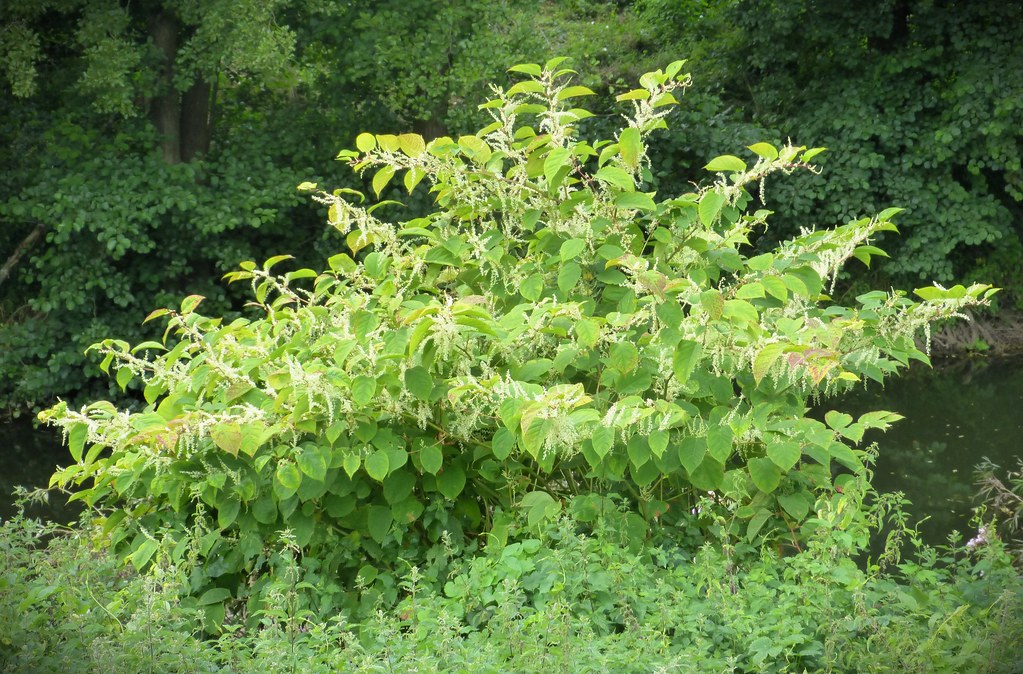
Japanese knotweed
Knotweed regrows from rhizome pieces “as small as 1cm”, according to the UK government, and its rhizomes run “1m (3⅓ft) or more” deep, according to the Royal Horticultural Society. In England and Wales the plant and any soil it has grown in are controlled waste. GOV.UK guidance says you must send it “to a landfill site or incineration facility that has the correct type of permit”, using a registered waste carrier, and “you can be prosecuted for causing it to spread into the wild”. Burial on site is allowed only at 5 m (16 ft) depth, or 2 m (6.5 ft) with a root barrier membrane, with the Environment Agency told a month beforehand. The RHS is blunt: not the home compost, not the council green-waste bin, not the household bin. The practical route is to kill the stand in place with a glyphosate programme, let cut canes dry on plastic, and burn them where allowed; GOV.UK notes that crowns and rhizomes can survive burning, and that dead canes may be composted only if cut, not pulled, at least 10 cm (4 in) above the crown. Never dig, rotavate or chop the rhizome. Our overview of knotweed, hogweed, kudzu and water hyacinth covers how to recognise each of these before you touch them.
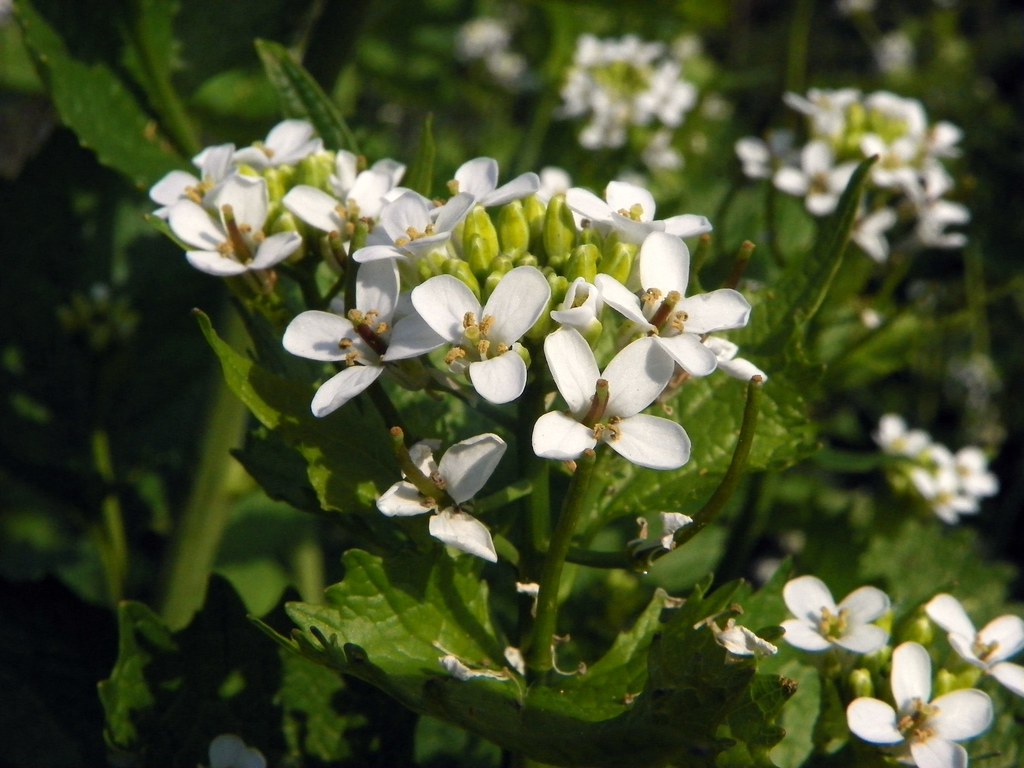
Garlic mustard
Pull in early spring while plants are in bud or first flower, before the long seed pods form. Minnesota DNR stresses that flowering plants keep setting seed after pulling, so “pulled plants be placed in bags for disposal and not simply left on the ground”. Bagged plants can be burned on site or piled under a tarp to rot; off site, only a composting facility hot enough for noxious weeds should take them. Clean boots, clothes and tools before leaving the patch; the seeds are tiny and travel in mud.
Kudzu
The huge kudzu storage root cannot sprout, which makes disposal simpler than its reputation suggests. Alabama Cooperative Extension explains that the plant regrows only from root crowns at or just below the soil surface, so the job is to “cut just below the root crown and remove the root crown from the soil”. Crowns go in the solarizing bags; cut vines can dry on a tarp, but check them for the nodes that root when buried. Expect 3 to 5 years of follow-up on old crowns, and treat regrowth with a foliar herbicide in late summer to early autumn.
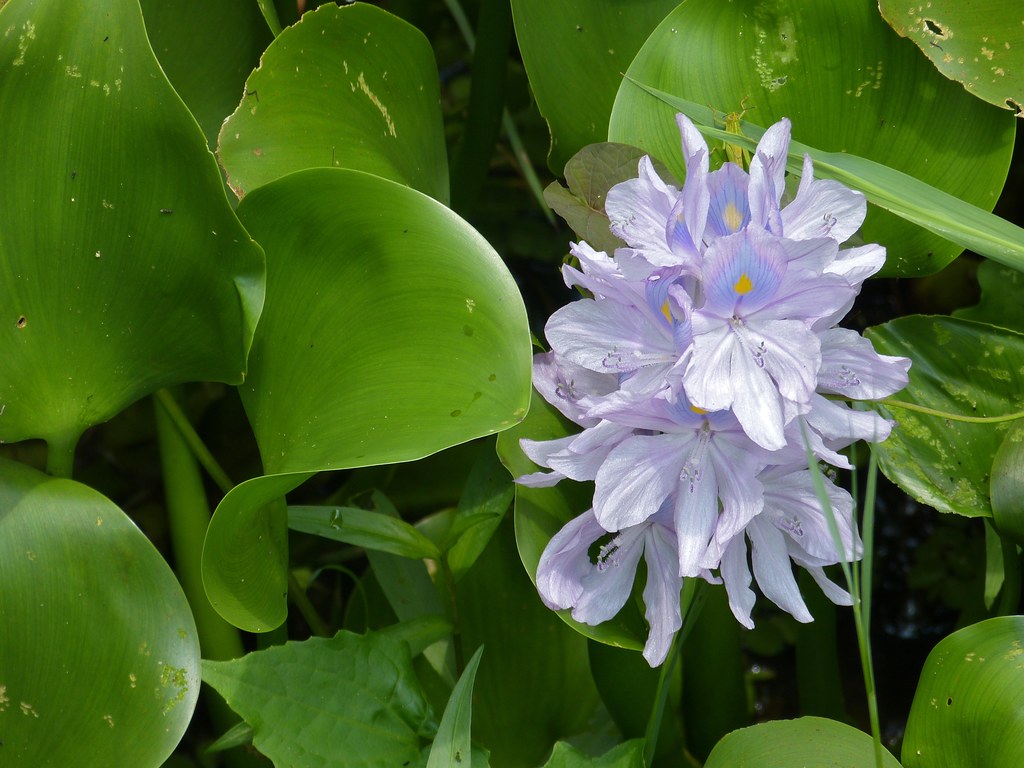
Water hyacinth, water lettuce and other pond plants
Aquatic plants are the group most often spread by disposal. Penn State’s rule: “Never dispose of aquatic plants from fish tanks or water gardens into natural systems.” For small amounts, freeze the plants for at least 24 hours and put them in the rubbish; for larger amounts, spread them to dry completely well away from any water, then bag them or let them rot on high ground. New York DEC says to leave all plant debris “above the waterline on dry land” or in the trash, never at the water’s edge where the next flood lifts it. Water hyacinth is illegal to possess or transport in some US states (Texas, for example, according to Texas A&M AquaPlant), water lettuce is restricted in a similar way, and water primrose roots from any stem fragment, so a single missed piece undoes the work.
Giant hogweed and other irritant-sap plants
Giant hogweed sap makes skin hypersensitive to ultraviolet light; the New York DEC giant hogweed control guide warns of blisters within 48 hours and scars that last years. Wear long waterproof gloves, long sleeves and trousers, boots and eye protection (a rain suit or disposable coverall with rubber boots and dishwashing gloves does the job), and work after sunset or in shade. Cut the root 2 to 6 inches (5 to 15 cm) below ground, deeper on slopes. Seed heads go straight into heavy bags, double-bagged, sealed and left in the sun for a week or more before the garbage. If sap touches you, wash with soap and water immediately and keep the area out of sunlight for at least 48 hours. Treat wild parsnip the same way.
Clean up: tools, boots, vehicles
- Knock soil out of boot treads and brush off trousers before you leave the infested patch, not when you get home.
- Wash or wipe down spades, forks and pruners; Penn State advises sanitising tools before using them on desirable plants.
- If plant material rode in a car or trailer, sweep the load bed and check wheel arches; aquatic weed on boats, trailers and gear should be removed on site.
- Do not drive over a seeding patch with the mower and then mow the rest of the lawn.
What to do with contaminated soil
Soil is where most re-infestations start. New York DEC’s rule is “don’t use topsoil or mulch contaminated by invasive species”; do not move it to another bed, give it away, or send it out as fill. For seed-only problems, solarize the cleared area under clear plastic in high summer, then plant a dense ground cover or turf so the next flush gets no light. For rhizome species, leave the soil in place, treat regrowth as it appears, and sieve out fragments if you must dig. Knotweed soil in the UK is controlled waste in its own right. When you replace a bed afterwards, apply the same care as when you prepare soil for grass seed: bring in clean topsoil from a supplier who can tell you where it came from.
Common mistakes
- Brush piles in the hedgerow. New York DEC says not to form brush piles “during or after flowering”, and UConn advises a plastic barrier under piles of rhizome species.
- Removing herbicide-treated plants too soon. UConn recommends leaving sprayed plants in place so the chemical reaches the roots.
- Burning seeding plants. UNH warns that heat can disperse mature seed before it burns. Bag seed heads; burn only stems.
- Transfer-station green waste. UNH says not to take invasives to a transfer station unless it has a designated area or the material is already dead.
Related guides: Running vs Clumping Bamboo: Which Kinds Are Invasive and How to Contain Them
Sources
- University of New Hampshire Extension – Methods for Disposing Non-Native Invasive Plants
- Penn State Extension – How To Properly Dispose of Invasive Plant Species
- New York State Department of Environmental Conservation – Guidelines for Disposing of Invasive Plants
- Connecticut Invasive Plant Working Group (UConn) – Invasive Terrestrial Plant Disposal
- GOV.UK – Prevent Japanese knotweed from spreading
- Royal Horticultural Society – Japanese knotweed
- New York State DEC – Giant Hogweed Control Guide
- Minnesota Department of Natural Resources – Garlic mustard
- eOrganic – Composting to Reduce Weed Seeds and Plant Pathogens
- Alabama Cooperative Extension System – Kudzu Control in Forests, Rights-of-Way and Natural Areas
- Texas A&M AgriLife AquaPlant – Water Hyacinth