
Short answer: most brown, crunchy lawns after a dry spell are dormant, not dead, and will come back on their own once rain returns and temperatures drop. Cool-season grasses such as Kentucky bluegrass and tall fescue can sit dormant for roughly 3 to 6 weeks without damage, and a healthy bluegrass lawn can go close to two months. To keep the crowns alive through a longer drought, apply 1/4 to 1/2 inch (6 to 12 mm) of water every 2 to 3 weeks; that will not green the lawn up, and it is not supposed to. Once the weather breaks, expect green shoots within about two weeks of the soil being fully wetted. Pull up a tuft and look at the crown first: a firm, white or pale crown that resists pulling is alive, a brown, shrivelled one that lifts out like carpet is dead and needs reseeding in early fall (cool-season) or late spring (warm-season).
Why grass goes brown in a drought and why that is not the same as dying
Turfgrass has a built-in drought response. When soil moisture runs out, the plant stops making new leaves, lets the existing blades dry out and turn straw-coloured, and pulls its resources back into the crown, the compact growing point sitting right at the soil surface where blades grow up and roots grow down. As long as the crown stays hydrated, the plant is alive and can regrow leaves later. South Dakota State University Extension puts it plainly: in dormancy the crown, rhizomes and roots are still alive even though the shoots have stopped and browned, and as little as 0.2 inch (5 mm) of rain or irrigation is enough to rehydrate those crowns.
How long that state lasts depends on species, heat, soil and how the lawn was treated before the drought. UC Master Gardeners (University of California) give the general figure of 3 to 6 weeks of survivable dormancy for most turfgrasses. Purdue Turfgrass Science says a well-managed cool-season lawn in good conditions can go 5 to 8 weeks without rain or irrigation and recover without significant thinning, while University of Minnesota Extension notes that Kentucky bluegrass should survive almost two months but a fine fescue lawn needs some water after a couple of weeks. Perennial ryegrass is the weakest of the common cool-season grasses and is often close to death by the time a bluegrass lawn is merely dormant. Shade, compaction, traffic and a recent heavy nitrogen feed all shorten those windows.
How to tell dormant grass from dead grass
Do this before you spend money on seed. Take a hand trowel to two or three brown spots, including the worst one, and lift a small plug.
- The tug test. Grab a handful of brown blades and pull firmly. Dormant grass holds; the roots are still anchored and the whole tuft resists. Dead grass lifts out with little effort, roots and all, like a loose piece of carpet. University of Wisconsin Extension describes roots that are firmly attached to the crown and difficult to pull off as the positive sign.
- Crown colour. Peel back the dry leaf sheaths at the base of a plant. A living crown is firm and white or pale green inside. A dead crown is brown, dry and shrivelled, or soft and mushy, with no pale tissue anywhere.
- Any green at all. Part the brown canopy and look at the base of the blades. Even a few green leaf bases mean the plant is viable.
- Pattern. Drought dormancy is fairly even across open, sunny areas and shows up first on slopes, along pavement and over shallow soil. Sharp circles, rings or patches with a definite edge point to grubs, chinch bugs or disease instead; our guide to why grass turns yellow walks through those patterns.
- The two-week water test. If you are still unsure, thoroughly water one small square for two weeks. Dormant grass will start to push green; dead grass stays brown.
Expect a mix: a lawn that is mostly dormant with genuinely dead patches on the hottest, thinnest ground is normal. Mark the dead patches so you can measure them later.
Survival watering: keep the crowns alive, do not chase green
During a long drought you have two sensible choices, and the mistake is to hover between them. Either water enough to keep the lawn green and growing, which for a cool-season lawn is about 1 inch (25 mm) a week from rain plus irrigation, or let it go dormant and give it only enough to keep the crowns alive. Extension recommendations for that second option are consistent:
| Source | Survival watering during dormancy |
|---|---|
| UC Master Gardeners (California) | About 1/2 inch once every 2 to 3 weeks |
| NC State Extension | 1/2 inch every 2 to 3 weeks to keep crowns hydrated |
| University of Minnesota Extension | 1/4 to 1/2 inch every 2 to 4 weeks, or whenever footprints stay visible |
In metric terms that is 6 to 12 mm every two to three weeks; put a tuna can under the sprinkler once to time it. NC State Extension suggests running it between 10 p.m. and 8 a.m. so less is lost to evaporation. This amount is deliberately too little to green the lawn. Its only job is to keep the crown tissue from desiccating, which is what turns a dormant lawn into a dead one.
What happens if you water heavily too soon
The instinct when the lawn goes brown is to soak it. If the heat is over and rain is back, that is fine. If it is still 90°F (32°C) and dry, it backfires. University of Illinois Extension warns that breaking dormancy drains the plant’s stored reserves, and if conditions stay hot and dry the plant cannot rebuild them. A lawn forced green in July, browned again in August and soaked once more in September has been through three dormancy cycles on one tank of reserves, and that is the lawn that comes back thin. Cool-season grasses also photorespire in heat, using more energy than they make, so pushing growth in a heatwave costs more than it gains.
Pick one strategy for the season. If you cannot water an inch a week all summer, let the lawn go dormant and stick to survival watering until temperatures fall. Heavy watering does nothing for grass that is already dead, and it favours the weeds germinating in the gaps.
The recovery sequence once the weather breaks
Recovery starts when two things line up: soil moisture returns and daytime highs drop back into the 70s°F (low to mid 20s°C) for cool-season grass. Warm-season grasses only need the moisture. From there:
- Wet the soil properly, then wait. A single soaking of about 1 inch (25 mm), ideally in two applications a few days apart, is enough to start things moving. Wisconsin Extension notes it takes at least two weeks after the soil is completely wetted for the grass to start greening up, and Purdue puts full recovery at 1 to 2 weeks after significant rain returns. Do not add fertilizer to speed this up.
- Move to deep, infrequent watering. Once green shoots appear, water 1 inch a week in one or two sessions rather than daily sprinkles. Deep watering rebuilds the root system that shallow daily watering never does. The signs of an overwatered lawn are quite distinct from drought if you are unsure.
- Mow high and sharp. Set the mower to 3 to 3.5 inches (7.5 to 9 cm) for cool-season lawns, remove no more than a third of the blade at a time, and leave clippings. Taller grass shades the soil, keeps the crowns cooler and shades out germinating weed seed. Sharpen the blade; SDSU notes grass torn by a dull blade uses 40 to 60 percent more water to recover.
- Hold the fertilizer until active growth. Feeding dormant or half-dormant turf increases stress and does nothing for colour. Illinois and SDSU both say to wait until early September (northern US) when the grass is clearly growing again. Purdue’s recovery rate is 0.75 lb of nitrogen per 1,000 sq ft (about 3.7 kg per 100 m²) with 30 to 50 percent of it in slow-release form, followed by the normal fall feed of 1 lb N per 1,000 sq ft later in autumn. For warm-season lawns, feed only at the normal summer rate and stop after August so the grass hardens off for winter.
- Keep traffic off. Dry, brittle crowns are crushed by foot traffic and riding mowers. Stay off the lawn as much as you can until it is green and growing.
- Repair the dead areas in the right window. Minnesota Extension advises reseeding only bare patches larger than about 6 inches (15 cm); smaller gaps fill in from the surrounding turf. For cool-season lawns, the window is late summer to early fall, when soil is warm, nights are cooling and annual weeds are finishing. Rake the dead thatch out, loosen the top inch of soil, seed at the rate on the bag, rake lightly so seed sits within 1/4 inch (6 mm) of the surface, and keep it moist with light watering several times a day until it is up. For bermuda, zoysia, buffalo and other warm-season grasses, wait for late spring: Clemson Extension lists May, once the lawn has fully greened up, as the time to replant bare areas with sod, plugs or sprigs. If large areas are dead, decide first whether to clear weeds before you sow; our guide on killing weeds before overseeding covers that decision by weed type.
Weeds that move into drought-thinned turf
A drought does more damage through weeds than through the grass it kills directly. Thin turf, bare soil and full sun are exactly what crabgrass wants; University of Wisconsin Extension notes it readily invades thin stands and bare soil in warm weather and is worst in sunny, thin lawns. Its seed germinates when soil in the upper inch warms into the upper 50s to low 60s °F (14 to 17°C), and the plants die at the first hard frost, leaving another crop of seed behind. Other drought opportunists are goosegrass along compacted edges, spotted spurge and knotweed in bare, hot soil, yellow nutsedge wherever the sprinkler leaked, and dandelion and plantain rosettes the following spring. Our crabgrass identification guide shows what to look for.
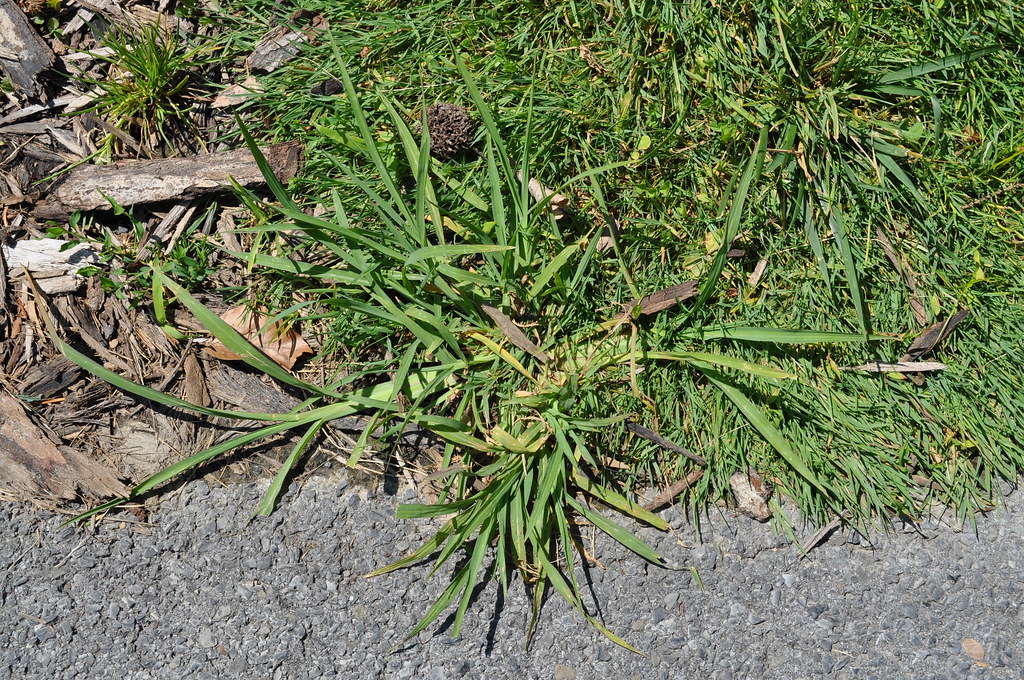
Do not spray while the lawn is stressed. Purdue and SDSU both point out that herbicides are ineffective on drought-stressed weeds and can injure drought-stressed turf; SDSU suggests waiting until the lawn is growing again in fall, ideally after the first frost, for broadleaf treatments. Summer annual grasses will die on their own; your job is to fill the gaps with grass before next spring’s germination and, if crabgrass was bad, to put down a pre-emergent (prodiamine, dithiopyr or pendimethalin) next spring when forsythia is dropping its petals. Skip the pre-emergent on any area you plan to seed, because it will stop grass seed too.
Which grasses handle drought best
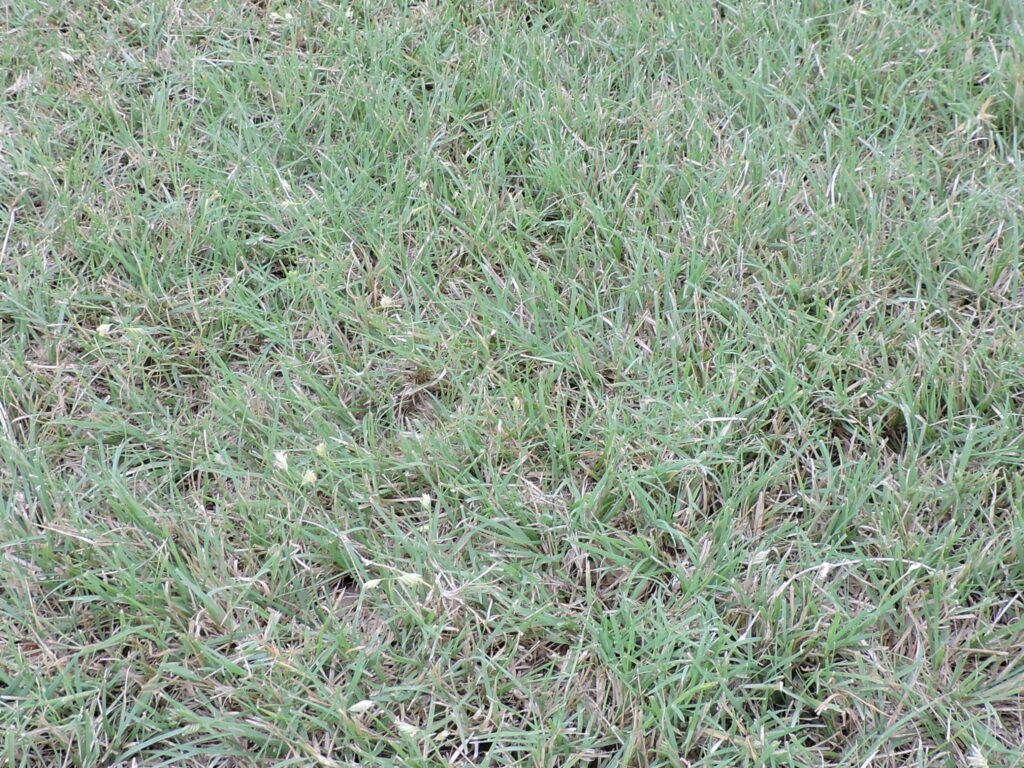
If the same lawn browns out every summer, the long-term fix is the species, not the sprinkler. Ratings below combine Kansas State University Turfgrass and UC Master Gardener descriptions. For a fuller comparison see our lawn grass comparison.
| Grass | Type | Drought tolerance | Dormancy behaviour and notes |
|---|---|---|---|
| Buffalograss | Warm-season | Excellent | Irrigation rarely needed once established; goes straw-coloured in drought and greens with rain. Full sun only, low fertility. |
| Bermudagrass | Warm-season | Excellent | Good heat and drought tolerance; deep rhizomes and stolons regrow quickly after rain. Needs full sun, spreads into beds. |
| Zoysiagrass | Warm-season | Very good | Tolerates heat and drought well but often browns before bermuda and is slow to fill back in; be patient for several weeks. |
| Tall fescue | Cool-season | Good | Deepest roots of the cool-season grasses; stays green longer than bluegrass but is a bunchgrass, so dead patches must be reseeded. |
| Fine fescues | Cool-season | Good (low input) | Best cool-season choice for dry shade; go dormant readily but Minnesota advises watering after a couple of weeks of dormancy. |
| Kentucky bluegrass | Cool-season | Poor to fair | Browns early but survives long dormancy (up to about 60 days) and self-repairs from rhizomes. |
| Perennial ryegrass | Cool-season | Poor | Lacks heat and drought tolerance; often dies rather than going dormant, so ryegrass-heavy lawns need the most reseeding. |
Preventing the next one
- Train roots deep before summer. From spring, water only when footprints stay visible, then apply a full inch. Frequent light watering builds shallow roots that fail in the first dry week.
- Raise the mower in late spring to 3 to 4 inches (7.5 to 10 cm) for cool-season lawns and toward the top of the range for warm-season lawns, and keep the blade sharp.
- Do not push nitrogen in late spring. Soft, lush growth uses more water. Save the main cool-season feed for fall.
- Overseed with better genetics. Each fall, overseed thin cool-season lawns with turf-type tall fescue or a drought-rated bluegrass blend; in warm regions, convert the hottest, sunniest sections to bermuda, zoysia or buffalograss.
- Aerate compacted slopes and edges in fall so rain actually gets in; the areas that dry first are usually compacted.
Related guides: How to Grow Buffalo Grass From Seed: Planting and Establishment Guide · What Does Bermuda Grass Look Like? Identification, Stress Tolerance and Lawn Care
Sources
- University of Minnesota Extension – Recover, restore and maintain your lawn after drought
- Purdue University Turfgrass Science – Dealing with Drought
- University of Wisconsin Extension – Drought and Lawns (PDF)
- University of Illinois Extension – Managing Lawns During Drought
- UC Master Gardener Program, Contra Costa County – Your Lawn During Drought
- South Dakota State University Extension – Dealing with Drought Stressed Lawns
- NC State Extension – Drought Stressed Turf
- Kansas State University Turfgrass – Lawn Problem Solver: Grass Selection
- University of Wisconsin Extension – Crabgrass Management in Lawns
- Clemson Cooperative Extension – Bermudagrass Yearly Maintenance Program