
It’s a crisp late-October afternoon. The mower hasn’t moved in a week, the lawn is still green, and the garden center has a pallet of bags marked “winterizer” stacked by the door. So should your lawn get one more feed before winter, or is the bag just marketing? If it should, when to apply winterizer matters far more than the brand printed on the bag.
Short answer: on a cool-season lawn (Kentucky bluegrass, tall fescue, perennial ryegrass), apply winterizer after top growth slows or stops in late fall, while the grass is still green and before the soil freezes. In much of the northern US that window runs from late October to about mid-November; Purdue’s rule of thumb is that if Halloween has come and gone, the spreader should stay in the shed. Use 0.75 to 1 lb of nitrogen per 1,000 sq ft with at least half slow-release. On a warm-season lawn (bermuda, zoysia, St. Augustine, centipede, bahia), skip the winterizer: the last nitrogen should go down by late summer.
Here’s the thing: “winterizer” is mostly a bag label. What matters is the timing. A late-fall feeding tops up the grass’s carbohydrate and nitrogen stores so it greens up faster in spring, and done right on the right grass, it can replace your early-spring application entirely.
Done on the wrong grass, or after the ground freezes, it wastes money and feeds winter injury or runoff. By the end of this guide you’ll know whether your grass wants a winterizer, the signs that the window is open, how much to spread, and the five mistakes that waste the bag.
Table of Contents
What a winterizer actually is
Walk down the fertilizer aisle in October and you’ll see bags marked “winterizer” with grades like 22-0-10 or 32-0-10. Surprise: there’s no special nutrient in them. A winterizer is simply a mostly-nitrogen fertilizer sold for the last feeding of the year. The magic, such as it is, comes from what late-fall nitrogen does inside the plant.
Cool-season grasses keep their roots and crowns alive through winter. When top growth slows in late fall, the plant stops spending on new leaves and starts banking: carbohydrates and nitrogen move down into storage tissue.
Penn State Extension notes that late-summer and late-fall feedings drive recovery from summer stress and carbohydrate storage, and that a late-fall application can replace an early-spring one. The payoff? Grass fed in late fall greens up earlier in spring, without the surge of weak, lush top growth that a spring feeding produces.
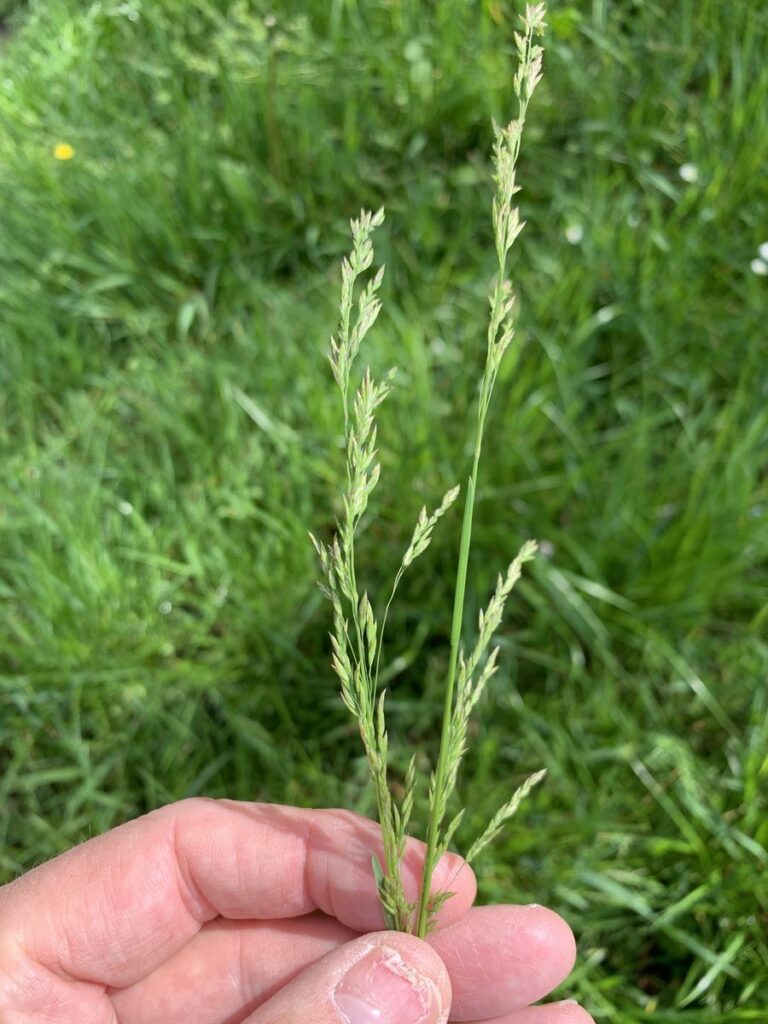
Photo: “Kentucky bluegrass (Poa pratensis)” by Dave Richardson via iNaturalist, CC BY 4.0.
When to apply winterizer fertilizer: the timing rule
The most useful timing rule comes from Penn State, and it’s refreshingly precise: apply when foliar growth slows or stops, but soils are not frozen. In most of Pennsylvania that lands in mid-November.
Your own date depends on where you live. Farther south the window slides later; in Minnesota, University of Minnesota Extension schedules its last fall applications in August, September and, for high-maintenance lawns, early October. The pattern is easy to remember: the colder your climate, the earlier your last feeding.
Cool-season lawns
Kentucky bluegrass, tall fescue and perennial ryegrass are the grasses winterizer is made for. The trick is to watch your lawn, not the calendar. The window is open when all three of these are true:
- You’ve gone from mowing weekly to every other week, then to not at all.
- The turf is still green.
- The ground isn’t frozen.
Purdue’s turf specialists use Halloween as their rule of thumb for Indiana: if it has passed, put the spreader away. Tempted to push into November anyway? Purdue advises checking for frozen soil, checking the forecast, and reducing the nitrogen rate first, because very late nitrogen can push excessive growth the following spring.
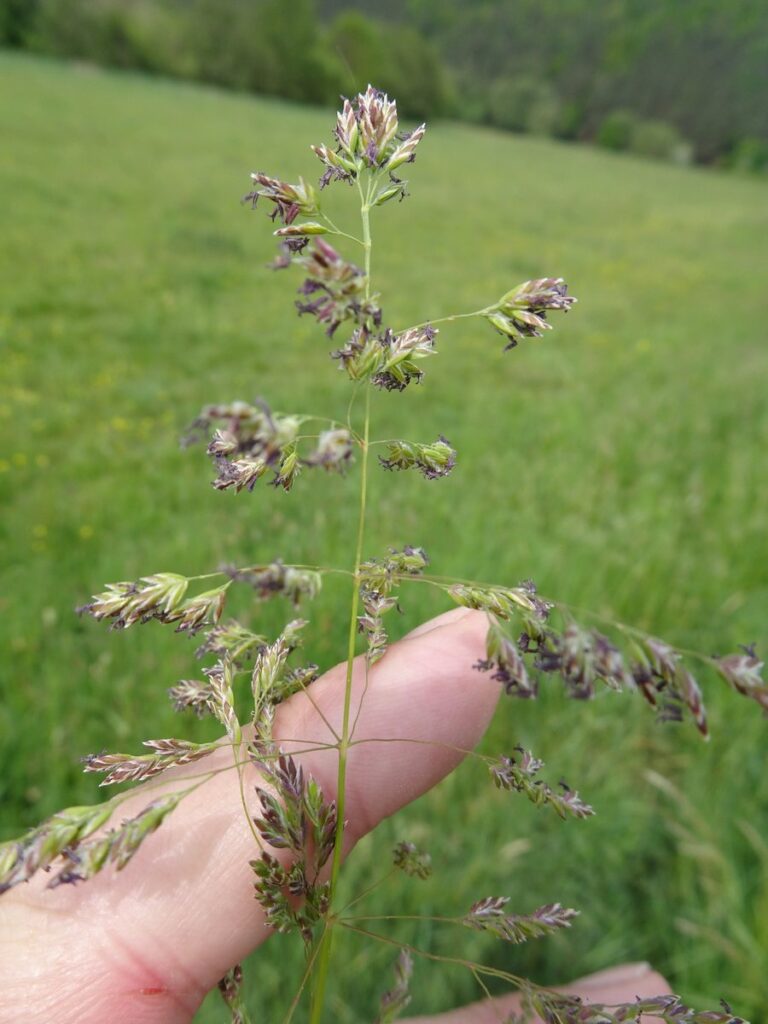
Photo: “Kentucky bluegrass (Poa pratensis) panicle” by Robert H. Wardell via iNaturalist, CC0 1.0.
Warm-season lawns: why most should skip it
If you grow bermudagrass, zoysia, centipede, St. Augustine or bahia, here’s some good news: you can walk right past the winterizer pallet. These grasses go dormant and tan with the first hard frosts, and they can’t use nitrogen while dormant.
Clemson HGIC programs end nitrogen for all of these grasses by August or very early fall. Feed them later and you push tender growth that winter cold then damages.
What Clemson does allow is potassium: an extra application of 1 lb of potash per 1,000 sq ft in late August to mid-September may increase winter hardiness. And if your lawn is overseeded with rye for winter color, that overseed is a cool-season grass and follows its own light feeding program. And if you skipped fall seeding entirely, dormant seeding once the soil cools is the northern backup plan that needs no watering until spring.
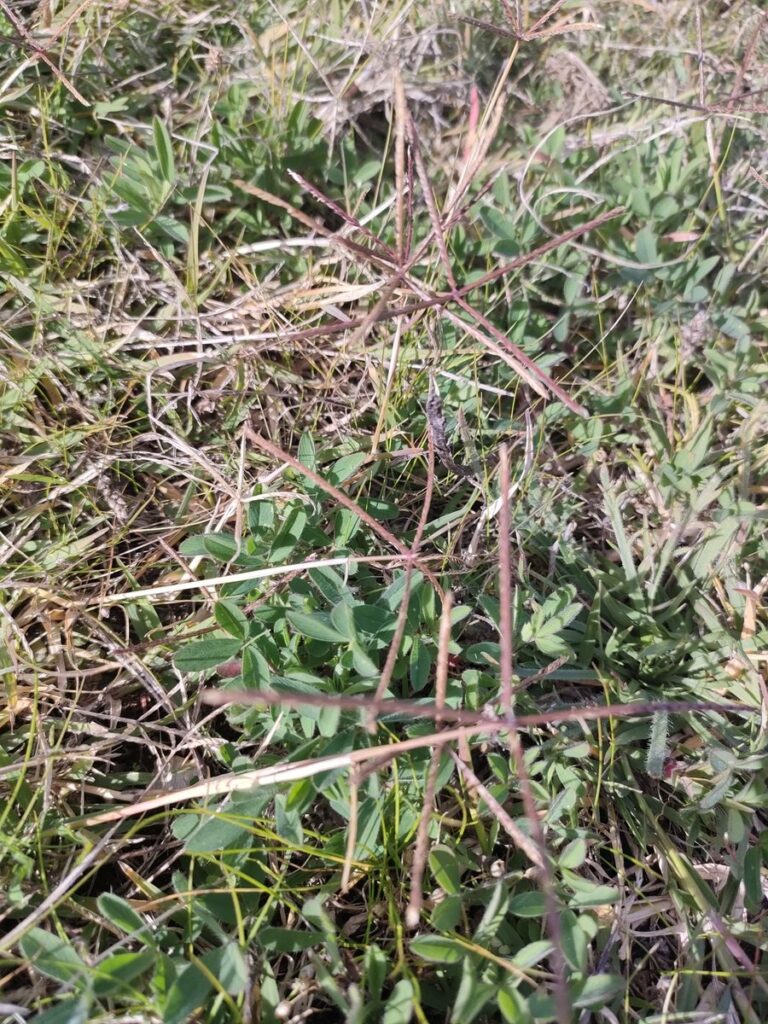
Photo: “Bermudagrass (Cynodon dactylon) going dormant” by Tom Ferguson via iNaturalist, CC0 1.0.
When to apply winterizer by grass type
If you remember only one thing from this guide, make it the grass-type split below. It decides everything else.
| Grass type | Examples | Last nitrogen feeding | Winterizer? |
|---|---|---|---|
| Cool-season | Kentucky bluegrass, tall fescue, perennial ryegrass | After top growth slows, before soil freezes (about mid-November in Pennsylvania, around Halloween in Indiana, by early October in Minnesota) | Yes: 0.75 to 1 lb N per 1,000 sq ft, at least half slow-release |
| Warm-season | Bermuda, zoysia, St. Augustine, centipede, bahia | Late summer to very early fall; Clemson programs end N by August or early September | No: late N risks winter injury; only potassium in late Aug to mid-Sept may help hardiness |
| Overseeded for winter | Rye over dormant bermuda, in the South | Light feedings of the overseed while it establishes | Different program: treat the overseed as a cool-season grass |
Not sure which grass you have? Our lawn grass comparison and the guide to identifying bermudagrass will sort it out before you spend a cent on fertilizer.
How much to apply
The good news is that two numbers keep you out of trouble:
- Per application: no more than 1 lb of nitrogen per 1,000 sq ft (Minnesota and Penn State both use this cap).
- Per year: 0.5 to 4 lb of nitrogen per 1,000 sq ft in total, depending on your maintenance level, soil and whether you return clippings (UMN Extension).
What does that look like on a real lawn? Penn State’s sample program for a bluegrass or ryegrass lawn with clippings returned puts 1 lb N down in early to mid-September and 0.75 to 1 lb N in the November 1 to 15 slot, with at least half of that late dose slow-release.
Bag grades trip up almost everyone, so here’s Clemson’s shortcut: pounds of product for 1 lb of actual nitrogen equals 100 divided by the nitrogen percentage on the bag. A 16-4-8 product needs about 6.25 lb per 1,000 sq ft to deliver 1 lb N; a 32-0-10 product needs about 3.1 lb.
The type of nitrogen matters too. Quick-release sources (urea, ammonium sulfate) green the grass fast but carry higher burn and leaching risk. Slow-release (coated or water-insoluble N) is the safer bet for a single late application, especially on sandy soil (Penn State).
A few habits protect both your lawn and the creek down the street. Water the fertilizer in if no rain is due, sweep granules off pavement, and never spread on a frozen surface, where the next rain or thaw can carry the whole dose into storm drains.
One freebie worth taking: returning clippings when you mow can cut your nitrogen fertilizer needs by up to one-third (Penn State). It costs you nothing but leaving the bagger off. Our piece on mulching grass clippings weighs the pros and cons.
Choosing the product: NPK, soil test and the weed-and-feed trap
This is where a lot of fertilizer money quietly disappears. For a winterizer, nitrogen does the work. Phosphorus is rarely needed on established lawns: many Midwestern soils already test high in P, and established turf shows little response to more (UMN Extension).
Potassium follows the soil test too, with Clemson’s late-summer K note for warm-season lawns as the exception. If you haven’t tested in the last two or three years, that’s job one. A lawn that stays pale despite feeding often has a soil problem, not a fertilizer problem (see why grass won’t grow and why grass turns yellow).
And be skeptical of fall weed-and-feed combinations. UMN advises applying fertilizer and weed killer separately because herbicide timing rarely matches fertilizer timing, and combination products often apply more herbicide than the lawn needs.
Late fall is also simply the wrong moment for most weed control: broadleaf post-emergent products work best while weeds are actively growing, and fall pre-emergent timing is a different decision entirely. Whatever herbicide you use, follow the label. Our guides to post-emergent herbicides and pre-emergent timing cover those windows; kill weeds before overseeding explains why weed-and-feed conflicts with fall seeding.
5 winterizer mistakes to avoid
Notice a theme? Four of these five are timing errors. Get the date wrong and no amount of careful bag math can rescue the application.
- Spreading on frozen ground. Penn State is blunt: never apply nitrogen to frozen surfaces in winter. The nutrient cannot enter the soil and runs off with the first thaw.
- Feeding dormant warm-season turf. A brown bermuda lawn in November can’t use nitrogen. You’d be feeding winter weeds and the creek instead.
- Applying too early. A “winterizer” spread in September while the grass is still growing hard is just a regular fall feeding. It does some good, but the storage effect only kicks in once the plant is shutting down.
- Using weed-and-feed before or after overseeding. The herbicide in a combination product can damage new grass, and the fertilizer timing rarely lines up with the herbicide timing (UMN).
- Skipping the soil test. Without one, the P and K on the bag are guesses. Test every two or three years and buy to the report.
Where this applies: timings are for Northern Hemisphere lawns; in the Southern Hemisphere shift the months by six. Exact dates move with latitude and altitude, so anchor them to your lawn’s growth (slowing, still green, unfrozen soil) rather than the calendar alone. In dry-winter climates, keep the companion guide on watering grass in winter in mind, and check whether you can fertilize wet grass before spreading on a dewy morning.
A note from the agronomist’s side
Here’s a pattern worth knowing: the lawns that green up first in April are rarely the ones fed first in spring. They’re the ones fed last in fall.
That follows straight from the physiology. Nitrogen taken up as top growth stalls goes into storage rather than leaves, so the plant enters spring with a full pantry. A lawn waiting on an early-spring feeding starts from empty and spends its first burst on soft, lush leaves. Since Penn State notes that the late-fall application can replace the early-spring one, you usually aren’t adding a feeding at all; you’re moving it to the date where it works hardest.
So if your budget covers only a couple of feedings a year on a cool-season lawn, the late-fall slot is the one worth protecting.
The flip side is just as predictable. On bermuda and zoysia, a September or October nitrogen push produces soft, succulent growth right as the first frost arrives, and that is exactly the tissue cold injures. When a warm-season lawn comes out of winter patchy, a late feeding is one of the first suspects worth checking. Match the program to the grass, and winterizer goes from marketing term to useful tool.
FAQ
Is winterizer fertilizer necessary?
Not for every lawn, and that’s worth knowing before you buy. Penn State notes a late-fall feeding can replace the early-spring one, so it is a scheduling choice as much as an extra one, and UMN’s low-maintenance program needs only a single September feeding per year. If your cool-season lawn already gets a September application and looks good, a winterizer is the upgrade that buys earlier spring green-up, not a requirement.
Can I apply winterizer after the ground freezes?
No. Penn State says never to apply nitrogen to frozen surfaces in winter. Frozen soil cannot absorb the nutrient, and rain or melting snow carries it straight into runoff. If the ground has frozen, the season is over. Save the bag for spring.
Winterizer vs regular fall fertilizer: what is the difference?
Timing and intent. The September feeding rebuilds density and helps the lawn recover from summer stress. The late-fall winterizer goes on after growth nearly stops and is stored for spring green-up. The bag contents can be nearly identical; the date on the calendar is what changes.
Can I use weed and feed as my winterizer?
You can, but UMN recommends against combination products in general: herbicide and fertilizer timings rarely match, and the lawn often gets more herbicide than it needs. A straight nitrogen product at the right date, with weed control handled separately, is the cleaner program.
What NPK should a winterizer have?
High nitrogen, modest or zero phosphorus and potassium unless a soil test says otherwise. Something in the 20-0-5 to 32-0-10 range with at least half the nitrogen slow-release fits Penn State’s late-fall program. Warm-season lawns wanting extra winter hardiness should look at potassium in late summer instead (Clemson).
Related guides: should you water grass in winter?, mulching grass clippings: pros and cons, and the full watering and feeding section.
Sources
- Penn State Extension. Turfgrass Fertilization: A Basic Guide for Professional Turfgrass Managers.
- Purdue Plant and Pest Diagnostic Laboratory. Fall Fertilization of Home Lawns: Is it too late?
- University of Minnesota Extension. Fertilizing Lawns.
- Clemson Cooperative Extension HGIC. Fertilizing Lawns, HGIC 1201.