
It starts innocently. A few ferny, grey-green shoots come up beside the new shrub you planted last year, and they smell a bit like chrysanthemums when you pull them. You pull them. Three weeks later there are twice as many, a foot further out, and now they’re coming up through the mulch, the edge of the lawn and the crack beside the path.
Short answer: that’s almost certainly the mugwort weed (Artemisia vulgaris), a perennial that spreads by tough underground rhizomes and regrows from small root pieces. Pulling, tilling and ordinary mowing rarely beat it. What works is a combination: never till it, smother or repeatedly strip the leaves to starve the rhizomes, and, if you use herbicide, spot-treat with glyphosate in late summer or early fall. Expect a multi-season job, not a weekend one.
By the end of this guide you’ll be able to confirm it’s mugwort in about ten seconds, avoid the three mistakes that make a patch bigger, pick the right method for your lawn, bed or vegetable garden, and know what the herbicide research really shows (it’s not what most product roundups tell you).
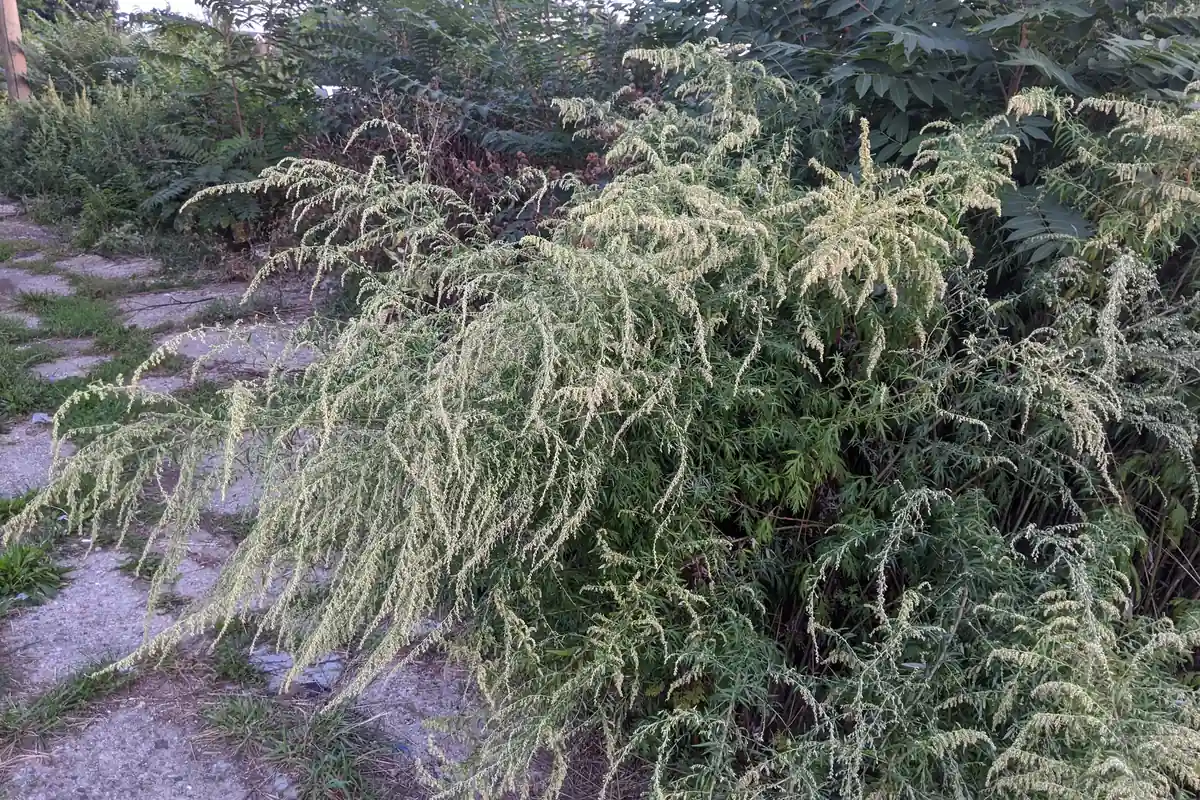
What is mugwort, and why is this weed so hard to kill?
Mugwort is a perennial in the daisy family that’s native to Europe and Asia. According to UConn Extension, it was brought to North America in the 1600s for medicinal use and then spread as a contaminant on ships and in nursery stock. Today it’s found across much of the Northeast, west to Minnesota and south into scattered parts of Florida, with large populations in Oregon and Washington too.
Here’s what makes it different from the average garden weed: the part you see is the small part. NC State Extension describes mugwort as an aggressive perennial that spreads by long, stout, persistent rhizomes, and West Virginia University Extension notes it’s considered one of the worst weeds by the American nursery industry. Those rhizomes store the energy that lets the plant bounce back after you’ve pulled, cut or sprayed the top.
It’s also officially unwelcome. The New York Botanical Garden’s plant information service notes that mugwort is a prohibited invasive species in New York, New Jersey and Connecticut, and the University of Maine lists it as invasive there as well. If you garden in the eastern US, a mugwort weed problem isn’t a sign you did something wrong. It’s a sign you bought a plant, a load of soil or a house.
How it usually gets into your yard
This one surprises people. NC State says most infestations begin with contaminated root balls of landscape plants or with soil that contains mugwort rhizomes, not with seed blowing in. Viable seed is uncommon in much of the country (WVU goes as far as saying the seeds aren’t considered viable), although NC State warns that seed spread can be locally important, particularly in the Southeast, and UConn notes seedlings establish on bare, disturbed ground.
The practical takeaway: check the root ball of every field-grown shrub or perennial you buy, and be wary of free fill soil. One finger-length piece of rhizome is all it takes.
How to identify mugwort weed in 10 seconds
Flip a leaf over. That’s the test. Mugwort leaves are green on top and covered with dense white to grey woolly hairs underneath, which gives the underside a silvery look. Then crush the leaf: it has a strong chrysanthemum or sage-like smell. If you’ve got the silver underside, the smell and creeping roots, you’ve got mugwort.
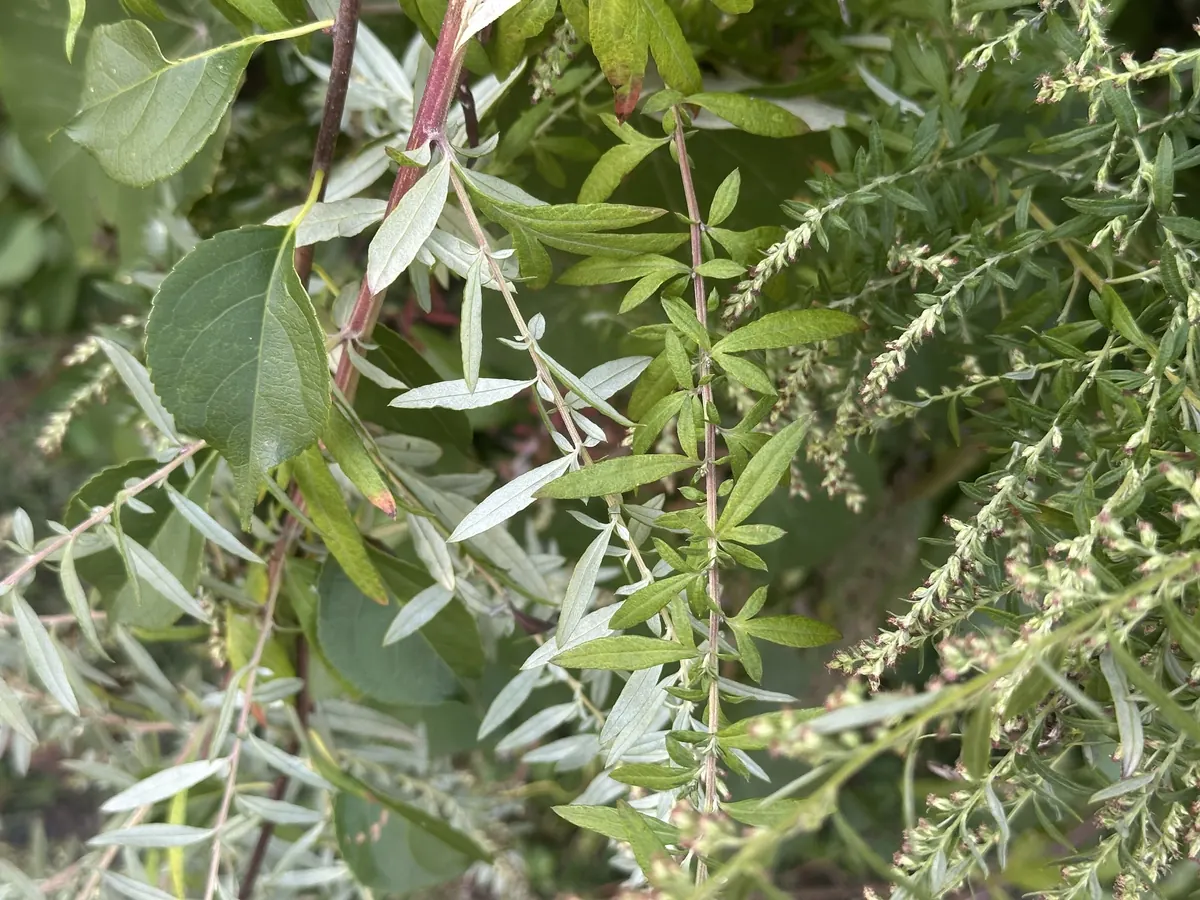
The other features of the mugwort weed, drawn from UConn, WVU and the NC State Extension Gardener Plant Toolbox:
- Height: usually 2 to 5 feet when left alone (NC State records plants up to 6 feet), but it also survives as a low mat in mown turf.
- Leaves: alternate along the stem. Lower leaves have broad, shallow lobes; leaves higher up are deeply cut into narrow, pointed, almost linear segments.
- Stems: purplish-brown, angular and furrowed, branching near the top.
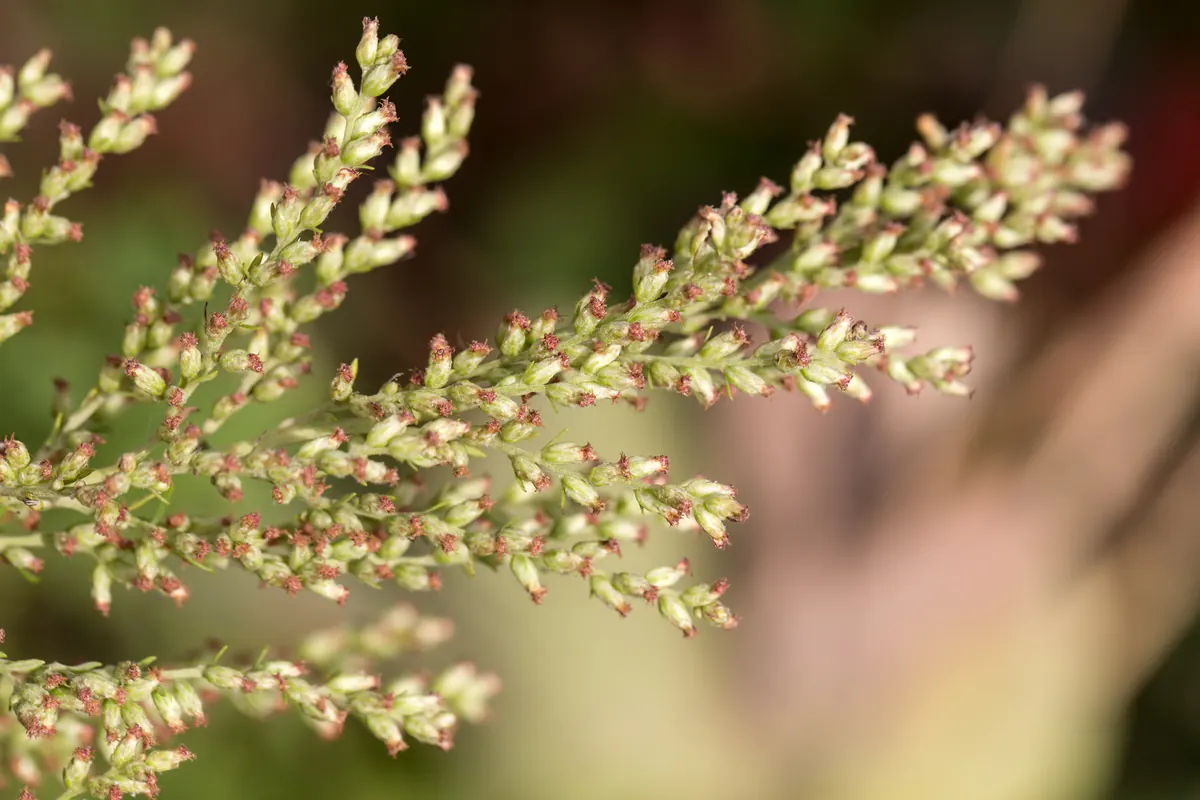
- Flowers: tiny, petal-less, yellowish-green to reddish-brown heads about 1/8 inch across, clustered at the stem tips from July to October. They’re easy to miss.
- Roots: a mat of creeping rhizomes. Dig one plant and you’ll find it connected to its neighbours.
- Season: shoots emerge in early spring, flower in late summer and fall, and die back after frost. The rhizomes overwinter.
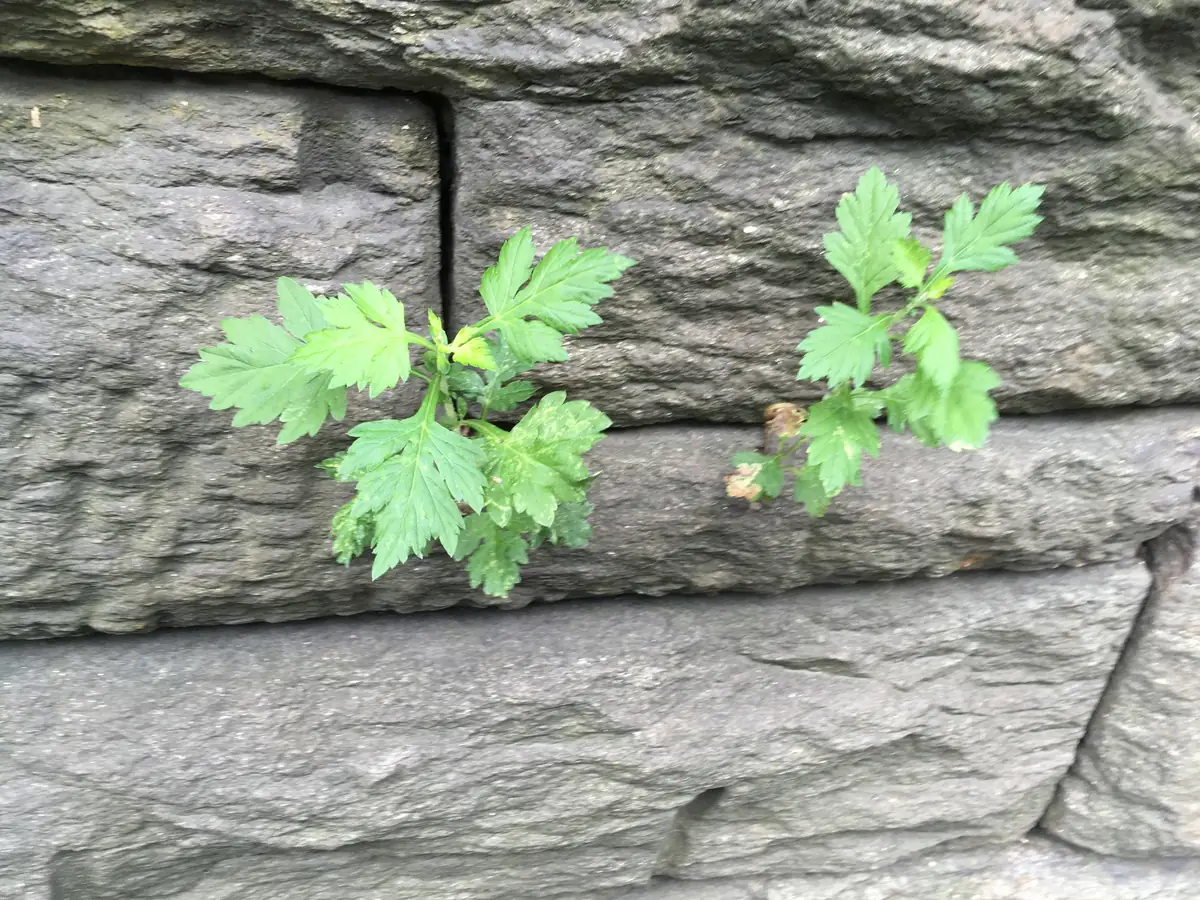
Mugwort look-alikes
A young mugwort weed gets mistaken for a few other plants, and one mix-up is expensive: people leave it alone because they think it’s a garden mum. The silver underside settles every case in the table below.
| Plant | Leaf underside | Leaf shape | Roots | Other clue |
|---|---|---|---|---|
| Mugwort | Dense white-grey hairs (silvery) | Broad lobes low on the plant, narrow pointed segments higher up | Creeping rhizomes | Chrysanthemum or sage smell |
| Common ragweed | Green, no white hairs | More finely lobed, lacier | Annual, no rhizomes | Usually seen as single plants, not a spreading colony |
| Garden chrysanthemum | Green, no white hairs | Very similar to young mugwort | No rhizomes | Stays where you planted it |
| Common groundsel or dogfennel seedlings | Green, no hairs underneath | Similar only at the seedling stage | No rhizomes | Quickly look different as they grow |
Source for the comparisons: NC State Extension (Neal, 2023).
How to get rid of mugwort weed: 7 methods compared
No single technique reliably finishes off a mugwort weed patch. The New York Botanical Garden puts it bluntly: there’s no technique that will simply eradicate it, but you can steadily reduce it by combining methods and sticking with repeat treatments. The University of Maryland says the same thing in fewer words: a combination of methods is the best approach.
So think of the list below as a toolkit. Most yards need two or three of these working together.
| Method | Best for | Effort and cost | Honest verdict |
|---|---|---|---|
| 1. Pull young plants early | New arrivals, seedlings, first-year shoots | Low; free | Works only before rhizomes form |
| 2. Strip the leaves repeatedly | Small patches among plants you want to keep | High; free | Slow, but it does exhaust the roots if you never let up |
| 3. Smother it | Beds and corners you can take out of use | Medium; cost of plastic or mulch | The best non-chemical option; needs patience |
| 4. Contain it with a barrier | Patches creeping in from next door | Medium; heavy-duty fabric | Holds the line, doesn’t kill |
| 5. Spot-treat with glyphosate | Established patches in beds, edges, waste areas | Low; low cost | Most effective single tool, timing matters |
| 6. Selective lawn herbicide | Mugwort growing in turf | Low to medium | Mixed evidence; see the research section |
| 7. Replant bare ground | Everywhere, afterwards | Low | Stops the comeback |
First, the three mistakes that make it worse
Tilling. The University of Maryland’s advice is two words long: never till it. Each root piece generates a new plant, so a rototiller turns one patch into a few hundred cuttings, evenly spread.
Casual pulling of established plants. NC State notes mugwort regrows from small rhizome fragments, which makes hand removal quite difficult, and the NYBG warns that pulling may only make matters worse. The stems snap, the rhizomes stay, and you’ve pruned it rather than removed it.
Relying on the mower. Mugwort tolerates low mowing heights. WVU reports that in studies the rhizomes regenerated even after two years of routine mowing. Mowing has a job (stopping seed heads), but it isn’t a cure.
1. Pull young plants before the rhizomes form
UConn recommends hand-pulling very young plants in spring or early summer, before rhizomes develop. At that stage the whole plant comes out. Loosen the soil with a fork first, follow every white root you can find, and bag what you dig. Don’t compost it; our guide on how to dispose of invasive plants covers the safe options.
2. Strip the leaves, again and again
A rhizome is a battery, and leaves are the charger. The University of Maryland says you can exhaust the root system by continuous pulling or removal of the leaves, and it’s honest that this is difficult. It suits a small patch tangled through perennials you don’t want to spray or bury. The rule is simple: never let regrowth stay green for long.
3. Smother it
For a bed you can sacrifice for a while, smothering is the method extension services keep coming back to. Maryland suggests black plastic, or layers of newspaper covered with mulch. The University of Maine calls smothering the best non-chemical method but adds that it takes time and dedication.
Be realistic about thin covers. One Maine gardener reported mugwort surviving under cardboard and wood chips, and NC State points out that mugwort actually thrives in ordinary mulched landscape beds. So overlap the edges generously, extend the cover well past the visible patch, weigh it down, and deal with any shoot that finds daylight at the margin. A normal layer of bark mulch on its own won’t do it; see how to stop weeds in mulch beds for what mulch can and can’t do.
4. Contain it with a barrier
WVU and UConn both note that heavy-duty landscape fabric or another impenetrable mulch can be used to contain mugwort, with UConn adding that it may need to be combined with other control methods. This is your tool when the source is a neighbouring lot you don’t control.
5. Spot-treat with glyphosate in late summer or early fall
If you’re willing to use an herbicide, this is the one with the most consistent extension support for beds and non-lawn areas. NC State says late summer or early fall applications of glyphosate are effective, and Maryland explains why a systemic product makes sense: it travels down inside the plant to the roots.
Glyphosate is non-selective. It will kill lawn grass and any ornamental it touches, so shield nearby plants or wipe it onto the mugwort leaves instead of spraying. More on rates and expectations in the next section.
6. Selective herbicides for mugwort weed in lawns
In turf you can’t use glyphosate without killing the grass. WVU lists clopyralid, triclopyr, or a combination of the two as selective options for lawns and turf. The evidence for them is more mixed than that sentence suggests, though, and that’s worth a section of its own.
7. Replant the bare ground
UConn notes that mugwort seed germinates on bare, disturbed soil and recommends stabilising bare ground with grass cover. Once a patch is gone, get something dense growing there quickly, whether that’s turf, a groundcover or closely planted perennials. Empty soil is an invitation.
Mugwort weed killer: what the herbicide research says
Here’s where a lot of online advice gets fuzzy, so let’s look at actual data. In Virginia field trials published in the journal Weed Technology, Bradley and Hagood (2002) sprayed mugwort with nine herbicides across a wide range of rates and then checked the plots a full year later. A one-year check is the one that counts, because it shows whether the rhizomes died or just the tops.
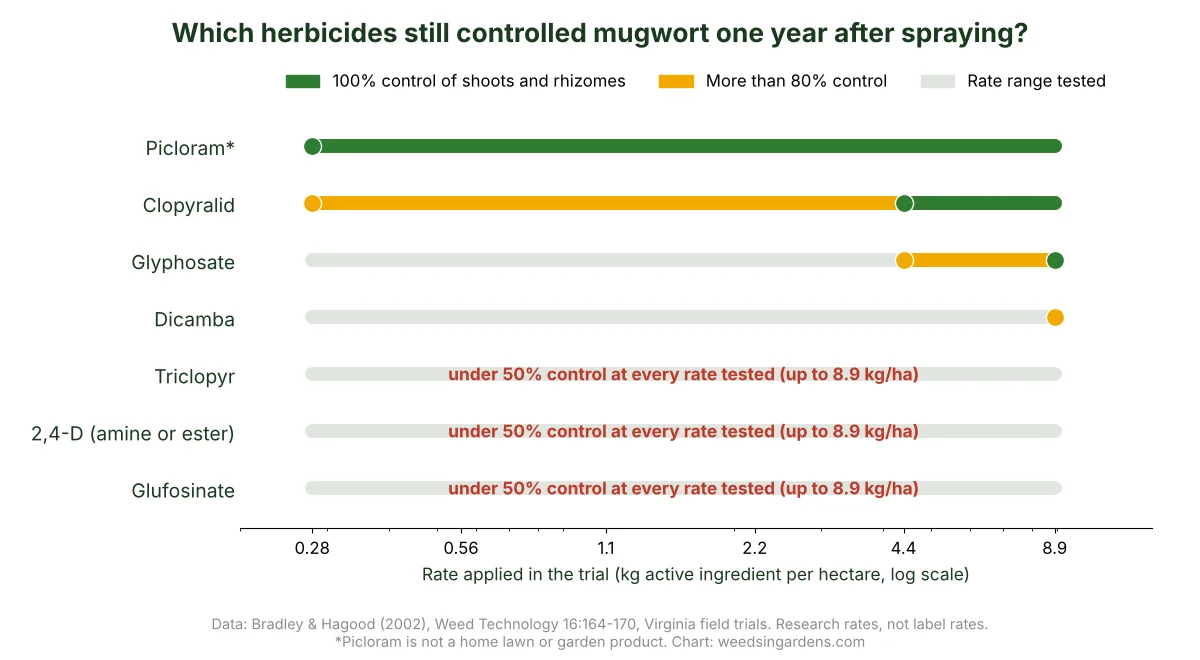
The headline results at one year after treatment:
- Clopyralid gave more than 80% control even at the lowest rate tested (0.28 kg of active ingredient per hectare) and complete control at the higher rates.
- Glyphosate gave more than 80% control only at 4.4 kg per hectare and above, and complete control at the top rate tested, 8.9 kg per hectare.
- Dicamba passed 80% only at the top rate.
- Triclopyr, 2,4-D (both forms) and glufosinate gave less than 50% control at every rate tested.
- Picloram was the most effective of all, but it isn’t a home lawn or garden product, so it’s not an option for you.
Two cautions before you draw conclusions. These are research rates on established stands, not label rates, and you must never exceed what your product’s label allows. And one trial series in one state isn’t the last word.
So what should a homeowner actually use?
In beds, borders and waste areas: glyphosate, applied in late summer or early fall. For a directed spray, WVU suggests a 3% to 4% solution of a concentrated glyphosate product, or a 33% solution in a weed wiper, where the product label permits. Go in expecting to repeat it. UConn is candid that a fall glyphosate application will suppress mugwort the following year but won’t necessarily eradicate it, which matches the trial data above: glyphosate works, but mugwort needs a lot of it.
In lawns: look for a product containing clopyralid if one is labelled for residential turf in your state (many aren’t, so read the label before you buy). Clopyralid has the best research record, although NC State found it didn’t control established stands in nursery settings while working well on seedlings and young shoots from small root pieces. Triclopyr is widely recommended by extension services and is easier to find, but the Virginia trials suggest you should expect suppression and repeat applications from it, not a one-spray kill. Standard 2,4-D-based weed killers are the weakest choice here. Our post-emergent herbicide guide explains how these active ingredients differ.
Don’t bother with pre-emergents. NC State states that mugwort isn’t controlled by common pre-emergence herbicides, which makes sense for a weed that spreads by rhizome rather than seed.
Four rules that apply to every product
- Follow the label. It sets the legal rate, the grass types the product is safe on, the temperature limits for spraying and how long to keep people and pets off.
- Help it stick. UConn points out that the dense hairs on mugwort leaves hinder herbicide penetration and that a surfactant may be needed. Check whether your product already contains one.
- Spray leaves, not stubble. Systemic herbicides need leaf area to get in. Let cut or mown mugwort regrow before you treat it.
- Don’t compost treated clippings. WVU warns that clopyralid residues can linger for long periods in plant material, so keep treated mugwort and grass clippings out of the compost heap.
A season-by-season mugwort weed control plan
Timing is where most mugwort weed campaigns are won or lost. UConn calls it critical. The calendar below pulls the timing advice from four extension services into one plan; shift it a few weeks earlier in the South and later in the far North.
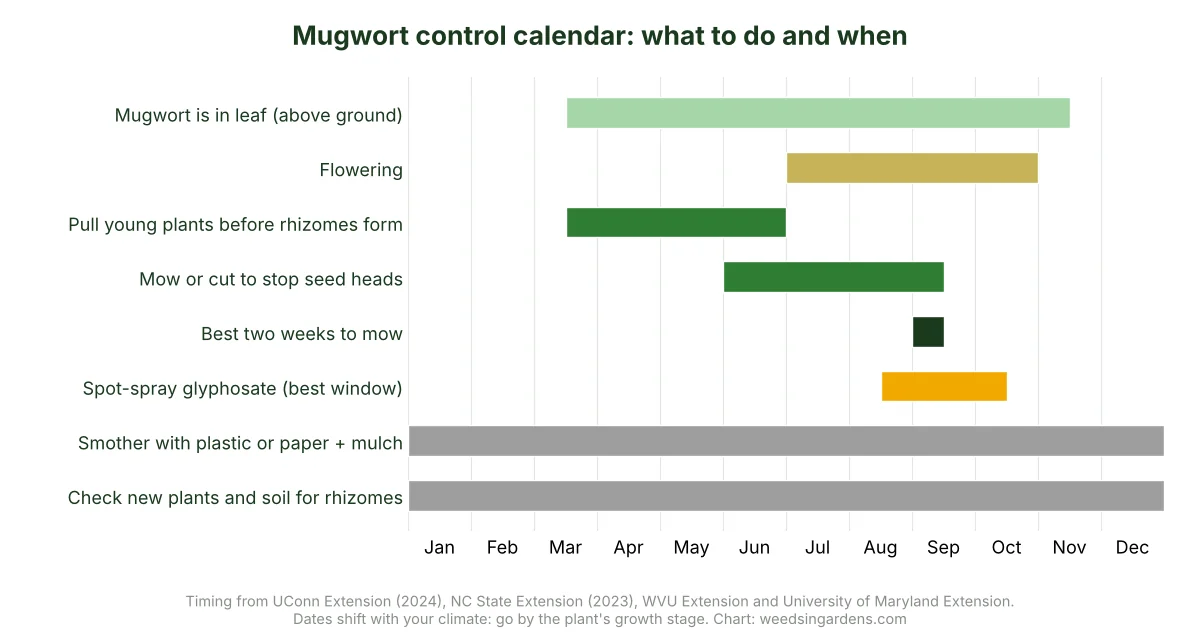
| Season | What mugwort is doing | What you do |
|---|---|---|
| Early to mid spring | New shoots emerge from overwintered rhizomes | Scout beds and new plantings. Pull young plants before rhizomes form. Lay smothering covers. |
| Early summer | Rapid top growth, rhizomes spreading | Keep stripping or cutting regrowth. Begin mowing rough areas so seed heads never form. |
| Mid to late summer | Flower stalks forming (bloom runs July to October) | Mow before seed matures. In patches you plan to spray, let healthy leaf area develop. |
| Late summer to early fall | Plant is moving sugars down to the rhizomes | Best window for glyphosate. UConn names the first two weeks of September as the best time to mow. |
| Mid fall to winter | Tops die back after frost; seed (if any) is mature | Don’t mow seedy stands now, or bag the cuttings if you must. Replant bare ground. Order fabric or plastic for spring. |
One detail in that table matters more than it looks. UConn advises against mowing after seed has matured, from mid fall through winter, because you’ll only spread it. If you’re reading this in November with brown mugwort stalks standing in the yard, cut them by hand, bag them and put your energy into planning next year’s attack. For other jobs that pay off at this time of year, see our fall weed control guide.
How long will it take? No extension source gives a guaranteed number, and you should be suspicious of anyone who does. WVU’s note that rhizomes survived two years of routine mowing tells you the scale: plan in seasons, and judge progress by whether the patch is smaller each spring.
Is mugwort useful, edible or harmful?
Mugwort isn’t just a weed, which is partly how it got here. The NC State Plant Toolbox notes it has been used medicinally and as a culinary herb, and that the aromatic leaves help repel insects. That history doesn’t make it a good garden plant. The same source lists it as weedy and high-maintenance, and no herb patch is worth rhizomes under your whole border.
Two health notes. UConn describes mugwort pollen as a common cause of allergies and hay fever, which is a good reason to cut it before it flowers in late summer. And NC State lists contact dermatitis as a problem with the plant, so wear gloves and long sleeves when you’re pulling a lot of it. If you’re curious about eating or brewing it, be certain of your identification and talk to a qualified professional first; this article isn’t medical advice.
Mugwort is one of many plants that arrived as something useful and stayed as something invasive. The same “rhizomes first” logic applies to Japanese knotweed removal. You can browse the rest in our invasive weeds category.
A note from the agronomist’s side
When extension sources seem to disagree about a weed, it usually means they’re describing different situations, and mugwort is a good example. WVU says the seeds aren’t viable; NC State says viable seed is uncommon but locally important; UConn tells you to mow before seed matures. Read together, the sensible position is this: rhizomes are the main engine everywhere, seed is a regional bonus, and since stopping seed costs you one well-timed mowing, you may as well do it.
The same goes for the herbicide picture. Extension pages recommend triclopyr and clopyralid for lawns, yet triclopyr stayed under 50% control a year after treatment in the Virginia trials. Those statements aren’t really in conflict. In a lawn, your realistic selective options are few, and a product that burns the top growth back several times a year while dense turf competes for light can still shrink a patch over time. Just don’t expect it to behave like a one-shot cure, and don’t judge any mugwort weed treatment by how the plants look three weeks later. The only verdict that counts is what comes up next spring.
The late-summer timing isn’t arbitrary either. A perennial that dies back in winter spends the end of the season moving reserves down into its storage organs, and a systemic herbicide applied to healthy leaves then gets carried along in the same direction. Spray in May and you mostly kill leaves the plant can afford to replace.
If there’s one rule of thumb to keep, it’s that mugwort weed control is a budget problem. Every method on the list either cuts the rhizomes’ income (smothering, stripping leaves, mowing) or attacks the savings directly (systemic herbicide). Methods that do neither, like tilling or a quick tug on the stems, are why so many people conclude that nothing works. Something does work. It’s just slower than anyone would like, and it rewards the gardener who keeps showing up.
Mugwort Weed FAQ
Is mugwort a weed or a useful plant?
Both. Mugwort has a long history as a medicinal and culinary herb, but in North America it’s an introduced, aggressive perennial. It’s a prohibited invasive species in New York, New Jersey and Connecticut and is considered invasive in Maine.
What kills mugwort weed permanently?
No single treatment is reliable. Extension services recommend combining methods: never tilling, smothering or repeatedly removing the leaves, and spot-treating with glyphosate in late summer or early fall. Expect to repeat the work over more than one season and to follow the product label.
Will mowing get rid of mugwort?
Not on its own. Mugwort tolerates low mowing, and West Virginia University Extension reports rhizomes regenerating even after two years of routine mowing. Mowing is still useful for stopping seed heads; UConn Extension names the first two weeks of September as the best time.
Should I pull mugwort out by hand?
Only very young plants in spring or early summer, before rhizomes form. Established mugwort regrows from small rhizome fragments, so casual pulling tends to leave the roots behind. If you dig, loosen the soil, follow every root and bag the pieces.
What is the best mugwort weed killer for lawns?
Glyphosate can’t be used in a lawn because it kills grass. Selective options listed by extension services are clopyralid and triclopyr. Clopyralid has the stronger research record, but many clopyralid products aren’t labelled for home lawns, so check the label. Expect repeat applications.
How do I tell mugwort from ragweed?
Turn a leaf over. Mugwort has dense white-grey hairs underneath that make it look silvery, and it smells like chrysanthemum or sage. Ragweed leaves are more finely lobed and lack the white hairs. Mugwort also spreads by rhizomes, while common ragweed is an annual.
Can I compost mugwort?
It’s safer not to. Rhizome pieces can regrow, and if the plants were treated with clopyralid, the residue can persist in the plant material. Bag mugwort and follow your local guidance for disposing of invasive plants.
Sources
- Wallace, V., Siegel-Miles, A., & Sowizral, K. (2024). Invasive Plant Factsheet: Common mugwort (Artemisia vulgaris). UConn Extension, EXT070.
- Neal, J. C. (2023). Mugwort or Chrysanthemum Weed (Artemisia vulgaris). NC State Extension Publications.
- Chandran, R. (reviewed 2019). Mugwort. West Virginia University Extension.
- Bradley, K. W., & Hagood, E. S. Jr. (2002). Evaluations of selected herbicides and rates for long-term mugwort (Artemisia vulgaris) control. Weed Technology, 16(1), 164–170.
- University of Maryland Extension (updated 2024). Mugwort.
- NC State Extension Gardener Plant Toolbox. Artemisia vulgaris.
- Foster, J. University of Maine Cooperative Extension. How can you control mugwort? and Should I try to get rid of mugwort or leave it alone?
- Coleman, L. (updated 2026). How can I get rid of mugwort? New York Botanical Garden, Mertz Library Plant Information Service.