
Short answer: the weeds most often mistaken for lawn grass are crabgrass, goosegrass, foxtail, quackgrass, dallisgrass, annual bluegrass (Poa annua), yellow nutsedge, wild garlic or wild onion, and star-of-Bethlehem. The first six are true grasses; nutsedge is a sedge; the last two grow from bulbs. You can sort almost any grassy-looking weed in under a minute: roll the stem between your fingers (a triangular, solid stem means sedge), crush a leaf (an onion or garlic smell means an Allium), look for a white stripe down the middle of a shiny leaf with no smell (star-of-Bethlehem), and for the true grasses check the ligule and auricles where the blade meets the stem. Getting the group right matters more than the species name, because a crabgrass preventer does nothing to nutsedge, and nothing sold for home lawns selectively removes quackgrass.
The one-minute test: grass, sedge or bulb?
Pull up one plant with its base intact and work through four checks.
- Roll the stem. Grass stems are round or flattened and usually hollow between the joints. Sedge stems are triangular and solid; you feel the edges as they roll. Yellow nutsedge also carries its leaves in three ranks, one set on each face of the triangle, where grass leaves alternate in two rows.
- Crush a leaf and smell it. A strong onion or garlic odour means wild garlic or wild onion. No odour from a fleshy, bulb-based leaf points to star-of-Bethlehem.
- Cut a leaf across. Wild garlic leaves are round and hollow; wild onion leaves are flat and solid (Cornell Weed Science).
- For true grasses, look at the collar. Peel the blade back where it meets the stem. The ligule (a small membrane or fringe of hairs) and the auricles (claw-like lobes that wrap the stem) separate grassy weeds from each other and from your turf. A hand lens helps, but good eyesight in daylight is usually enough.
The 9 weeds that look like grass
1. Crabgrass (Digitaria spp.)
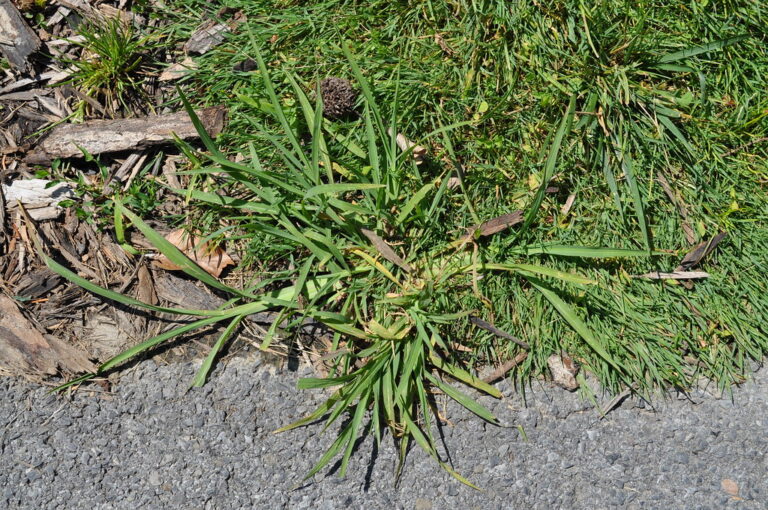
An annual grass with pale, wide blades that splay out from a low centre. Large crabgrass has hairy leaves and sheaths, a membranous ligule with a wavy edge, no auricles, and a seedhead of finger-like spikes (University of Minnesota Extension). It dies in autumn and returns from seed. The University of Wisconsin turf programme puts germination at soil temperatures of 60–70°F in the top 2 inches and advises applying a pre-emergent when soil reaches 50–55°F, so the barrier is in place before the seed wakes up (UW–Madison Turfgrass Science). Our full crabgrass identification guide covers the seasonal stages.
2. Goosegrass (Eleusine indica)
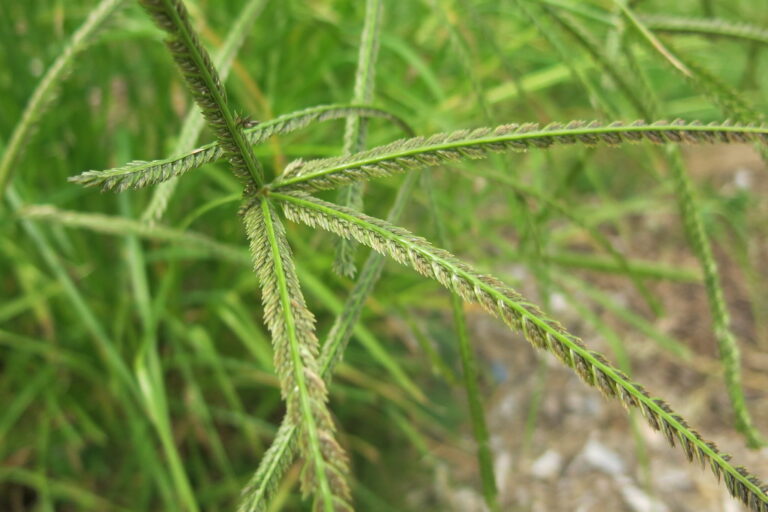
Often called silver crabgrass, but it is a different plant. Goosegrass forms a flat rosette with a white or silvery “wagon-wheel” centre and folded or flattened leaves. Its seedhead is two to six soft, silver-green spikes. LSU AgCenter notes it emerges when soil reaches 60–65°F, later than crabgrass, which is why a crabgrass pre-emergent applied early in spring can wear off before goosegrass arrives (LSU AgCenter). It is a reliable indicator of compacted soil along paths and play areas; if you find it, read our guide to fixing compacted soil before seeding.
3. Foxtail (Setaria spp.)
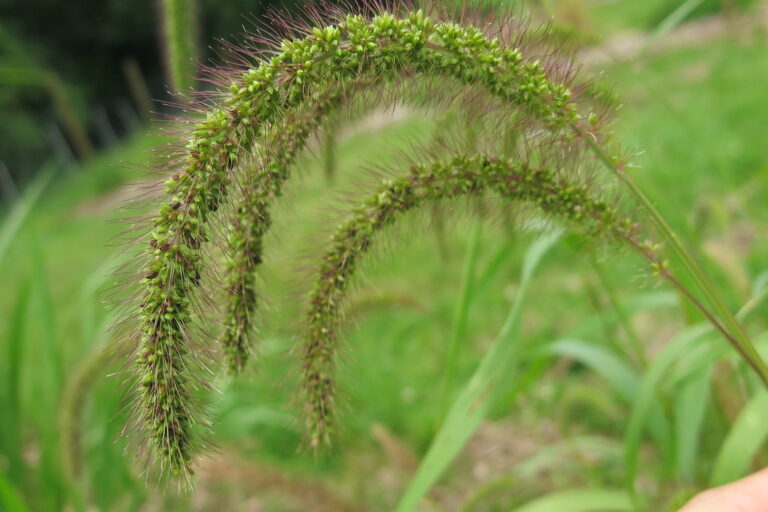
Annual grasses that are hard to spot until they send up their bristly, cylindrical seedheads, 2 to 5 inches long depending on species. Before that, the ligule gives them away: a fringe of hairs rather than a membrane, about 0.5 mm long in green foxtail and 1–2 mm in giant foxtail, whose upper leaf surface is also densely hairy (University of Minnesota Extension). Because they are annuals, a dense lawn and regular mowing that stops them seeding keep numbers down.
4. Quackgrass (Elymus repens)
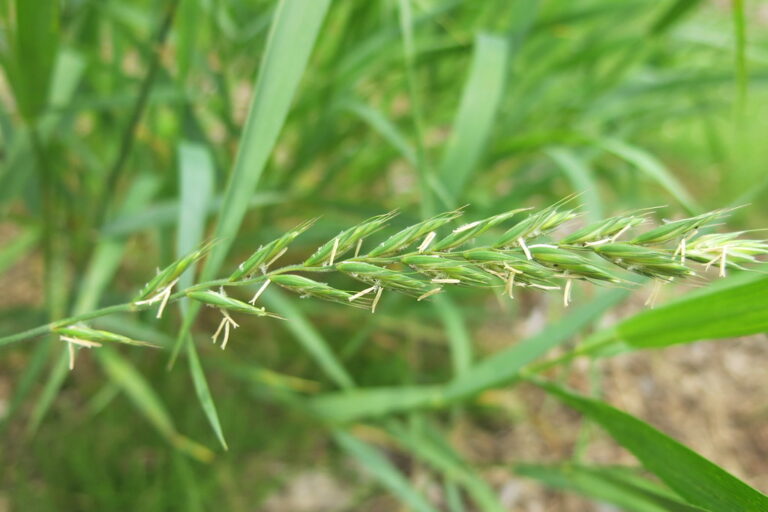
A cool-season perennial and the hardest grassy weed to get rid of. The key feature is a pair of long, slender auricles that clasp the stem like claws; the ligule is very short, about 1/32 inch. Blades are dull to bluish green, 1/8 to 1/2 inch wide. Underground it spreads by white, sharp-tipped rhizomes several feet long with new shoots every few inches (University of Illinois Extension). Illinois Extension is blunt about control: there is no selective herbicide for quackgrass in lawns. The options are digging out every piece of rhizome or spot-treating with glyphosate, which kills the turf too, and reseeding, ideally in autumn.
5. Dallisgrass (Paspalum dilatatum)
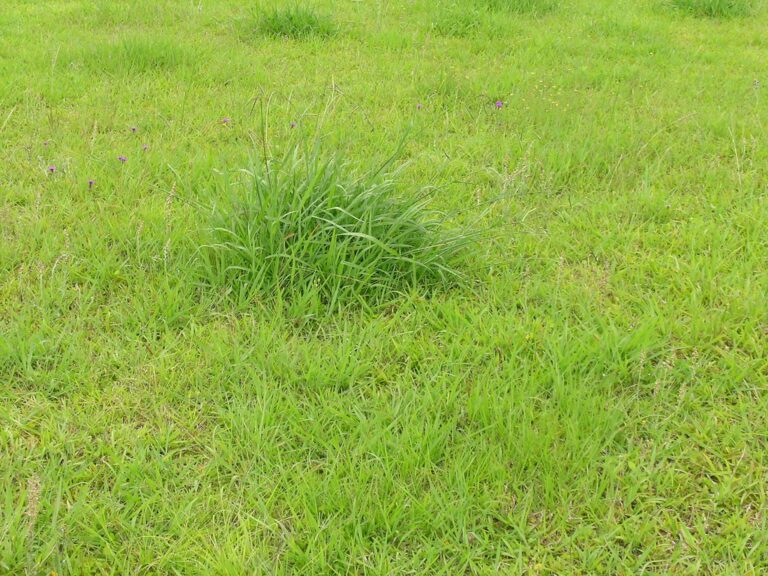
A warm-season perennial that grows in coarse, yellowish-green, spreading clumps that stand out against finer turf. Blades are about 1/2 inch wide with a prominent midrib; the ligule is pointed and membranous; the seedhead carries three to five or more loose, spike-like branches. It spreads by seed and short, thick rhizomes and favours poorly drained spots (University of Maryland Extension). The arsenical herbicides once used on it (MSMA, DSMA) are no longer labelled for home turf, so small infestations are dug out or spot-killed and reseeded once the kill is complete.
6. Annual bluegrass (Poa annua)
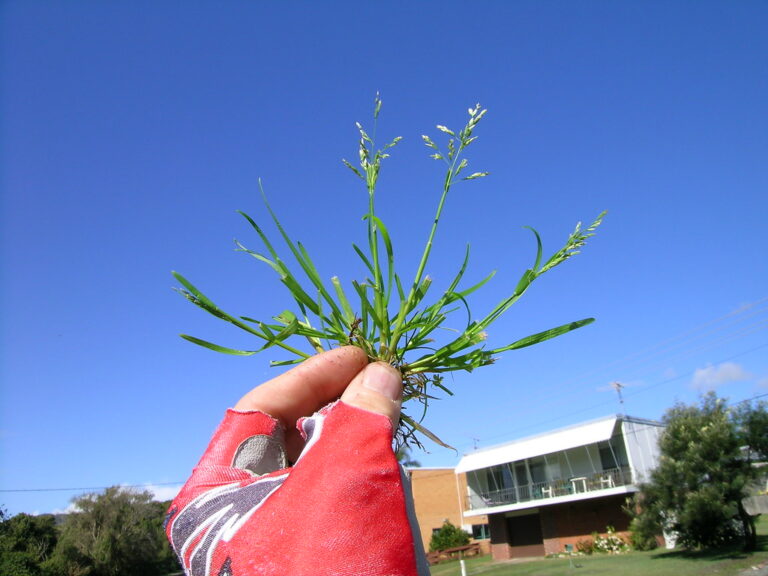
A light-green, clumping grass that turns lawns patchy in spring when it flowers at mowing height and then thins out in summer heat. Look for the boat-shaped leaf tip typical of bluegrasses and blades that are crinkled part way down. UC IPM reports it germinates in late summer and autumn once soil drops below 70°F, can produce seedheads six weeks after germination and about 100 seeds per plant in as little as eight weeks (UC Statewide IPM Program). That timing is the opposite of crabgrass, so an autumn pre-emergent, not a spring one, is what prevents it.
7. Yellow nutsedge (Cyperus esculentus)
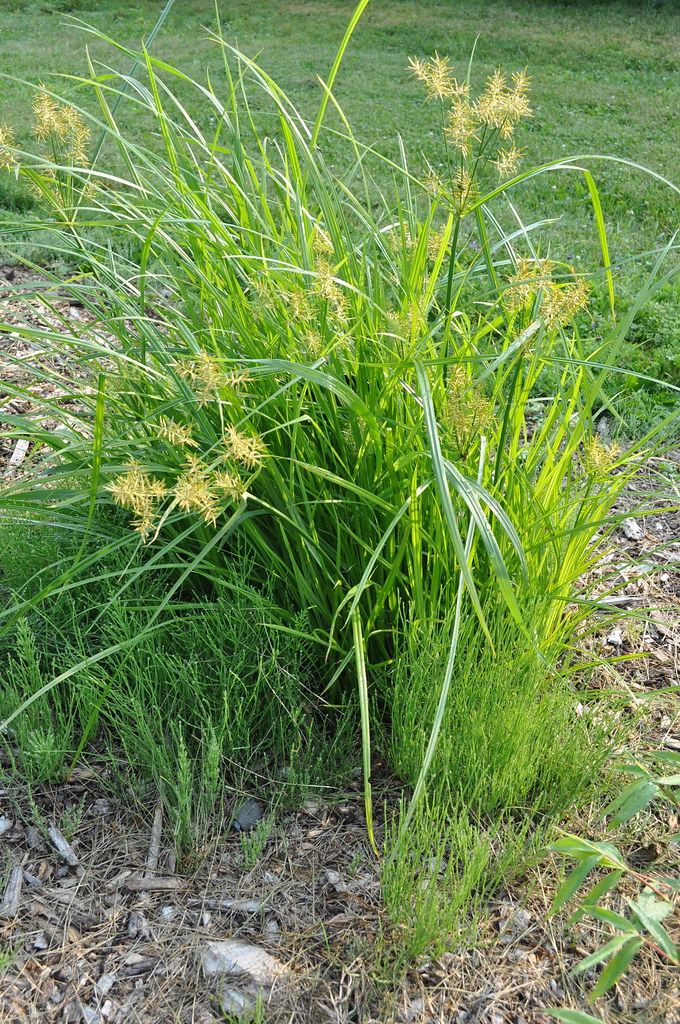
Not a grass at all. Nutsedge is light yellow-green and shiny, and in summer its leaves grow fast enough to poke above the mown lawn between cuts. The base of the stem is triangular and the leaves come in threes. Each plant can produce hundreds to several thousand tubers in a season, most of them in the top 6 inches of soil (University of Illinois Extension). In the US Midwest, Illinois Extension places emergence from late May to mid-July and tuber formation six to eight weeks after emergence, which is why treatment has to happen before about July. Grass herbicides and crabgrass preventers do not control it; products labelled for sedges (halosulfuron, sulfentrazone, bentazon, mesotrione and similar) do. Pulling snaps the plant above the tuber and usually leaves the tuber to resprout. For purple nutsedge and more control detail, see our yellow vs purple nutsedge guide.
8. Wild garlic and wild onion (Allium vineale, A. canadense)
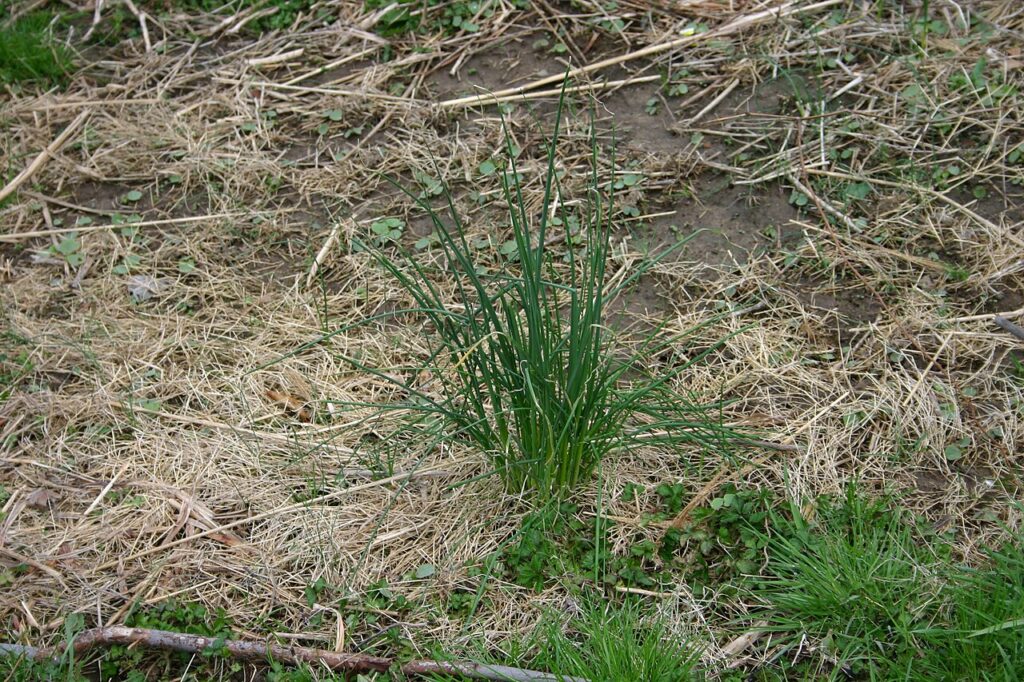
Clumps of dark-green, upright “grass” that appear in late autumn and winter when the lawn is dormant, then grow taller than the turf in early spring. The smell settles it. Wild garlic leaves are round and hollow; wild onion leaves are flat and solid. Cornell notes that wild garlic shoots emerge from August until the ground freezes, that its leaves carry a waxy coating herbicides struggle to penetrate, and that its hard-coated offset bulbs can stay dormant in soil for five years or more (Cornell Weed Science). Maryland Extension recommends a selective broadleaf herbicide containing 2,4-D, MCPP, dicamba or triclopyr while the plants are actively growing (University of Maryland Extension). Expect to repeat it for several seasons as dormant bulbs keep sprouting.
9. Star-of-Bethlehem (Ornithogalum umbellatum)
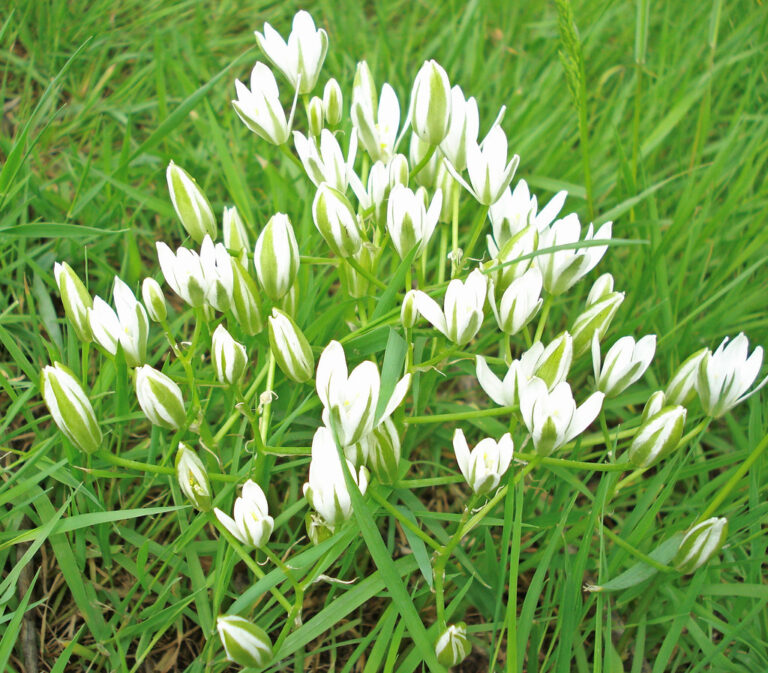
Easily confused with wild garlic, but the leaves are shiny, dark green, 2–6 mm wide and 4–12 inches long, with a distinct white midrib and no onion or garlic smell (Missouri Weed ID). It produces six-petalled white flowers in late April or May, then dies back by early summer. The bulbs and flowers contain toxic glycosides, so keep children and livestock away from dug-up bulbs. West Virginia University Extension recommends a product containing carfentrazone applied early in the season; heavy infestations may need a full renovation and reseeding (WVU Extension).
Side-by-side identification chart
| Weed | Type / life cycle | Quickest ID feature | Seen in lawn | What controls it |
|---|---|---|---|---|
| Crabgrass | Grass, summer annual | Hairy wide blades, membranous ligule, finger-like seedhead | Late spring to frost | Spring pre-emergent; post-emergent grass herbicide when young |
| Goosegrass | Grass, summer annual | Silvery-white centre, folded leaves | Early summer on compacted ground | Pre-emergent timed later than crabgrass; relieve compaction |
| Foxtail | Grass, summer annual | Ligule is a fringe of hairs; bristly seedhead | Summer, thin or new lawns | Pre-emergent; mowing before seed |
| Quackgrass | Grass, cool-season perennial | Long claw-like clasping auricles; white rhizomes | Spring and autumn | No selective option; dig out or spot-kill and reseed |
| Dallisgrass | Grass, warm-season perennial | Coarse clumps, pointed ligule, 3–5+ spike-like seedhead branches | Summer, wet spots | Dig out or spot-kill and reseed |
| Annual bluegrass | Grass, winter annual | Boat-shaped tip, crinkled blade, seedheads at mowing height | Autumn to spring | Autumn pre-emergent |
| Yellow nutsedge | Sedge, perennial from tubers | Triangular solid stem, leaves in threes, shiny yellow-green | Early to late summer | Sedge-specific herbicide before tubers form |
| Wild garlic / onion | Bulb, perennial | Onion smell; garlic hollow and round, onion flat and solid | Late autumn to spring | Broadleaf herbicide in active growth, repeated yearly |
| Star-of-Bethlehem | Bulb, perennial | White midrib, no smell, white star flowers | Early spring to May | Carfentrazone early; renovate if dense |
Why the ID decides the control
The nine weeds fall into four control groups, and most failed treatments come from putting a weed in the wrong one.
- Annual grasses (crabgrass, goosegrass, foxtail, annual bluegrass) come back from seed every year, so a pre-emergent timed to their germination window prevents most of them. Spring for the summer annuals, autumn for Poa annua.
- Perennial grasses (quackgrass, dallisgrass) survive through rhizomes or crowns. Pre-emergents do nothing to an established plant. Remove them physically or kill the patch and reseed; our guide to killing weeds before overseeding sets out the waiting times.
- Sedges need a sedge-labelled product. A general “weed and feed” rarely touches them, and lowering the mower gives them more light.
- Bulb weeds respond, slowly, to broadleaf herbicides applied while they are in active growth, but dormant bulbs mean it takes several years.
If the “weed” turns out to be a different turfgrass, such as clumps of tall fescue in a bluegrass lawn or a creeping patch of bentgrass, that is a separate problem with its own fix, covered in different types of grass in your lawn. For a grassy weed with long bristly awns in spring, see how to get rid of barley grass. More identification guides are collected under grassy weeds and lawn weeds.
A note from the agronomist’s side
In field weed surveys, grass-like weeds are recorded by growth habit and collar features long before anyone looks at a seedhead, because by the time the seedhead appears the plant has already set seed or tubers. The same habit pays off in a lawn. Walk it once in late spring and once in late summer, pull one suspect plant each time, and do the roll, smell and collar check. Two minutes of identification in June saves a season of spraying the wrong product, and for nutsedge it is the difference between treating a few plants and treating the thousands of tubers they would have left behind.
Related guides: Poa Annua in Lawns: How to Identify and Control Annual Bluegrass · Weeds With White Flowers in Lawns: 10 Common Types and How to Identify Them · When to Apply Pre-Emergent: Soil Temperature Timing
Sources
- University of Minnesota Extension – Annual grass weeds
- UW–Madison Turfgrass Science – Crabgrass pre-emergence timer
- LSU AgCenter – Goosegrass
- University of Illinois Extension – Quackgrass identification and control
- University of Maryland Extension – Dallisgrass
- UC Statewide IPM Program – Annual bluegrass (Pest Note 7464)
- University of Illinois Extension – Yellow nutsedge identification and control
- Cornell University Weed Science – Wild garlic
- University of Maryland Extension – Wild garlic or wild onions
- University of Missouri – Mizzou WeedID: Star-of-Bethlehem
- West Virginia University Extension – Star-of-Bethlehem