
Every summer it looked a little worse. First a few big three-part leaves crept out of the woods at the back of the lot, then they climbed the fence, then a whole pine disappeared under a green blanket. Now the October nights are getting cold, the leaves are starting to brown, and you finally have a clear look at the tangle. You want to know whether kudzu control is something a homeowner can actually win.
Short answer: Kudzu control works when you kill the root crowns, the knot-like balls at the soil surface where every vine starts, not the vines themselves. On a home property, that means cutting crowns out with a hatchet or saw, spraying a glyphosate or triclopyr product twice a year (once in late spring after the leaves fully expand, and again on the regrowth in late summer or early fall), and cutting vines off trees and treating the cut ends. Expect young patches to die within a season or two and old patches to take 3 to 5 years (Alabama Extension ANR-2168; ANR-2249).
The good news is that you don’t need to dig up the giant storage root, and you don’t need professional-only chemicals. By the end of this guide you’ll know how to confirm it really is kudzu, where the crowns hide, which homeowner products and rates the extension specialists recommend, what to do this fall and winter, and how to keep it from coming back.
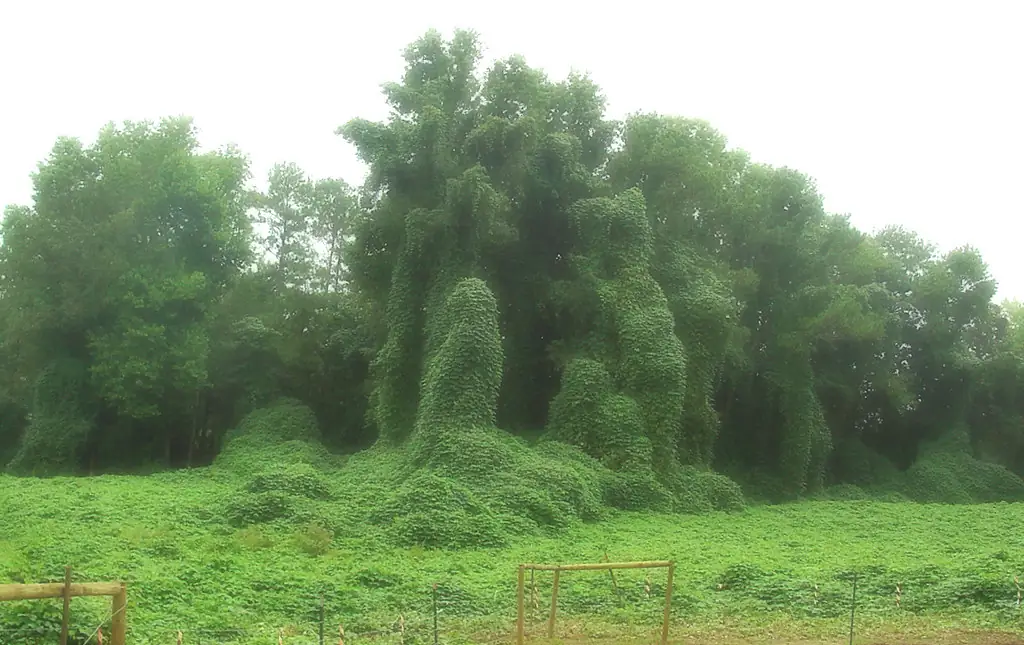
What kudzu is, and why it is so hard to kill
Kudzu (Pueraria montana var. lobata) is a semi-woody, climbing perennial vine in the pea family. It arrived in the US at the 1876 Philadelphia Centennial Exposition, was later promoted as livestock forage and an erosion-control cover crop, and was recognized by the USDA as a pest weed in 1953. It is now found in more than 30 states, concentrated in the Southeast (Maryland DNR Forest Service).
Three traits make it so tough. First, speed: Maryland DNR puts its growth at 7 to 12 inches a day, and New York’s DEC says up to a foot a day. Second, it roots wherever a vine node touches soil, creating a new plant with its own crown. Third, it stores huge reserves underground: tuberous roots reach 3 to 16 feet deep (National Park Service).
Here is the part most people miss. That massive root is only a storage organ. Alabama Extension specialists point out that it cannot sprout; new vines grow only from the root crown and from seed (ANR-2168). So kudzu control is really a hunt for crowns. Every crown you kill is a plant gone for good.
In some states it’s also a legal issue. New York lists kudzu as a prohibited species, and Indiana requires property owners who know they have it to work to eliminate it (NY DEC; Indiana DNR). Check with your state’s department of agriculture or natural resources before you start, since some will even help.
How to identify kudzu (and rule out look-alikes)
Before you spray anything, make sure it really is kudzu. Plenty of vines have three leaflets, and one of them, poison ivy, needs very different handling. These are the key ID features from the New York DEC fact sheet and Indiana DNR:
- Leaves: compound, with three broad leaflets 3 to 8 inches long. Each leaflet can be smooth-edged or have up to three lobes, and the leaf stem is hairy.
- Stems: yellow-green and covered in bristly hairs when young, turning brown and woody with age. Old vines can reach 4 inches across.
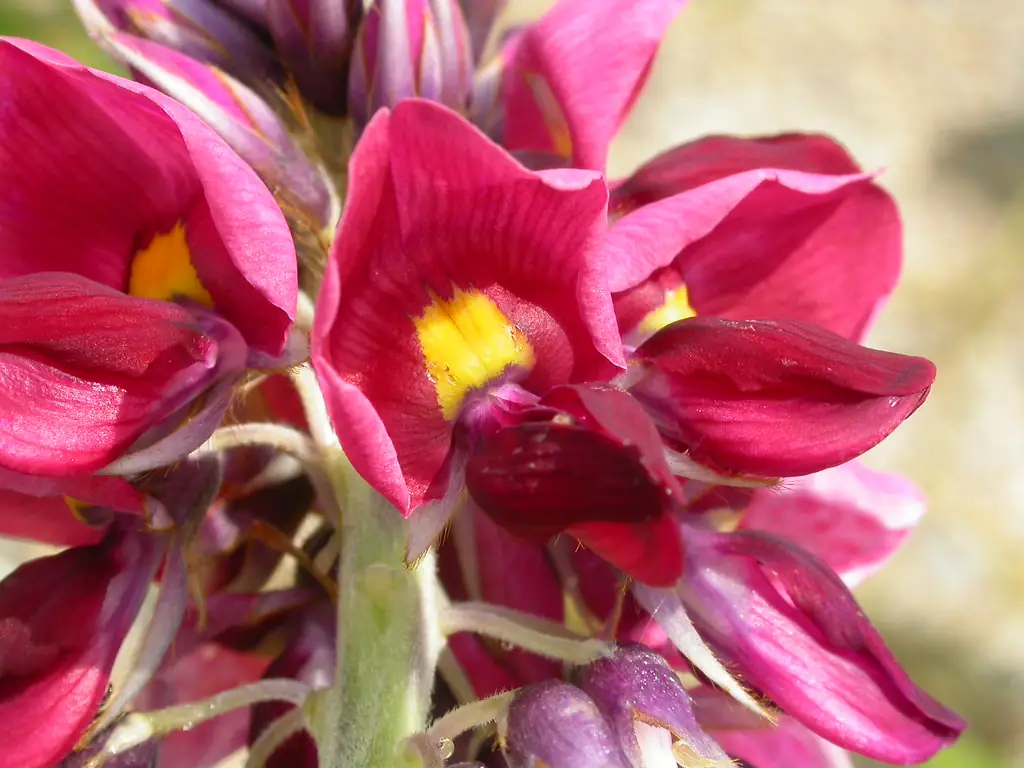
- Flowers: upright clusters 4 to 12 inches long, purple to reddish-pink, often with a yellow spot at the base of the petal. They bloom in mid to late summer and smell strongly of grape.
- Pods: flat, brown, hairy pea-like pods up to about 5 inches long, holding up to 10 hard seeds.
- Habit: a dense, smothering blanket over the ground, shrubs, trees, fences and buildings. Vines can run 35 to 100 feet ({a(NPS, ‘NPS’)}).
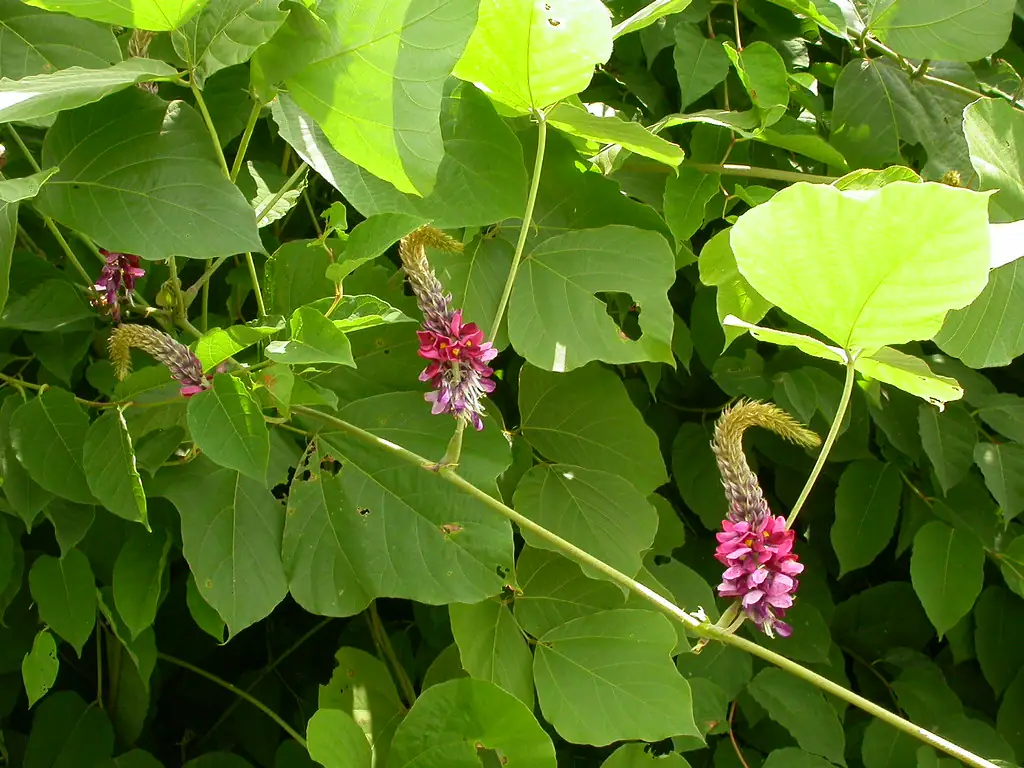
Indiana DNR lists poison ivy, hog peanut, wild grape and bur cucumber as the common look-alikes. This quick table will help you sort them out.
| Plant | Leaves | Stems / habit | How to tell it from kudzu |
|---|---|---|---|
| Kudzu | 3 large leaflets, often lobed, 3–8 in long | Hairy young vines; forms blankets over everything | Size, hairiness and sheer mass; grape-scented purple flower spikes |
| Poison ivy | 3 leaflets, usually smaller and often glossy | Climbing vines with hairy aerial rootlets | Much smaller leaves; white berries, not pea pods. See our poison ivy ID guide |
| Hog peanut (native) | 3 small, thin leaflets | Slender, delicate twining vine | Far smaller, never woody, not aggressive |
| Wild grape (native) | Simple, heart-shaped or lobed | Woody vines with tendrils | One leaf blade, not three leaflets |
| Bur cucumber (native) | Simple, maple-like lobes | Annual vine with tendrils | Simple leaves; spiny fruit clusters |
If you’re on the northern edge of kudzu’s range and think you’ve found it, take photos of the whole plant, the leaf, the vine and any flowers, and report it. Several states, including New York, track new patches (NY DEC).
The root crown: the real target in kudzu control
Think of each kudzu plant as a hub with spokes. The hub is the root crown, and every vine radiates out from it. Cut the spokes and the hub simply grows new ones. Kill the hub and that plant is finished.
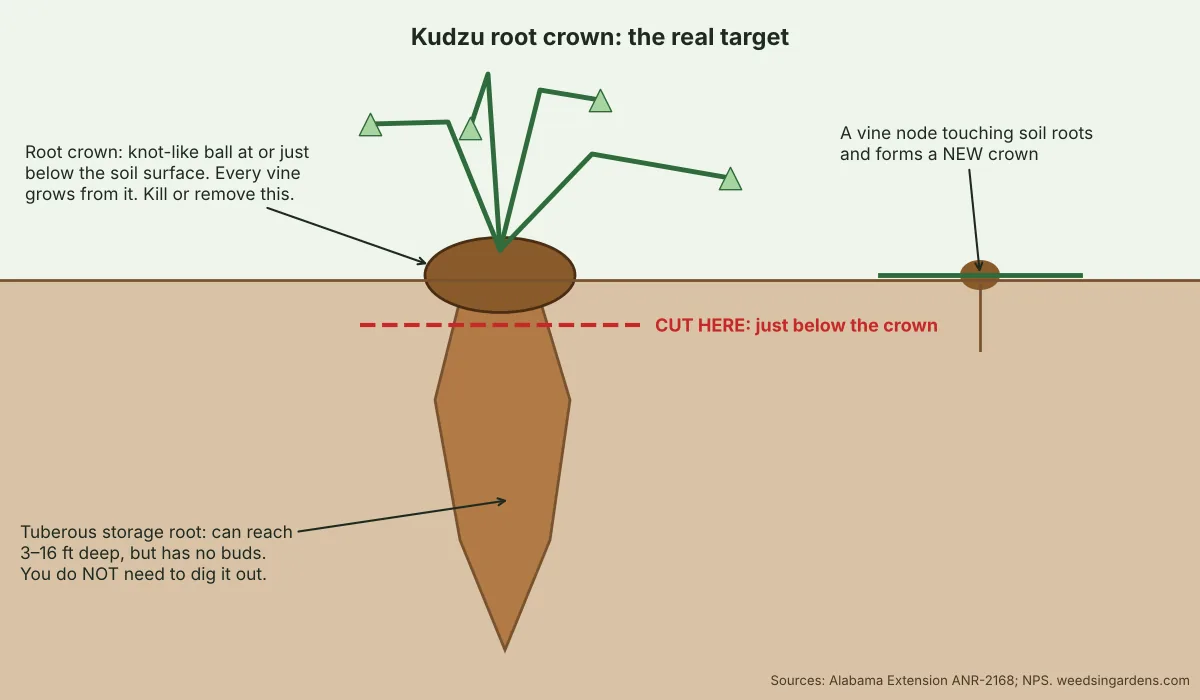
Here is what the Alabama Extension residential guide says you need to know about crowns:
- They sit at or slightly below the soil surface.
- They’re easiest to find in early spring, when new vine growth starts. Once the leaves are fully out, they’re hidden.
- To stop a plant, cut just below the crown and remove it. Kudzu doesn’t resprout from lateral roots.
- Vines buried under a few inches of leaf litter can root and look like lateral roots. Follow them, because each one may lead to another crown.
- Use a shovel or pick to expose the crown, then a sharp hatchet, axe or small handsaw to sever it. A shovel or hoe alone won’t cut it. Pruning shears only work on small crowns.
The National Park Service agrees: crowns can be removed with mattocks, hoes and saws, and removing the tuberous taproot is not required (NPS). Bag removed crowns, or let them dry out completely on a hard surface, because a crown that touches moist soil can re-establish. Our guide to disposing of invasive plants covers the safe options.
Kudzu control methods compared
No single method suits every yard. The size of the patch, what’s growing under and around it, and how much time you have all matter. This table pulls the extension and agency advice into one place.
| Method | Best for | When | How long it takes | Main drawback |
|---|---|---|---|---|
| Root crown removal | Small or young patches; crowns that survive spraying | Early spring, as shoots emerge | Each cut crown is done; repeat for missed ones | Hard physical work; crowns hidden under leaves in summer |
| Foliar spray (glyphosate or triclopyr) | Ground-level kudzu away from desirable plants | Late spring + late summer/early fall | Young crowns: often 1 season; old crowns: 3–5 years | Kills or injures any plant it touches |
| Cut-vine (cut-stem) treatment | Vines climbing trees, fences and shrubs | Late summer to fall is most effective | Repeat on resprouts | Must treat the cut within minutes |
| Repeated cutting / mowing | Herbicide-free sites; flat, open ground | Weekly through the growing season | Many years | Stopping for a few weeks undoes progress |
| Goat or sheep grazing | Large patches, slopes, near crops | Growing season | Several years | Fencing and animal care |
| Covering with plastic | Small, mowed areas | After mowing | 2 years for partial control | Only partial control (NPS) |
Sources: ANR-2168, ANR-2249 and NPS.
Herbicides for kudzu control in residential areas
Forestry crews use powerful products such as picloram, aminopyralid and metsulfuron on kudzu. Alabama Extension is clear that, except for glyphosate and triclopyr, those herbicides are not labeled for use in homeowner landscapes, and all picloram products are Restricted Use Pesticides (ANR-2249). For a yard, stick to glyphosate and triclopyr.
Homeowner products and label rates
These are the retail products and rates listed in Alabama Extension’s Kudzu Control in Residential Areas (revised 2024). Always check the label on the container you buy, because formulations change.
| Product (active ingredient) | Foliar rate | Cut-stump rate |
|---|---|---|
| Bayer Advanced Brush Killer Plus Concentrate (triclopyr amine 8.8%) | 4 oz per gal water per 500 sq ft | 100% (undiluted) |
| Ortho Max Poison Ivy and Tough Brush Killer Concentrate (triclopyr amine 8.0%) | 4 oz per gal per 800 sq ft | 100% |
| Roundup Concentrate Poison Ivy Plus Tough Brush Killer (glyphosate 18% + triclopyr amine 2%) | 6 oz per gal per 300 sq ft | 100% |
| Roundup Pro (glyphosate 41%) | 2.67 oz per gal per 1,000 sq ft | 50% |
| Roundup Pro Concentrate (glyphosate 50.2%) | 2.4 oz per gal per 1,000 sq ft | 50% |
The rate means ounces of product, mixed into one gallon of water, to cover that many square feet. For scale, a typical two-car garage floor is about 400 square feet. The extension guide warns that spraying a full gallon over a smaller area than the label allows is going off-label, so measure the patch first.
How to apply them
- Foliar spray: wet the leaves without making them drip. The herbicide moves down to the crown. Use it where kudzu is growing on the ground, away from plants you want to keep.
- Cut-vine treatment: for kudzu in trees, cut every vine just above the ground and immediately paint or spray the stump with a recommended product. Spraying only the lower leaves of kudzu in a tree is not effective (ANR-2168).
- Root crown treatment: expose the crown, cut into it, and apply herbicide to the fresh wound (Maryland DNR).
Weather and safety limits
- Don’t spray kudzu that’s drought-stressed, or when a hard frost is expected within 2 weeks of treatment (ANR-2249).
- Maryland DNR’s table pairs foliar triclopyr with air temperatures above 65°F, and diluted cut-stem treatments with air above 45°F (Maryland DNR).
- Both active ingredients can kill or injure trees, shrubs, flowers, vegetable gardens and lawn grasses they contact. The label warning covers all desirable vegetation, so shield or avoid everything you want to keep, including the lawn edge.
- Tree saplings smothered by kudzu are easily injured by spray on their leaves or green bark. Pull vines off saplings by hand and spray the kudzu away from them.
- Work carefully along property lines, and talk to your neighbors. A shared patch has to be treated on both sides.
- Wear the protective equipment the label lists, and keep children and pets off treated areas until the spray dries.
New to these products? Our explainer on post-emergent herbicides covers how systemic weedkillers move through a plant and why timing matters so much.
A year-round kudzu control plan
Because no single treatment kills every crown, Alabama Extension says one treatment a year is not enough (ANR-2168). The plan below spreads the work across the seasons, so each step sets up the next. If you garden north of the Deep South, shift each window 2 to 4 weeks later.
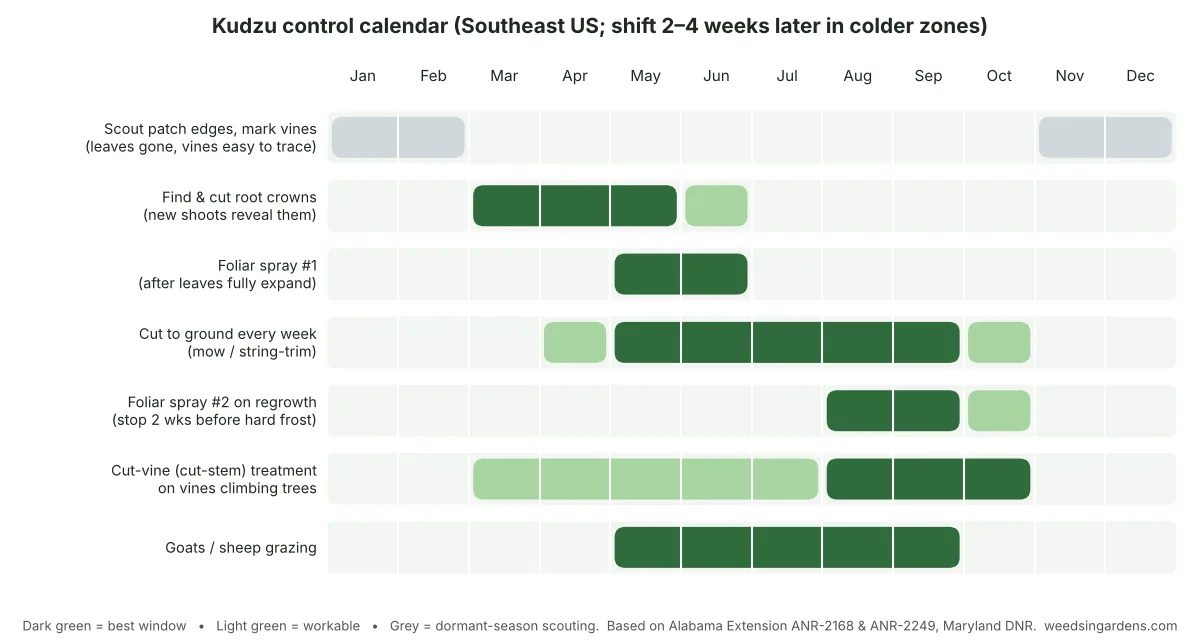
| Season | What to do | Why it works |
|---|---|---|
| Fall (now, late Sept–Nov) | If leaves are still green and no hard frost is forecast for 2+ weeks, make your follow-up foliar spray. Otherwise cut vines climbing trees and treat the stumps. Flag the patch edges. | Late summer to early fall is the optimal foliar window, when the plant moves sugars down to the crown (ANR-2249). |
| Winter (Dec–Feb) | With the leaves gone, trace vines back toward their origins and mark likely crown spots with stakes or flags. Clear debris for safe access. | Dense summer growth hides ditches, stumps and holes; winter shows the ground. |
| Early spring (Mar–May) | Go back to your flags as new shoots appear. Dig, expose and cut crowns. | Crowns are easiest to find when new growth starts (ANR-2168). |
| Late spring–early summer | First foliar spray, once leaves are fully expanded. | Spraying before full leaf-out wastes product and gives poor control. |
| Summer | Cut regrowth to the ground weekly, or let goats graze, if you’re avoiding herbicides. | Repeated defoliation drains root reserves. |
| Late summer–early fall | Second foliar spray on regrowth; cut-stem treatment on tree vines. | Strongest downward movement of herbicide to the crown. |
Keep this cycle going for at least 3 years on an old patch. Young crowns often die after one well-timed treatment, but crowns that have been growing for decades may need repeated treatment for 3 to 5 years (ANR-2249).
How to get rid of kudzu without chemicals
If you have a vegetable garden next door, a pond, or simply don’t want to spray, you still have options. They just need more patience.
Cut it to the ground, every single week
Trimming kudzu back gives no long-term control. To starve the crowns, you must cut every vine to the ground every week during the summer, possibly for many years, and stopping for even a few weeks lets it recover (ANR-2168). For larger open areas, Alabama Extension notes that mowing that removes more than 80% of the leaf area every month of the growing season for a few years can badly weaken or kill a stand (ANR-2249). Walk the area first: dense kudzu hides ditches, stumps, rocks and holes that can wreck a mower.
Let goats or sheep do the work
Cattle, hogs and horses eat tender new shoots, but only goats and sheep will eat the semi-woody and woody vines. Prescribed grazing can reduce an infestation over several years (NPS). Grazing and repeated mowing are also among the safest approaches next to sensitive crops such as soybeans, which are injured by drift from every kudzu herbicide (ANR-2249).
Dig crowns, then cover
On a small patch, hand-digging crowns over a few years can work, because repeated pulling eventually exhausts the stored energy (Maryland DNR). The NPS also lists mowing and then covering with plastic sheeting, firmly fastened down, for two years. It warns that this gives only partial control, so pair it with crown removal.
What doesn’t work
- Burning: a spring burn can clear debris and reveal hazards, but repeated burns will not control kudzu (NPS).
- Waiting for kudzu bugs: these insects suck sap from new growth, but they have not been shown to eliminate kudzu patches (ANR-2168).
- Household mixes: vinegar, salt and boiling water only scorch top growth, and the crown regrows. See our tests of vinegar and other home remedies.
Getting kudzu off trees, fences and buildings
Kudzu in trees is the most urgent problem, because the weight and shade can kill or topple them. Don’t try to pull the vines down from the canopy; you’ll only tear branches. Instead:
- Cut every vine just above the ground, so the vines in the tree are separated from their crowns. A second cut a little higher up makes a gap that keeps the ends from re-joining the soil.
- Immediately treat the ground-level stumps with a recommended glyphosate product (undiluted or 50%, depending on the product’s cut-stump rate).
- Leave the vines in the canopy to die and dry out. They’ll loosen and fall over time.
- Follow the ground-level vines back to their crowns and deal with those in spring.
Fences and sheds respond to the same cut-and-treat approach. If you’re also fighting other climbers, the techniques overlap with our guides to removing English ivy and killing poison ivy.
A note from the agronomist’s side
If you remember one thing from this article, make it this: kudzu is a crown problem, not a vine problem. Every popular fix that fails, from weed-eating the patch twice a summer to spraying whatever leaves you can reach, fails for the same reason. It removes foliage the plant can easily replace, while the crowns, backed by deep starch reserves, simply refuel and resprout.
Why do the extension specialists stress late summer and early fall spraying? Perennials move sugars downward to their storage organs as days shorten. A systemic herbicide applied then rides that flow straight into the crown. Spray in spring before the leaves expand and you’re hitting a plant that is sending energy up, so far less herbicide reaches the crown. That’s also why the two-spray schedule works: the spring spray knocks the plant back, and the fall spray hits the weakened regrowth when it’s most vulnerable.
My rule of thumb for homeowners is to measure progress by the number of crowns, not the amount of green. A patch that looks just as leafy in year two but comes from half as many crowns is a patch you’re winning. Keep a rough map, mark crowns you’ve cut, and expect the last few survivors to be the oldest and toughest.
Finally, think about soil movement. Alabama Extension notes that grading and topsoil removal take out most crowns, but topsoil that’s put back can reinfest a site (ANR-2168). Seed can also stay dormant in the soil and survive herbicides (ANR-2249). So after the patch is gone, walk the area each spring for a few years and pull seedlings while they’re tiny. Replanting the bare ground with a dense groundcover, lawn or trees closes the door for good. Our overview of introduced invasive weeds explains why bare, disturbed ground is where invaders get their start.
FAQ
What is the fastest way to get rid of kudzu?
On a home lot, combine three steps: cut out root crowns in early spring, spray a glyphosate or triclopyr product after the leaves fully expand, and spray the regrowth again in late summer or early fall. Young patches can die within a season; old ones take 3 to 5 years.
What kills kudzu permanently?
Killing or removing the root crown kills a kudzu plant permanently. You can cut it out just below the crown with a hatchet or saw, or kill it with repeated, well-timed systemic herbicide applications. The deep storage root cannot sprout, so it doesn’t need to be dug out.
Does Roundup kill kudzu?
Glyphosate products such as Roundup Pro are recommended by Alabama Extension for residential kudzu control, either as a foliar spray or on cut stumps. One application is not enough, so plan on two treatments a year for several years, following the label rate.
When is the best time to spray kudzu?
Late summer to early fall is the best foliar window, with a first spray in late spring or early summer once leaves are fully expanded. Don’t spray drought-stressed kudzu or within two weeks of an expected hard frost.
Can you kill kudzu by cutting it?
Only if you cut every vine to the ground every week through the summer, for several years. Occasional trimming just stimulates regrowth. Cutting is most effective when combined with crown removal or herbicide on the cut ends.
Do goats really eat kudzu?
Yes. Goats and sheep eat the semi-woody and woody vines, while cattle, hogs and horses eat only tender shoots. The National Park Service says prescribed grazing can reduce kudzu over several years.
Is kudzu poisonous to touch?
No. Kudzu doesn’t cause the rash poison ivy does, but young plants of the two can look alike. Wear gloves and long sleeves until you’ve confirmed the ID.
Sources
- Alabama Cooperative Extension System. Kudzu Control in Residential Areas (ANR-2168), revised April 2024. aces.edu
- Alabama Cooperative Extension System. Kudzu Control in Forests, Rights-of-Way & Natural Areas (ANR-2249), revised March 2024. aces.edu
- National Park Service, Chattahoochee River NRA. Kudzu: The Vine that Ate the South. nps.gov
- New York State Department of Environmental Conservation. Kudzu (Pueraria montana var. lobata) fact sheet, updated July 2026. dec.ny.gov
- Indiana Department of Natural Resources, Division of Entomology & Plant Pathology. Kudzu. in.gov
- Maryland DNR Forest Service. Forest Pests: Kudzu (Pueraria spp.), 2012. dnr.maryland.gov