
The maple out front let go all at once. One windy weekend in late October and the lawn disappeared under a crunchy orange blanket, and now you’re standing there with a rake in one hand and your phone in the other, wondering whether any of this is actually necessary. Plenty of neighbors leave theirs. Some swear it feeds the soil. Others warn it will kill the grass by spring.
Short answer: Leaving leaves on lawn over winter is fine only when they’re chopped small enough that you can still see at least half of the grass. A thick, whole-leaf layer blocks light, holds moisture against the turf and raises the risk of snow mold, so it should be mulch-mowed or moved before snow. University research shows that mulching a moderate leaf drop into the lawn does no harm and can even trim dandelion numbers the next spring.
By the end of this guide you’ll know exactly which situation your lawn is in, how to mulch leaves with the mower you already own, what to do with any surplus, and how to time it all from the first leaf drop to the last mow of the year.
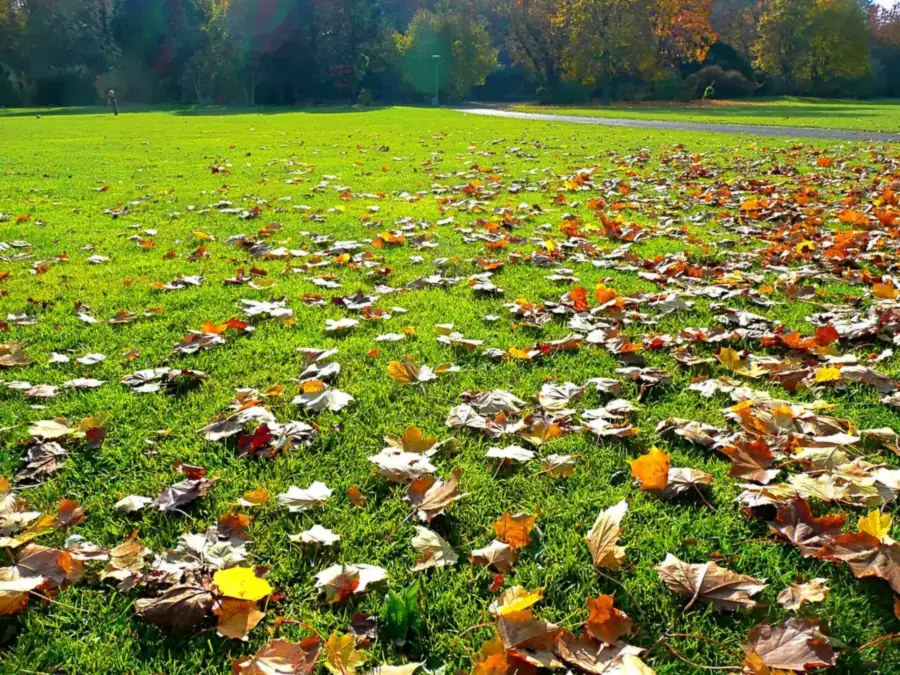
Is It OK to Leave Leaves on Lawn Over Winter?
It depends on how many leaves there are and what shape they’re in, not on whether leaves are “good” or “bad” in general. Scattered leaves and leaf crumbs are harmless. A solid mat is not.
Here’s why. Cool-season grasses like Kentucky bluegrass, tall fescue and perennial ryegrass keep photosynthesizing and storing carbohydrates well into late fall. That late-season food is what carries them through winter and powers spring green-up. Purdue turf specialist Zac Reicher put it bluntly: heavy layers of tree leaves that shade the grass “can smother and kill grass yet this fall” (Purdue Turfgrass Science).
Whole leaves also trap moisture right at the crown of the plant. Nebraska Extension notes that leaves left on turf over winter can smother the grass and promote snow mold, and that raking lets the lawn dry out on warm days when there’s no snow cover (Nebraska Extension). University of Minnesota Extension adds that excessive leaf residue left on the surface can harm the lawn in spring and favor snow mold damage (UMN Extension).
What a leaf mat does to grass underneath
| Leaf condition going into winter | What happens to the grass | Verdict |
|---|---|---|
| A few scattered leaves, grass clearly visible | Light still reaches the blades; leaves break down by spring | Fine to leave |
| Mulched into dime-to-quarter-sized bits, more than half the grass visible | Pieces settle between blades and decompose over winter and early spring | Fine to leave (this is the goal) |
| Whole leaves, more than half the lawn covered | Shading cuts late-fall food storage; moisture builds up | Mulch or remove before snow |
| Wet, matted layer packed down by rain or snow | Grass yellows or dies in patches; high snow mold risk | Rake or blow off now |
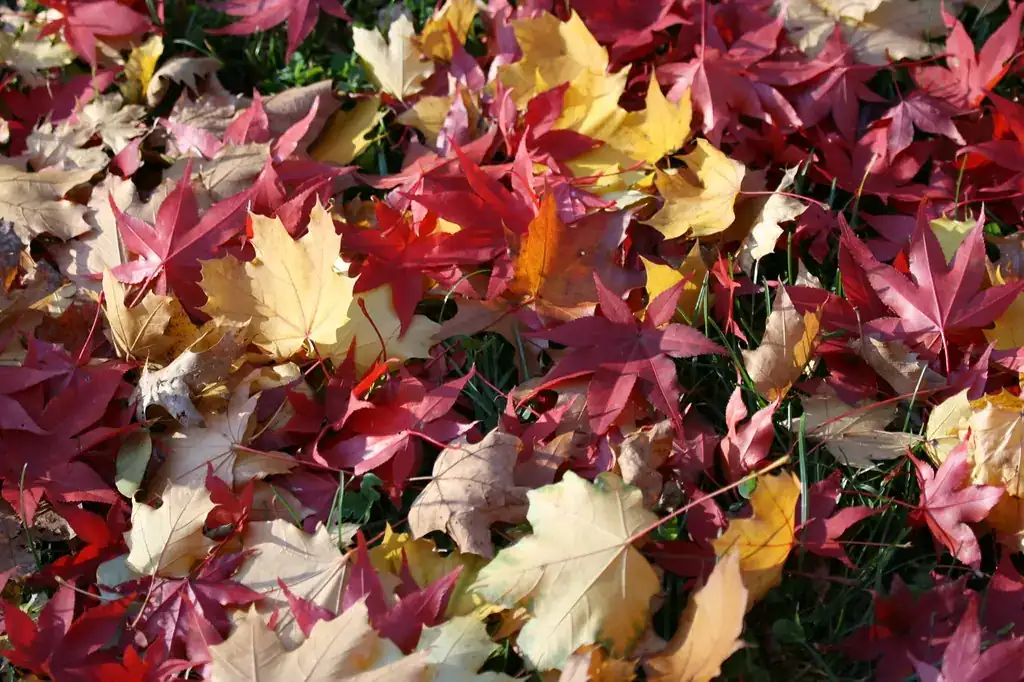
Snow mold is the big winter risk to keep in mind. It shows up in spring as matted, straw-colored or pinkish circles where the snow melted last, and Reicher specifically lists heavy leaf cover as something that favors it (Purdue News). Leaf mats aren’t the only cause, but they’re one of the easiest ones to remove.
What the Research Says About Mulching Leaves Into Your Lawn
The good news is that the “leave the leaves” crowd is half right. You don’t need to haul every leaf to the curb. You just need to make them small. And this isn’t folk wisdom; several universities have tested it on real turf.
| Study or source | What was tested | Key finding |
|---|---|---|
| Michigan State University (reported by Illinois Extension and Virginia Tech) | Maple and oak leaves mulched into established turf | A layer up to 6 inches deep was mulched in with no apparent adverse effects |
| Purdue University (reported by Virginia Tech) | Maple leaves mulched in a single application | Up to 4,000 lb of leaves per acre with no harm to the turf |
| Purdue (Reicher) | Turf color, quality and nitrogen after mulching | No change in color or quality; mulching did not tie up the nitrogen the grass needs |
| Kowalewski et al., HortTechnology (2009) | Maple and oak leaf mulch on Kentucky bluegrass | Dandelions fell by up to 80% after one fall application at the high rate, and up to 53% after two |
| UMN Extension (Trappe, 2024) | Practical threshold for home lawns | Mulch until about half the lawn surface is visible; bag beyond that |
The Michigan State and Purdue work both come through Virginia Tech’s turf specialist Mike Goatley, who summarizes it in his extension publication on lawn leaf management (Virginia Cooperative Extension). Illinois Extension cites the same Michigan State finding that a six-inch layer of maple and oak leaves could be mulched into established turf with no apparent harm, and adds that decomposing leaf pieces can supply nutrients and help with quicker spring green-up (University of Illinois Extension).
The dandelion bonus (with a caveat)
The most interesting result came from Michigan State. Researchers mulched red maple, silver maple, sugar maple and red oak leaves into Kentucky bluegrass and counted dandelions the next spring. After one fall application at the high rate, dandelion populations dropped by up to 80% (Kowalewski et al., 2009). Sugar maple tended to do best, and later work with leaf extracts pointed to a natural, allelopathic effect on dandelion germination.
Here’s the caveat the researchers themselves gave: leaf mulch is not a replacement for a weed-control program. Control was weaker after a second year (down to 53%), and it varied with leaf species and growing conditions. Treat it as a free bonus on top of good mowing and fertilizing, not as your dandelion plan. If dandelions are a real problem, our guide on why dandelions keep coming back covers the full fix.
Does mulched leaf litter feed the lawn?
A little. UMN Extension says mulched leaves return less nitrogen than grass clippings do, but they still return nitrogen, phosphorus and potassium and improve soil structure, water infiltration and root growth (UMN Extension). Virginia Tech is clear that leaf mulch doesn’t replace appropriate nitrogen fertilization, so keep your normal fall feeding plan. Our guide to when to apply winterizer explains the timing.
The 50% Rule: Should You Rake, Mulch or Leave Them?
Most people overthink this. You only need one look at the lawn to decide. After a leaf drop, stand at the edge of the yard and ask: how much green can I still see? UMN Extension’s guidance boils down to a simple threshold: keep mulching until about half of the lawn surface is visible, and once less than 50% is showing, start bagging the extra (UMN Extension).
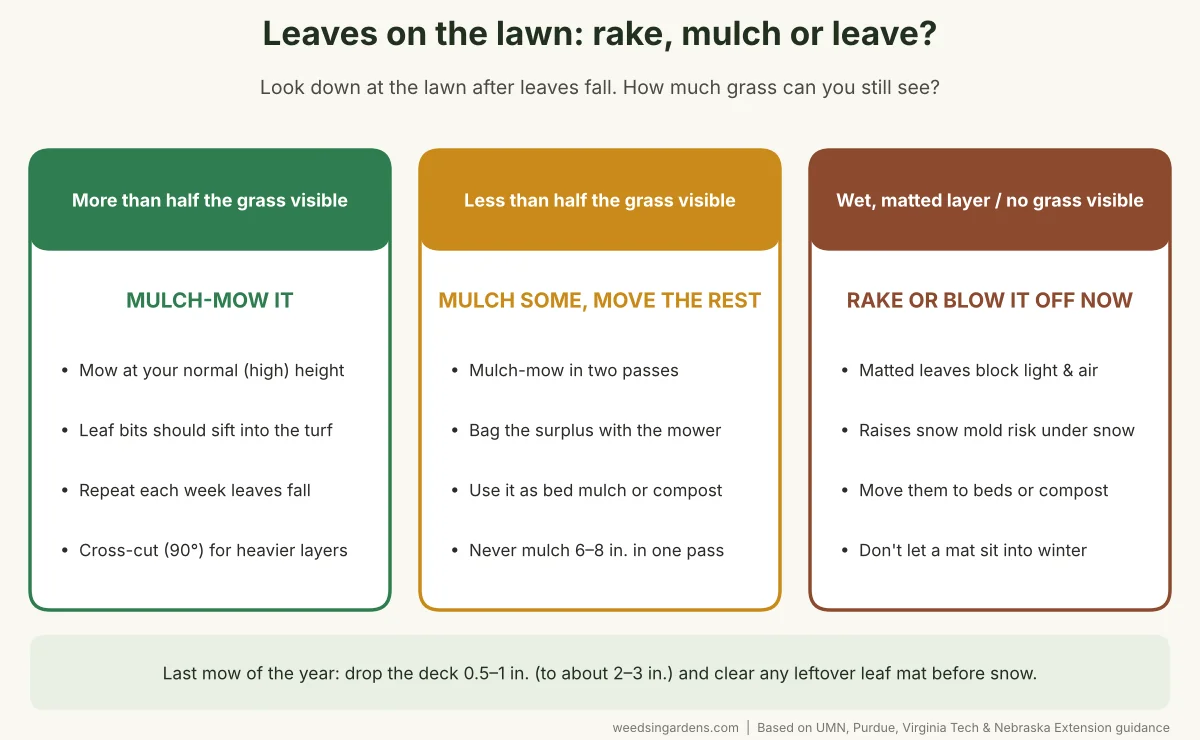
| If you see this… | Do this | Why |
|---|---|---|
| Light scatter, most of the grass showing | Mulch-mow at your regular height during your normal mow | Leaf bits drop into the canopy and break down by spring |
| Patchy cover, roughly half the grass showing | Mulch-mow, then do a second pass at 90° to the first | A double pass makes finer pieces that decompose faster (UMN) |
| Heavy cover, less than half showing | Mulch what you can, bag the rest with the mower’s bagger | Too much residue can harm the lawn in spring and favor snow mold |
| 6–8 inches of whole leaves (one big tree, one big drop) | Mow off the top layer and bag it, then mulch the remainder | Reicher: mulching 6–8 inches all at once “is just not going to work” |
| Wet, flattened mat after rain | Rake or blow it off; wait for drier leaves before mowing | Wet leaves clog the deck and don’t chop small enough (Virginia Tech) |
| Pine needles | Rake them off the lawn and use them as bed mulch | Virginia Tech notes they stay intact for months and aren’t suited to mulching |
How to mulch-mow leaves the right way
- Pick a dry-ish day. Slightly moist leaves chop well; soaking-wet ones strain the engine and come out as soggy clumps (Virginia Tech).
- Keep the deck high. Illinois Extension suggests mowing at the mower’s highest setting and mowing as usual (Illinois Extension).
- Close the side chute or use a mulching blade if you have one. Any rotary mower will shred leaves, but a mulching deck keeps them circulating longer.
- Go twice over heavy spots. Make the second pass in a crisscross, 90-degree pattern. Nebraska Extension suggests two or three passes for thick cover (Nebraska Extension).
- Check your work. You want pieces roughly the size of a fingernail sitting down between the blades, with grass clearly visible on top. Some residue is normal and disappears over winter.
- Repeat weekly while leaves are falling. Small, frequent jobs beat one heroic Saturday in November.
Oak leaves are tougher and slower to break down than maple, but Michigan State included red oak in its trials, so they can be mulched too. Just expect to need that second pass.
A Fall-to-Spring Timing Plan for Leaves on Your Lawn
Timing matters more than most people realize, because the job changes as the season goes on. Early in the drop you’re managing a trickle. By late fall you’re racing the first snow. Here’s how the season usually unfolds for a cool-season lawn, and where leaves on lawn over winter fit into it.
| When | What’s happening | What to do |
|---|---|---|
| Early fall (first leaves dropping) | Grass is actively growing; weeds are storing food for winter | Mulch-mow with your regular mowing. Good window for fall broadleaf weed control before leaves bury the weeds |
| Mid to late fall (peak drop) | Leaves arrive faster than they break down | Mulch-mow weekly. Apply the 50% rule and bag any surplus |
| Late fall, before the last mow | Growth slows; trees nearly bare | Final cleanup pass: mulch or remove any remaining leaf mat |
| Last mow of the season | Grass is going dormant | Lower the deck 0.5–1 inch, to a final height of about 2–3 inches (UMN Turfgrass Science) |
| Winter | Snow cover in northern zones | Nothing to do on the lawn. Stray leaves that blow in later won’t matter much |
| Late winter / early spring | Snow melts; residue shows | Lightly rake any matted patches or snow mold spots so they dry out and recover |
That last-mow step comes straight from the University of Minnesota’s turf program, which recommends cutting 0.5 to 1 inch lower than usual at the end of the season and mulching or removing excess leaf litter to reduce snow mold pressure (UMN Turfgrass Science). They’re honest that this improves your odds rather than guaranteeing anything, because snow cover and temperature also play a big role.
A practical point on raking timing: Nebraska Extension points out that it matters less than you’d think, because more leaves tend to fall right after you finish (Nebraska Extension). Do the big cleanup once most trees are bare, and handle the trickle with the mower before that.
What about warm-season lawns?
If you have bermudagrass, zoysia or St. Augustine, your lawn goes dormant earlier and won’t be using the light the way a fall-green fescue lawn is. The smothering risk is lower, but a wet leaf mat over a dormant lawn still keeps the crowns damp for weeks and can leave thin, slow-to-green patches in spring. The same 50% rule is a sensible target. It also helps to see our guide to different grass types in a lawn if you’re not sure which you have.
Where the Leaves You Remove Should Go
Not keeping leaves on lawn over winter doesn’t mean they have to leave the property. In fact, the best place for surplus leaves is usually ten feet away from where they fell.
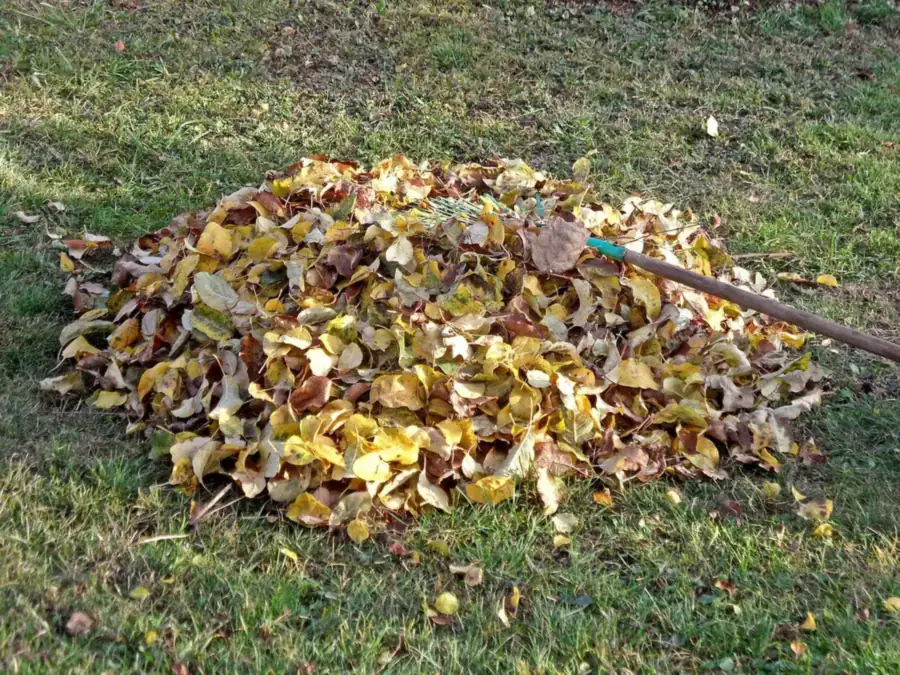
- Garden beds and around shrubs. Nebraska Extension recommends raking leaves around perennials and shrubs for extra winter protection (Nebraska Extension). Shredded leaves also make a free weed-suppressing mulch; see our guide to stopping weeds in mulch beds.
- The compost pile. Leaves are an excellent carbon (“brown”) ingredient to balance green kitchen scraps and grass clippings.
- Bagged for spring. Store shredded leaves in bags and use them as mulch in vegetable beds next season.
- A leaf corner for wildlife. University of Maryland Extension notes that many beneficial insects, including lady beetles, assassin bugs and syrphid flies, overwinter in leaf litter and plant stems (UMD Extension). A pile in a back corner or under shrubs gives them shelter without smothering the lawn.
Two places leaves should never go
First, the street and storm drains. Leaves that wash into surface water release phosphorus and nitrogen as they decompose, which can feed algae and damage water quality (Nebraska Extension). Second, any area where people and pets brush past. UMD Extension advises raking leaves away from paths and play areas where ticks are likely to meet people, and bagging diseased leaves for the trash rather than the home compost, which may not get hot enough to kill pathogens (UMD Extension).
Honestly, this is where “leave the leaves” and “rake the leaves” stop being opposites. You can do both: move the leaves off the grass and leave them in the beds.
Common Mistakes (and the Fall Weed Window You Don’t Want to Miss)
Most leaf problems on lawns come from a handful of habits. Each one is easy to fix once you know it’s happening.
Mistakes that cost you grass
- Waiting until every leaf has fallen. By then the lower layer has been shading the lawn for weeks. Mulch the early drop as it comes.
- Mowing a deep, wet pile in one pass. The mower clogs, the pieces stay big, and you end up with a soggy mat. Take the top off first.
- Leaving piles sitting on the grass. A raked heap left on the lawn for a week does the same damage as an unraked one, concentrated in one spot.
- Skipping fall fertilizer because “the leaves will feed it.” They help, but research from Virginia Tech says they don’t replace nitrogen.
- Assuming leaves cause moss or mushrooms. Leaf litter feeds soil fungi, so you may see a few more mushrooms in the lawn, but they’re harmless to grass. Persistent moss in the lawn points to shade, compaction or acidity, not leaves alone.
Don’t let leaves bury your fall weed control
Fall is the best time of year to kill perennial broadleaf weeds like dandelions, wild violets and creeping Charlie, because they’re moving sugars down to the roots and carry the herbicide with them. Purdue cites Nebraska research showing 2,4-D and dicamba were far more effective on dandelions when applied 1 to 10 days after the first fall frost than 5 to 11 days before it, and notes that broadleaf applications should still work through the first week or two of November (Purdue Turfgrass Science).
The catch is that herbicide has to land on weed leaves, not tree leaves. Mulch-mow or clear the lawn a few days before you spray, then hold off mowing for a couple of days afterward so the product can be absorbed.
| Active ingredient | Typical fall targets | Notes (always follow the label) |
|---|---|---|
| 2,4-D + dicamba (often with MCPP) | Dandelion, plantain, clover | Common three-way mixes. Check the label for your grass type and temperature limits |
| Triclopyr | Wild violet, ground ivy, clover | Purdue found it still effective into early to mid-November on ground ivy. Not for use on some warm-season lawns; check the label |
| Carfentrazone (in combination products) | Fast visible burn-down | Purdue notes a response within 7–10 days even in late October or early November |
| Non-chemical: hand-pulling, thicker turf | Small infestations | Mulch-mowed leaves plus overseeding thin spots helps turf crowd weeds out |
Labels differ on which grasses are safe (some broadleaf products injure St. Augustine, centipede or newly seeded lawns), on temperature limits and on rainfall timing. Read the label for your grass before you buy. For more detail, see our guide to post-emergent herbicides.
A Note From the Agronomist’s Side
When you strip the question of leaves on lawn over winter down to basics, it’s really about light and air at the crown of the plant. Grass doesn’t care whether the thing shading it is a tarp, a pile of maple leaves or a plywood sheet; once it can’t photosynthesize and the crown stays wet, it starts losing ground. That’s why the useful question is never “leaves, yes or no?” but “how much of the grass can still see the sky?” The 50% rule from Minnesota is a neat field shortcut for exactly that.
The research also tells us something reassuring about scale. A six-inch layer mulched into established turf without harm is far more leaf than most front yards ever get in one go. So for the typical lawn under one or two trees, the mower really can do the whole job. The problems start with deep drops under big trees, with wet weather that packs leaves into a mat, and with procrastination.
I’d also read the dandelion result for what it is: a promising signal from controlled plots, not a promise for your yard. The effect faded in the second year and depended on leaf species. What it does show is that recycling leaves into the lawn isn’t just harmless; it can tilt the balance slightly in the grass’s favor. Pair it with a high mowing height, a fall feeding and a well-timed broadleaf spray, and you’ve got a lawn that goes into winter clean, fed and with fewer weeds waiting in spring.
One last rule of thumb: whatever you do in October, look at the lawn again just before the forecast turns to snow. That final check is where most snow mold problems are prevented.
FAQ: Leaves on Your Lawn in Fall and Winter
Is it bad to leave leaves on the lawn over winter?
Leaving whole leaves on lawn over winter in a thick layer is bad because it blocks light, holds moisture against the grass and raises the risk of snow mold. A light scatter or leaves mulched into small pieces, with at least half of the grass visible, is fine to leave and breaks down by spring.
Should I rake leaves or mulch them into the lawn?
Mulch them when there’s a light to moderate layer; university research found mulching up to about 6 inches of maple and oak leaves into established turf caused no apparent harm. Rake or bag the surplus when less than half the lawn is visible, when leaves are wet and matted, or when they are pine needles.
How many leaves can I mulch into my lawn?
UMN Extension suggests mulching until about half the lawn surface is visible and bagging beyond that. Purdue’s Zac Reicher warns that trying to mulch 6 to 8 inches of leaves in a single pass won’t work, so mulch weekly during the drop instead of all at once.
Do mulched leaves kill grass?
No, not when they’re chopped small and the grass stays visible. Purdue research found no change in turf color or quality from mulched leaves, and the leaf pieces decompose over winter and early spring.
When should I do the last leaf cleanup before winter?
Do a final mulch or removal pass once most trees are bare, around your last mow of the season, and before lasting snow. UMN Turfgrass Science also recommends lowering the final mowing height by 0.5 to 1 inch, to about 2 to 3 inches.
Can I leave leaves in my flower beds?
Yes. Leaves around perennials and shrubs add winter protection and give overwintering beneficial insects shelter. Remove diseased leaves, keep leaves away from paths where ticks may meet people, and never blow leaves into the street or storm drains.
Sources
- Kowalewski, A.R., Buhler, D.D., Lang, N.S., Nair, M.G., & Rogers, J.N. III (2009). Mulched maple and oak leaves associated with a reduction in common dandelion populations in established Kentucky bluegrass. HortTechnology 19: 297–304 (summary via ScienceDaily).
- Goatley, M. Jr. “Leave” Them Alone: Lawn Leaf Management. Virginia Cooperative Extension publication 430-521 (reviewed 2025).
- Trappe, J. (2024). Fall leaf mulching is good for your lawn. University of Minnesota Extension.
- University of Minnesota Turfgrass Science. Home Lawn Care Newsletter, November 2023.
- Reicher, Z. (2004). Keep mowing to mulch those tree leaves. Turfgrass Science at Purdue University.
- Purdue University News Service (2001). Mulch leaves into the lawn, Purdue turf specialist Zac Reicher.
- Reicher, Z. (2007). How late is too late to control dandelions and other weeds? Turfgrass Science at Purdue University.
- Nebraska Extension. Managing leaves in your lawn. University of Nebraska–Lincoln.
- University of Illinois Extension (2022). Home, Yard & Garden Pest Newsletter, Issue 12: mulching leaves into turf.
- Anderson, A. Leave the leaves for natural pest control. University of Maryland Extension (updated 2025).